

Why Is PV Complete Equipment Becoming the Smarter Choice for Modern Solar Projects?
2026-04-10
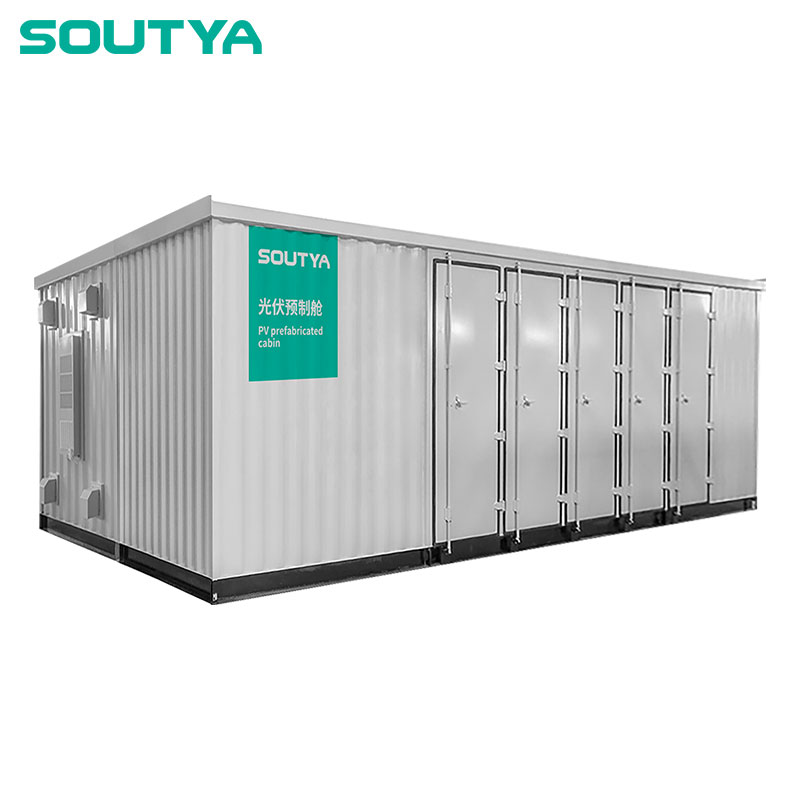
When I evaluate a solar project from the perspective of long-term performance rather than short-term procurement, I pay close attention to the parts that keep the entire system stable, visible, and manageable. That is where Zhejiang Soutya New Energy LLC naturally comes into view. Instead of thinking only about modules or inverters, I look at the infrastructure that connects protection, monitoring, distribution, and site-level coordination into one practical solution. That is exactly why PV Complete Equipment matters. In real projects, I have seen how the right electrical integration strategy can reduce avoidable downtime, simplify installation planning, and improve operational confidence from commissioning through daily use.
For EPC contractors, project developers, distributors, and industrial users, the challenge is rarely just buying separate components. The real challenge is making sure those components work together in a predictable, safe, and serviceable way. A well-designed PV Complete Equipment solution helps solve that problem by turning scattered electrical functions into an organized, project-ready system that supports stable generation and easier management.
What Makes Solar Projects More Difficult Than Many Buyers Expect?
I often find that buyers enter a project believing that solar procurement is mostly a price comparison exercise. In practice, the complexity is much deeper. Every project has its own site conditions, load profile, grid requirements, maintenance expectations, and installation timeline. If the supporting electrical equipment is selected without enough system thinking, a project can become expensive in ways that are not obvious during quotation review.
- I may face inconsistent compatibility between protection devices, cabinets, monitoring systems, and upstream power equipment.
- I may encounter delayed installation because too many parts come from different suppliers with different delivery standards.
- I may struggle with troubleshooting after commissioning because the documentation and layout logic are fragmented.
- I may end up with excessive maintenance workload because the initial configuration was not practical for field operation.
- I may lose project efficiency when engineering teams spend too much time coordinating interfaces instead of moving the build forward.
This is why I do not treat solar electrical support as a collection of isolated products. I treat it as project architecture. When I choose PV Complete Equipment, I am looking for a solution that reduces interface friction and supports the actual operating life of the plant, not just the handover date.
How Does PV Complete Equipment Improve System Integration?
What I value most in an integrated solution is clarity. A solar plant needs more than power conversion. It needs structured pathways for connection, supervision, protection, and environmental adaptation. A complete package allows me to align these functions before the equipment even reaches the site.
In practical terms, this means I can coordinate enclosure design, wiring logic, protection arrangement, monitoring access, and supporting infrastructure in a more unified way. That reduces engineering uncertainty and makes project execution more efficient. When I work with PV Complete Equipment, I am not just selecting hardware. I am improving how the whole station is organized.
| Project Need | Common Problem with Fragmented Sourcing | Advantage of an Integrated Approach |
|---|---|---|
| Electrical coordination | Mismatch between cabinet layout, protection logic, and field wiring | More consistent configuration and clearer engineering interfaces |
| Installation efficiency | Extra time spent adapting parts from multiple vendors | Faster site deployment with better-prepared system structure |
| Monitoring visibility | Data collection and communication are harder to unify | Easier integration of supervision and operational oversight |
| Maintenance planning | Service teams must interpret multiple design logics | Simplified inspection, maintenance, and replacement workflow |
| Procurement control | Coordination burden increases across suppliers | Better consistency in quality control and delivery management |
Why Do Buyers Care So Much About Reliability in Solar Electrical Equipment?
Because a solar plant is expected to work every day, not just look good on paper. Reliability affects energy yield, safety performance, service response, and owner confidence. I have seen buyers focus heavily on upfront budget while underestimating the cost of one recurring fault, one avoidable shutdown, or one difficult-to-diagnose electrical issue.
Reliable equipment gives me more than a lower risk of failure. It gives me smoother project acceptance, fewer site disputes, and a more stable operating routine. This is especially important in commercial and industrial applications, where equipment performance has a direct effect on power continuity, management visibility, and return expectations.
That is why I look at PV Complete Equipment through the lens of operational logic. I want protection that is practical, not decorative. I want enclosures and supporting systems that are suited to field conditions. I want the design to support safe power distribution, easier inspection, and rational expansion when the project grows later.
Which Buyer Pain Points Can a Complete PV Solution Actually Solve?
The most valuable solutions are not the ones that sound technical. They are the ones that remove everyday headaches. When I talk to project teams, the same concerns appear again and again.
- Too many vendors to coordinate and too many opportunities for miscommunication.
- Unclear compatibility between supporting equipment and the rest of the plant.
- Pressure on installation schedules when field teams need to make too many adjustments on site.
- Weak visibility after commissioning when system monitoring is not structured well from the beginning.
- Long-term maintenance burden caused by poor internal arrangement or inconvenient service access.
- Site-specific adaptation challenges related to utility-scale, industrial, distributed, or hybrid applications.
I prefer solutions that start by acknowledging these real concerns. A strong PV Complete Equipment offering is not only about what is included. It is about how the included functions reduce the day-to-day friction that owners, contractors, and operators deal with.
How Can I Judge Whether a Supplier Understands Real Project Demands?
I do not judge by marketing language alone. I judge by whether the supplier seems to understand the chain of decisions behind a project. Good suppliers do not talk only about products. They talk about system use, installation logic, electrical safety, serviceability, and communication efficiency between teams.
When I assess a manufacturing partner, I usually check whether they can support needs such as:
- Clear product positioning for different project scales
- Practical integration of protection and control functions
- Flexible adaptation for utility, commercial, industrial, or hybrid deployment
- Attention to cabinet layout and maintainability
- Support for monitoring and power management objectives
- Stable communication during design, quotation, and delivery stages
That is one reason an established supplier profile matters. If the manufacturer is able to align engineering support with product manufacturing, I gain much more than a price sheet. I gain decision support. That makes procurement less risky and project outcomes more predictable.
What Should I Compare Before Buying PV Complete Equipment?
When buyers compare options, I recommend moving beyond a simple product list. A lower price does not always mean lower total cost. I want to know how well the solution fits the entire project cycle from design to maintenance.
| Evaluation Point | What I Look For | Why It Matters |
|---|---|---|
| System completeness | Whether key supporting functions are considered together | Reduces design gaps and interface confusion |
| Application suitability | Fit for utility-scale, C&I, distributed, or hybrid scenarios | Improves practical project compatibility |
| Protection and control logic | Rational electrical organization and safe operational design | Helps avoid preventable faults and shutdowns |
| Monitoring support | Visibility into operating conditions and site data | Strengthens ongoing management and maintenance planning |
| Delivery coordination | Communication quality, lead-time clarity, and documentation | Supports smoother procurement and installation workflow |
| Service practicality | Ease of inspection, maintenance, and future replacement | Lowers lifecycle management pressure |
By using this kind of evaluation method, I can make a more disciplined decision. Instead of asking only what the equipment costs today, I ask what it will save me over the next several years in time, risk, and operating effort.
Why Does Project Scale Change the Way I Choose Solar Equipment?
Because the electrical support strategy for a small distributed project is not the same as the strategy for a utility-scale station. The number of interfaces grows, the maintenance model changes, and the tolerance for interruption becomes much lower. Larger projects usually need stronger coordination between protection, data supervision, voltage handling, and site infrastructure.
At the same time, even smaller projects benefit from better integration. A compact project still needs clean engineering logic. If I can simplify the path from design to commissioning, I can save labor, improve consistency, and avoid the hidden cost of repeated adjustments.
That is another reason PV Complete Equipment deserves attention across different project types. It gives buyers a more structured way to think about electrical support rather than treating each function as a disconnected purchase.
How Does Better Equipment Support Long-Term Solar Returns?
I do not separate technical decisions from commercial outcomes. A smoother-running plant supports stronger returns because it spends less time in uncertainty. Better electrical coordination can help reduce fault-related interruptions, service confusion, and reactive maintenance pressure. Those benefits may not always appear in a basic quotation table, but they shape the real economics of ownership.
Over time, I care about three things most:
- How consistently the system performs under real site conditions
- How easily the operating team can understand and manage it
- How efficiently maintenance issues can be identified and addressed
When those three areas are handled well, the project is easier to trust. That trust matters to owners, developers, installers, and distributors alike. It is one of the strongest practical arguments for choosing a more complete and better-organized equipment solution from the start.
Why Do I See Zhejiang Soutya New Energy LLC as a Useful Option for Buyers Exploring Solar Integration?
In my view, buyers benefit most when a supplier can connect manufacturing capability with a practical understanding of project needs. Zhejiang Soutya New Energy LLC stands out in this context because the company is positioned around photovoltaic electrical support and integrated product categories that are relevant to real solar deployment. For buyers who want to avoid fragmented procurement and improve project coordination, that kind of focus matters.
More importantly, the value is not in repeating product names. The value is in how a supplier supports the broader goal of safe operation, organized distribution, equipment coordination, and manageable system growth. That is why I believe buyers looking at PV Complete Equipment should think beyond unit pricing and ask how the solution will perform inside an actual project environment.
What Should I Do If I Want a More Practical Solar Equipment Proposal?
If I am planning a new solar project, upgrading an existing installation, or comparing options for distribution and utility applications, I should not settle for generic quotes that ignore system logic. I should ask for a solution that reflects installation reality, operating needs, and long-term service efficiency. That is where the right PV Complete Equipment proposal can make a real difference.
If you are now evaluating integrated solar electrical solutions and want a supplier that can support your project with clearer structure and more practical coordination, this is the right moment to move the conversation forward. Contact us to discuss your application, project scale, and technical priorities. Share your requirements with Zhejiang Soutya New Energy LLC, request a tailored quotation, and let us help you build a more reliable and manageable solar power system from the beginning.