
Why Is a Solar Agriculture Mounting System Becoming a Smarter Choice for Modern Farms?
2026-04-21
When I look at the future of farming, I do not see agriculture and solar energy competing for land. I see them working together. That is exactly why Xiamen Egret Solar New Energy Technology Co., Ltd. naturally comes into the conversation when I discuss a practical, land-efficient, and revenue-focused Solar Agriculture Mounting System. For growers, farm investors, and project developers, the real question is no longer whether solar can fit into agricultural land use, but how to make it support crop production, reduce pressure on operating costs, and improve long-term land value at the same time.
In my experience, buyers are rarely looking for a mounting structure alone. They want a complete solution that respects crop growth, simplifies installation planning, holds up outdoors, and makes the economics of dual land use more convincing. A well-designed Solar Agriculture Mounting System helps answer those needs by creating usable overhead solar space while preserving the function of the land below. That makes it attractive not only for farms, but also for agricultural parks, greenhouse projects, and integrated rural energy developments.
What Problems Do Farms Face When They Try to Add Solar Power?
Before choosing any system, I think it is important to start with the real pain points buyers face:
- They worry that solar structures may interfere with farming activities.
- They need enough ground clearance for people, equipment, and crop management.
- They want durability in outdoor environments with changing weather conditions.
- They often need a customized structure rather than a one-size-fits-all frame.
- They want the project to make financial sense over the long term, not just look good on paper.
These are reasonable concerns. Agricultural land is valuable, and every design choice affects productivity. That is why I always believe the best Solar Agriculture Mounting System should do more than hold solar panels in place. It should support a more flexible farming environment, improve how land is used, and reduce friction between energy generation and agricultural work.
How Can a Solar Structure Support Crops Instead of Getting in Their Way?
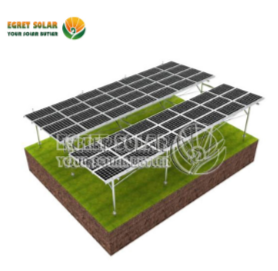
The biggest shift in thinking comes when we stop treating solar as an obstacle and start treating it as infrastructure. In an agricultural setting, an elevated mounting layout can create a useful upper layer for photovoltaic generation while leaving the lower layer available for planting, movement, irrigation, and day-to-day operations.
I find this especially valuable for projects that want to balance power generation with crop cultivation. Depending on the crop type, site layout, and project design, partial shading can help create a more moderated growing environment under the panels. For some agricultural applications, that can support better field conditions by reducing direct exposure during the hottest periods of the day. At the same time, the solar array above turns the same area of land into an energy-producing asset.
That is the real appeal of a thoughtfully engineered Solar Agriculture Mounting System. It is not just about structure. It is about enabling two productive functions on one site without forcing the landowner to choose one over the other.
Why Do Buyers Care So Much About Structural Design Details?
I have noticed that experienced buyers ask practical questions very early. They want to know whether the system can adapt to their crop plan, their land conditions, and their project budget. They are not impressed by vague promises. They want to understand how design decisions affect installation, maintenance, and daily use.
Here is how I would break down the design priorities that matter most:
| Design Factor | Why It Matters | Buyer Benefit |
| Elevated structure | Creates working space below the modules | Supports planting, walking access, and field operations |
| Adaptable spacing | Allows light and airflow management | Improves compatibility with different crops and farm layouts |
| Durable materials | Helps the structure perform in outdoor conditions | Reduces maintenance pressure and protects long-term investment |
| Customizable dimensions | Matches local terrain and operational needs | Improves installation efficiency and project fit |
| Stable engineering design | Supports panel security and system reliability | Builds confidence for developers, EPCs, and landowners |
To me, these points are what separate a generic frame from a serious agricultural solar solution. A strong supplier understands that every farm is different, and the structure should reflect that reality.
Which Advantages Make a Solar Agriculture Mounting System Worth the Investment?
When I evaluate product value, I usually look at the result from several angles instead of only the initial hardware cost. A high-quality system creates value through performance, efficiency, and adaptability over time.
- Better land utilization by combining solar generation and agricultural use in one area.
- Improved project flexibility because structure height, layout, and configuration can be tailored to local needs.
- Long-term durability thanks to materials and engineering suited for outdoor agricultural environments.
- Operational practicality by preserving access for workers, tools, irrigation, and crop management.
- Stronger investment logic because the land can support more than one form of output.
What I like most is that the value proposition is not abstract. It speaks directly to what buyers want: smarter use of land, more resilient planning, and a system that fits real agricultural operations instead of disrupting them. That is why the right Solar Agriculture Mounting System often draws attention from both energy investors and agricultural stakeholders.
How Does This System Help Different Types of Buyers?
Not every buyer comes from the same angle. Some care most about power generation, while others focus on cultivation, site policy, or project delivery. I think a good article should acknowledge those differences clearly.
| Buyer Type | Main Concern | What They Want from the System |
| Farm owners | Protecting agricultural usability | A layout that supports planting and daily farm work |
| Project developers | Return on investment | Efficient land use and dependable structural performance |
| EPC contractors | Installation efficiency | Clear engineering, reliable components, and customization support |
| Distributors | Market demand and product credibility | A versatile solution with broad application potential |
| Agricultural parks | Integrated rural development | A system that links clean energy with productive land planning |
From my perspective, this is why supplier capability matters. A manufacturer that understands buyer diversity can present the structure not merely as a product, but as a project-oriented solution.
Do Customization and Supplier Support Really Make a Difference?
Yes, absolutely. I would even say they are often the deciding factor. In agricultural solar applications, project conditions vary too much for buyers to feel comfortable with rigid options. Ground conditions, crop type, local climate, workflow requirements, and module arrangements can all influence what structure is most suitable.
That is why I place real value on suppliers that can discuss bracket height, structural thickness, layout logic, and application scenarios in a practical way. The more closely the solution aligns with the field reality, the more likely the project is to move smoothly from planning to installation.
For many buyers, support also means confidence. They want to know that the manufacturer understands export projects, technical coordination, and long-term cooperation. When that support is present, the purchasing process feels less risky and far more efficient.
Why Is This Product Category Gaining More Global Attention?
I believe the answer is simple. Land pressure is real. Energy demand is rising. Farms and rural developments are under more pressure than ever to do more with the same space. A conventional project model often separates agriculture from energy production, but integrated systems offer a more flexible path forward.
As market expectations change, buyers are paying more attention to solutions that combine practicality with sustainable thinking. A Solar Agriculture Mounting System fits that shift because it turns underused vertical space into a functional energy layer while keeping the land below productive. That makes it relevant in conversations about farm modernization, rural infrastructure, and diversified land income.
What Should You Look for Before Sending an Inquiry?
If I were advising a buyer before they contact a supplier, I would suggest preparing these questions first:
- What crops or agricultural activities will take place under the structure?
- What clearance and spacing are needed for local operations?
- What weather and site conditions must the structure handle?
- Do you need a standard solution, or will customization be essential?
- What balance do you want between installation efficiency, durability, and long-term value?
These questions help transform a general product inquiry into a more productive business discussion. They also help suppliers recommend a more suitable configuration from the beginning.
Why Should You Act Now If You Are Considering a Solar Agriculture Mounting System?
If you are planning a farm solar project, expanding an agricultural park, or exploring ways to improve land productivity, waiting too long can mean missing a practical opportunity. A well-planned Solar Agriculture Mounting System can help you approach land use more strategically, support cleaner energy development, and create a stronger foundation for long-term returns.
I believe buyers get the best results when they start the conversation early, compare real project needs carefully, and work with a supplier that understands both structure performance and agricultural application logic. If you are looking for a dependable partner and want a solution designed around real project conditions, now is the right time to reach out. Contact us today to discuss your project, request technical details, and send your inquiry for a tailored solution that fits your site and business goals.