

Why Do Centralized PV Plants Need an Intelligent Tracker Box?
2026-10-20
An O&M manager at a 150 MW centralized PV plant reviews the annual performance report. The plant underperformed its theoretical yield by 7.8 percent. The loss analysis points to three factors: soiling, inverter downtime, and tracker misalignment. Soiling and inverter downtime are expected and manageable. The tracker misalignment is not. The manager investigates and finds that 12 percent of the trackers have been operating in a fixed position for the past six months because the communication box failed and the trackers defaulted to a safe position. The energy loss from this single failure mode is 3.2 percent of the annual yield, which translates to $420,000 in lost revenue. The Intelligent Tracker Communication Box is the device that prevents this loss. This guide explains why centralized PV plants need it.
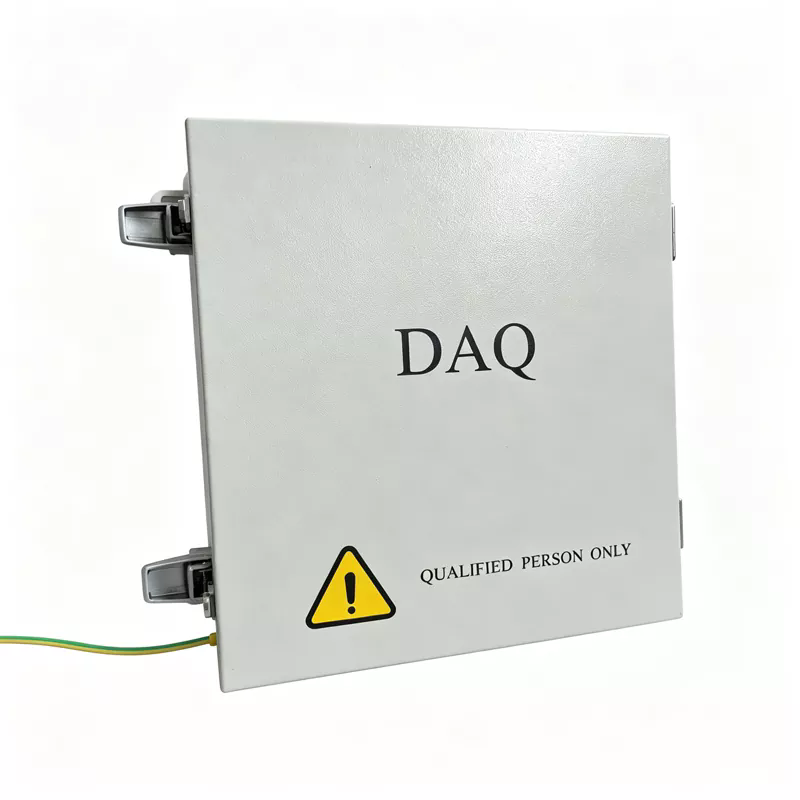
1. How Does Tracker Communication Affect Yield in a Centralized PV Plant?
A centralized PV plant uses hundreds or thousands of trackers. Each tracker is controlled by a communication box that receives commands from the central controller and reports status back. If the communication is reliable, the trackers follow the sun with high accuracy and the plant produces near its theoretical yield. If the communication is unreliable, the trackers may lose sync, default to a safe position, or drift from the optimal angle. The table below shows the relationship between communication reliability and yield loss.
| Communication reliability | Tracker availability | Average tracking error | Annual yield loss |
| 99.9% (redundant) | 99.5% | < 0.5° | 0.8 – 1.2% |
| 99.0% (standard) | 97.0% | 1.0 – 1.5° | 2.0 – 3.0% |
| 95.0% (basic) | 90.0% | 2.0 – 3.0° | 4.5 – 6.0% |
| < 90.0% (unreliable) | 80.0% | > 5.0° | 8.0 – 12.0% |
In our factory, we manufacture Intelligent Tracker Communication Box units that achieve 99.9 percent communication reliability through redundant communication paths and automatic recovery. The box maintains the tracking schedule locally even if the central controller is unreachable, so the trackers continue to follow the sun. Suzhou Ruitai Automation Technology Co., Ltd. has been manufacturing tracker communication boxes for over 8 years.
2. What Causes Communication Failures in Centralized PV Plants?
Centralized PV plants are located in remote areas with harsh environmental conditions. The communication box is exposed to temperature extremes, dust, lightning, and electromagnetic interference. The most common causes of communication failure are power supply faults, cable damage, connector corrosion, and firmware crashes. The table below shows the failure modes and their frequency in a typical plant.
| Failure mode | Frequency (per 1,000 boxes/year) | Typical cause | Detection time (without intelligent box) |
| Power supply fault | 35 – 50 | Surge, lightning, component aging | Days to weeks |
| Cable damage | 20 – 30 | Rodent, digging, UV degradation | Weeks |
| Connector corrosion | 15 – 25 | Moisture ingress, salt spray | Weeks to months |
| Firmware crash | 5 – 10 | Software bug, memory corruption | Days |
| Communication module failure | 5 – 10 | Component failure, thermal stress | Days to weeks |
O&M manager's note: The detection time is the critical factor. A failed communication box that is not detected for two weeks causes two weeks of lost yield from the affected trackers. In a 150 MW plant with 3,000 trackers, a 1 percent failure rate means 30 trackers are offline. If each tracker covers 50 kW, the lost capacity is 1.5 MW. Over two weeks, the energy loss is approximately 100 MWh, which is $12,000 in lost revenue. The Intelligent Tracker Communication Box reduces the detection time to minutes through self-diagnosis and automatic alerts.
3. How Does an Intelligent Tracker Communication Box Reduce Detection Time?
The Intelligent Tracker Communication Box includes a microcontroller that monitors the health of the communication link, the power supply, and the tracker motor. It performs a self-test every 60 seconds. If a fault is detected, the box sends an alert to the central controller with a fault code and the box ID. The central controller displays the fault on the SCADA screen and sends an email or SMS to the O&M team. The table below shows the self-diagnosis capabilities and the corresponding fault codes.
| Self-diagnosis function | Fault code | Alert method | Typical repair action |
| Power supply voltage out of range | E01 | SCADA + SMS | Replace power module |
| Communication timeout | E02 | SCADA + email | Check cable and connectors |
| Motor current abnormal | E03 | SCADA + SMS | Check motor and mechanical load |
| Tracking angle deviation | E04 | SCADA | Recalibrate angle sensor |
| Firmware watchdog reset | E05 | SCADA log | Update firmware |
In our factory, we program the Intelligent Tracker Communication Box with these self-diagnosis functions. The box also stores a local log of the last 1,000 events, which can be retrieved for root cause analysis. Suzhou Ruitai Automation Technology Co., Ltd. provides the SCADA integration manual and the fault code list for all of our products.
4. What Other Benefits Does an Intelligent Tracker Box Provide?
Beyond fault detection, the Intelligent Tracker Communication Box provides three additional benefits. The first is local autonomy. The box can operate the tracker according to the astronomical calendar even if the central controller is offline. This ensures that the tracker continues to produce energy during a communication outage. The second is data logging. The box records the tracker angle, the motor current, and the communication quality every 10 minutes. This data is used for performance analysis and for predictive maintenance. The third is firmware update capability. The box can receive firmware updates remotely, which allows the plant operator to improve the tracking algorithm without visiting each tracker. The table below summarizes these benefits.
| Benefit | Description | Impact on O&M |
| Local autonomy | Tracker continues to follow the sun during communication outage | Eliminates yield loss during outages |
| Data logging | Records angle, current, and communication quality | Enables predictive maintenance |
| Remote firmware update | Updates tracking algorithm without site visit | Reduces O&M cost and improves performance |
In our factory, we equip the Intelligent Tracker Communication Box with a 32-bit microcontroller, 256 KB of flash memory, and a real-time clock with battery backup. The box supports Modbus RTU and TCP/IP communication protocols. Suzhou Ruitai Automation Technology Co., Ltd. provides a software tool for configuring the box and for retrieving the data logs.
Frequently Asked Questions About Intelligent Tracker Communication Boxes in Centralized PV Plants
Summary for O&M Managers and Plant Owners
An Intelligent Tracker Communication Box is essential for centralized PV plants because it ensures reliable communication between the central controller and the trackers, reduces the detection time for faults from weeks to minutes, and provides local autonomy during communication outages. The box also logs performance data for predictive maintenance and supports remote firmware updates. By preventing tracker misalignment and communication failures, the box protects the plant's yield and reduces O&M costs. Suzhou Ruitai Automation Technology Co., Ltd. has been manufacturing Intelligent Tracker Communication Box units for over 8 years and provides full SCADA integration support for our customers.
Suzhou Ruitai Automation Technology Co., Ltd. manufactures Intelligent Tracker Communication Box units with self-diagnosis, local autonomy, data logging, and remote firmware update capability. We provide SCADA integration manuals and fault code lists for all of our products.