

Why Are Flat Roof Solar Mounting Systems Easier to Design and Install?
2026-09-22
A solar developer working on a commercial rooftop project faces a choice that affects the entire project timeline: flat roof or pitched roof. For a 500 kW system, the difference in design time can be two to three weeks. The difference in installation time can be 30 to 40 percent. The difference in structural risk can be the difference between a smooth permit approval and a costly redesign. A Solar Roof Mounting System designed for flat roofs eliminates many of the variables that make pitched roof projects complex. This guide explains the specific design and installation advantages of flat roof mounting systems and how they translate to faster project delivery.
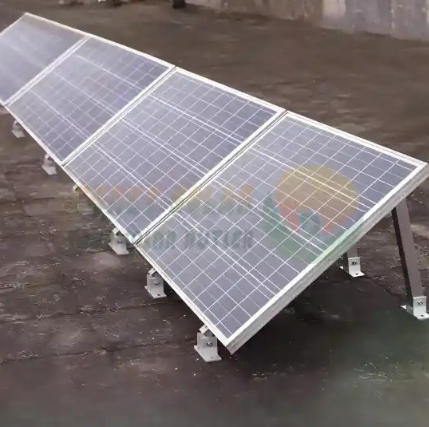
1. Why Is the Design Process Simpler for a Flat Roof Solar Mounting System?
The design of a pitched roof Solar Roof Mounting System is complicated by three factors. First, the roof pitch varies from building to building, which means every project requires a custom layout. Second, the roof covering (asphalt shingle, tile, metal) requires different attachment methods. Third, the orientation of the roof planes may not be optimal for solar production, which forces compromises in array layout. A flat roof eliminates all three factors. The roof surface is horizontal, so the mounting system can be designed with a fixed tilt angle that is optimal for the project location. The attachment method is standardized because flat roofs typically use ballasted or mechanically anchored systems. The array layout can be oriented to maximize energy production without being constrained by the building geometry. In our factory, we have designed Solar Roof Mounting System units for both flat and pitched roofs. The design time for a flat roof system is typically 40 to 50 percent shorter because the layout is modular and the structural calculations are simpler.
Design time comparison: A 500 kW pitched roof system typically requires 80 to 120 engineering hours for layout, structural analysis, and permit drawings. A 500 kW flat roof system typically requires 40 to 60 engineering hours. The saving is due to the standardized tilt, the modular layout, and the simplified load path.
Xiamen Egret Solar New Energy Technology Co., Ltd. provides design support for flat roof Solar Roof Mounting System projects. Our factory has a library of pre-engineered layouts for common roof sizes and wind zones, which further reduces the design time for our customers.
2. How Does Load Calculation Differ Between Flat and Pitched Roofs?
Load calculation is one of the most critical and time-consuming parts of any solar project. For a pitched roof, the load calculation must consider the roof pitch, the roof covering, the rafter spacing, and the condition of the existing structure. The wind load on a pitched roof is distributed differently depending on the pitch angle and the building height. For a flat roof, the load calculation is more standardized. The wind load is determined by the building height and the exposure category. The ballast weight is calculated based on the wind speed and the dead load of the mounting system. The structural capacity of the roof is typically easier to verify because flat roofs are often designed with a uniform live load allowance. The table below compares the load calculation parameters for flat and pitched roofs.
| Parameter | Pitched roof | Flat roof |
| Wind load distribution | Varies with pitch and height | Uniform based on height and exposure |
| Attachment method | Penetrating (requires sealing) | Ballasted or non-penetrating |
| Structural verification | Requires rafter analysis | Requires roof deck analysis |
| Ballast calculation | Not applicable | Standardized based on wind speed |
| Typical design time per 100 kW | 16 – 24 hours | 8 – 12 hours |
Egret Solar provides a load calculation tool that allows installers to input the building height, wind speed, and roof size. The tool calculates the required ballast weight and the spacing of the mounting system. This reduces the engineering time and ensures consistency across projects.
3. What Are the Installation Advantages of a Flat Roof Solar Mounting System?
Installation is where the advantages of a flat roof Solar Roof Mounting System become most apparent. On a pitched roof, installers must work on a sloped surface, which increases the risk of falls and slows the work. They must also seal every penetration to prevent leaks, which adds time and introduces a quality risk. On a flat roof, installers work on a horizontal surface, which is safer and faster. The mounting system is pre-assembled and laid out in a grid, so the installation sequence is repetitive and easy to learn. Ballasted systems require no roof penetrations, which eliminates the sealing step and the associated leak risk. The table below compares the installation productivity for flat and pitched roofs.
| Installation activity | Pitched roof (hours per kW) | Flat roof (hours per kW) | Productivity gain |
| Layout and marking | 0.08 | 0.04 | 50% |
| Mounting system assembly | 0.12 | 0.08 | 33% |
| Module installation | 0.10 | 0.07 | 30% |
| Penetration sealing | 0.05 | 0 | 100% |
| Total | 0.35 | 0.19 | 46% |
For a 500 kW project, the difference in installation time is 80 hours, or approximately 10 working days for a crew of four. This time saving reduces labor cost and accelerates the project timeline. Egret Solar manufactures Solar Roof Mounting System components that are pre-assembled and labeled for rapid installation. Our factory provides installation guides and training videos for each product.
4. How Do Wind and Ballast Requirements Affect the Design of Flat Roof Systems?
Wind is the primary design load for a flat roof Solar Roof Mounting System. The system must be designed to resist the uplift force that the wind exerts on the modules. The uplift force depends on the wind speed, the building height, and the exposure category. The ballast weight is calculated to counteract the uplift force with a safety factor. The design process involves calculating the wind pressure, determining the uplift force per module, and then specifying the ballast weight and the spacing of the mounting system. In our factory, we use a proprietary calculation method that has been verified by wind tunnel testing. The table below shows the ballast requirements for different wind speeds.
| Wind speed (m/s) | Wind pressure (Pa) | Ballast weight per module (kg) | Typical application |
| 30 | 540 | 35 | Low wind zones |
| 40 | 960 | 60 | Moderate wind zones |
| 50 | 1,500 | 95 | High wind zones |
| 60 | 2,160 | 135 | Coastal and typhoon zones |
The ballast weight is typically provided by concrete blocks or paver blocks. The blocks are placed on the mounting system and secured with clamps. No roof penetration is required. This makes the flat roof Solar Roof Mounting System ideal for roofs with membrane or built-up roofing, where penetrations are difficult to seal.
Frequently Asked Questions About Flat Roof Solar Mounting Systems
Summary for Solar Project Developers
Flat roof Solar Roof Mounting System units are easier to design and install because they eliminate the variables that complicate pitched roof projects. The design process is faster because the layout is modular and the load calculation is standardized. The installation is faster because the work surface is horizontal and the ballasted system requires no roof penetrations. The result is a shorter project timeline, lower labor cost, and reduced risk of leaks and structural problems. Xiamen Egret Solar New Energy Technology Co., Ltd. has been manufacturing Solar Roof Mounting System units for over 12 years and supplies to commercial and industrial projects worldwide.
Xiamen Egret Solar New Energy Technology Co., Ltd. manufactures flat roof Solar Roof Mounting System units with adjustable tilt, pre-assembled components, and verified wind resistance. We provide design tools, installation guides, and technical support for all of our products.