

Why Are Dual Master Modules Used in an Intelligent Tracker Box?
2026-10-08
In a 100 MW solar plant with 3,000 trackers, a single communication failure can stop the entire array from following the sun. The Intelligent Tracker Communication Box is the device that coordinates the movement of the trackers. If the master module inside that box fails, the trackers revert to a safe position and the plant loses generation until the module is replaced. This is the problem that dual master modules solve. A dual master configuration places two independent master modules in the same communication box. One module operates as the primary controller. The second module monitors the first. If the primary module fails or loses communication, the secondary module takes over automatically. The trackers continue to follow the sun. The plant continues to generate. This guide explains how the redundancy works and why it matters for plant profitability.
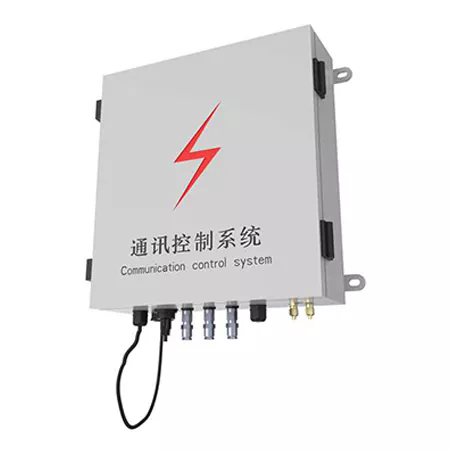
1. What Is the Failure Mode of a Single Master Module in an Intelligent Tracker Communication Box?
A single master module is a single point of failure. The module contains a processor, a communication interface, and a power supply. Any of these components can fail. The processor can lock up due to a software fault. The communication interface can be damaged by a lightning surge or a voltage transient. The power supply can fail due to a component defect or a thermal event. When the master module fails, the trackers that it controls lose their command signal. The tracker controllers interpret the loss of signal as a communication fault and move the trackers to the stow position. In a stow position, the trackers are not following the sun, and the plant loses generation. The table below shows the failure modes and the resulting downtime for a single master configuration.
| Failure mode | Cause | Tracker response | Typical downtime |
| Processor lockup | Software fault | Move to stow | 2 – 4 hours (until reset) |
| Communication interface failure | Surge or lightning | Move to stow | 4 – 8 hours (until replacement) |
| Power supply failure | Component defect | Move to stow | 4 – 8 hours (until replacement) |
| Firmware corruption | Power interruption during update | Move to stow | 8 – 24 hours (until reflash) |
In our factory, we have analyzed the downtime data from over 50 solar plants. The average downtime for a single master module failure is 6 hours. For a 100 MW plant, this translates to a generation loss of 60 MWh, which is approximately $3,000 to $6,000 in lost revenue depending on the local electricity price. This is the economic justification for dual master modules. Suzhou Ruitai Automation Technology Co., Ltd. has been manufacturing Intelligent Tracker Communication Box units for over 8 years.
2. How Does the Dual Master Configuration Achieve Redundancy?
The dual master configuration uses two identical master modules connected through a high-speed internal bus. Both modules receive the same sensor data and the same grid commands. One module is designated as the primary. The primary module sends commands to the tracker controllers. The secondary module listens to the commands and monitors the health of the primary module through a heartbeat signal. If the heartbeat stops or if the primary module reports an error, the secondary module takes over within 100 milliseconds. The tracker controllers do not see any interruption in the command signal. The table below shows the redundancy features of the dual master configuration.
| Feature | Single master | Dual master |
| Number of master modules | 1 | 2 |
| Failover time | Not applicable | < 100 ms |
| Tracker response to failure | Move to stow | No interruption; continue tracking |
| Downtime per failure | 4 – 8 hours | 0 hours (automatic switchover) |
| Annual yield loss avoidance | Baseline | Up to 0.5% of annual generation |
The 100 millisecond failover time is faster than the tracker controller's communication timeout, which is typically 500 milliseconds to 1 second. This means that the tracker controller never detects a loss of communication. The trackers continue to operate without interruption. In our factory, we test the failover time of every dual master Intelligent Tracker Communication Box unit using a simulated heartbeat failure. The failover must occur in less than 100 milliseconds to pass the test. Suzhou Ruitai Automation Technology Co., Ltd. provides the test report with each unit.
3. What Are the Economic Benefits of Dual Master Modules for a Solar Plant?
The economic benefit of dual master modules is the avoided revenue loss from communication failures. The calculation depends on the plant size, the failure rate, and the electricity price. For a 100 MW plant with a single master configuration, the expected annual downtime from master module failures is 6 to 12 hours. With a dual master configuration, the downtime is zero because the system switches over automatically. The table below shows the annual savings for different plant sizes.
| Plant capacity | Annual generation (MWh) | Single master downtime (hours) | Revenue loss (at $50/MWh) | Dual master saving |
| 50 MW | 75,000 | 6 | $3,750 | $3,750 |
| 100 MW | 150,000 | 9 | $11,250 | $11,250 |
| 200 MW | 300,000 | 12 | $30,000 | $30,000 |
| 500 MW | 750,000 | 15 | $93,750 | $93,750 |
Return on investment: The additional cost of a dual master module compared to a single master module is approximately $800 to $1,200 per communication box. For a 100 MW plant with 30 communication boxes, the additional investment is $24,000 to $36,000. The annual savings from avoided downtime is $11,250. The payback period is 2 to 3 years. For larger plants, the payback period is shorter because the savings scale with plant capacity.
4. How Is the Dual Master Module Configured and Maintained?
The dual master module is configured through the same interface as a single master module. The user assigns one module as the primary and the other as the secondary. The configuration is stored in both modules, so if one module is replaced, the configuration is automatically synchronized from the other module. The maintenance procedure is also simplified. If one module fails, the other module continues to operate. The failed module can be replaced during a scheduled maintenance window without affecting plant generation. The table below shows the maintenance comparison for single and dual master configurations.
| Maintenance task | Single master | Dual master |
| Module replacement | Immediate; plant stops | Scheduled; plant continues |
| Firmware update | Requires shutdown | Can update one module at a time |
| Configuration backup | Manual | Automatic (mirrored) |
| Spare parts inventory | 1 module per box | 1 module per 10 boxes |
In our factory, we recommend that plant operators keep one spare master module for every 10 communication boxes. This allows a failed module to be replaced quickly without waiting for a shipment. The dual master configuration also allows the operator to update the firmware on one module while the other module continues to control the trackers. This reduces the maintenance window from 4 hours to 1 hour. Suzhou Ruitai Automation Technology Co., Ltd. provides a firmware update tool that supports live update on dual master systems.
Frequently Asked Questions About Dual Master Modules in Intelligent Tracker Communication Boxes
Summary for Solar O&M Engineers and Plant Owners
Dual master modules are used in Intelligent Tracker Communication Box units to eliminate the single point of failure that causes tracker downtime and revenue loss. The dual master configuration provides automatic failover in less than 100 milliseconds, which is faster than the tracker controller's communication timeout. The trackers continue to follow the sun without interruption. The economic benefit is the avoided revenue loss from communication failures, which pays back the additional investment in 2 to 3 years for a typical utility-scale plant. Suzhou Ruitai Automation Technology Co., Ltd. has been manufacturing these communication boxes for over 8 years and supplies to solar plants worldwide.
Suzhou Ruitai Automation Technology Co., Ltd. manufactures Intelligent Tracker Communication Box units with single and dual master configurations. We provide failover test reports and retrofit kits for existing installations.