

Which Diesel Portable Compressor Features Matter Most for Reliable On-Site Air Supply?
2026-11-02
Diesel portable compressors are essential for construction sites, mining operations, road maintenance, industrial projects, and other demanding environments where reliable compressed air is required away from fixed power supplies. However, choosing the wrong compressor can lead to insufficient airflow, excessive fuel consumption, unexpected downtime, and higher operating costs.
This guide explores the essential features, technical specifications, operating principles, and maintenance considerations that buyers should understand before investing in a diesel portable compressor. Whether you are purchasing equipment for a single project or building a fleet for multiple job sites, understanding these factors can help you make a more informed decision.u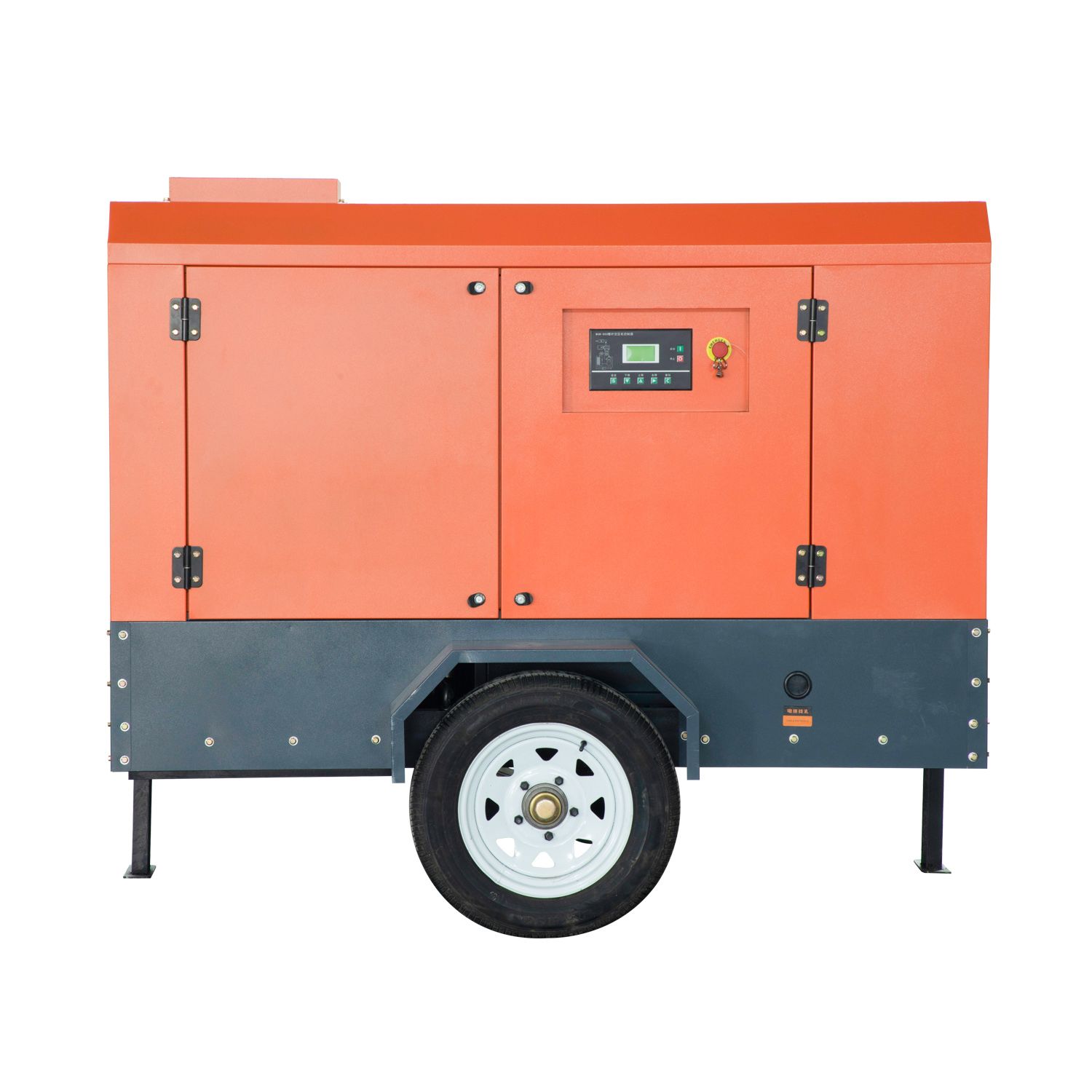
1. What Is a Diesel Portable Compressor?
A diesel portable compressor is a mobile machine that uses a diesel engine to drive an air compression system. It draws in atmospheric air, compresses it to a specified pressure, and delivers the compressed air through an outlet for powering pneumatic equipment and industrial tools.
Unlike stationary electric compressors, diesel-powered portable models have their own power source. This makes them particularly useful in remote locations, outdoor construction areas, and temporary work environments where electrical infrastructure is unavailable or unreliable.
Most industrial diesel portable compressors use rotary screw technology because it can provide a continuous supply of compressed air for demanding applications. Depending on the design, equipment may be mounted on a wheeled chassis, trailer, or compact skid for easier transportation
Essential Components
- Diesel engine: Provides mechanical power to operate the compressor.
- Air end: Compresses incoming air to the required pressure.
- Air intake filter: Removes dust and airborne particles before air enters the compression system.
- Cooling system: Helps maintain suitable operating temperatures.
- Oil separation system: Separates lubricant from compressed air in oil-injected screw designs.
- Control panel: Allows operators to monitor operating conditions and manage machine functions.
- Fuel system: Stores and supplies diesel fuel to the engine.
- Protective enclosure: Helps protect internal components and can reduce operating noise.
2. How Does a Diesel Portable Compressor Work?
Understanding the working process helps buyers evaluate equipment quality and identify which specifications are most important for their applications.
Step 1: Air Intake and Filtration
The compressor draws atmospheric air through an intake system. An air filter captures dust and other airborne contaminants before the air enters the compression chamber. Effective filtration is especially important on construction and mining sites, where airborne particles can accelerate internal wear.
Step 2: Mechanical Power Generation
The diesel engine converts fuel energy into mechanical power. This power is transferred to the compressor air end through a suitable drive arrangement. The engine and air end must be properly matched to deliver the required airflow without unnecessary fuel consumption or excessive mechanical stress.
Step 3: Air Compression
In a rotary screw compressor, two intermeshing rotors reduce the volume of trapped air as it moves through the compression chamber. This process increases air pressure and produces a continuous compressed-air supply.
Step 4: Cooling and Oil Separation
Compression generates heat. The cooling system helps control operating temperature, while an oil separator in oil-injected models removes most of the lubricant from the compressed air stream. Additional filtration or air treatment may be necessary when the application requires a specific air quality level.
Step 5: Compressed Air Delivery
Once the air reaches the required operating conditions, it is delivered through the outlet to connected pneumatic tools or equipment. Proper hose sizing, fittings, and pressure settings help ensure that the equipment receives sufficient airflow during operation.
3. Key Features That Determine Compressor Performance
Not every diesel portable compressor is designed for the same workload. Buyers should examine the following features rather than relying only on engine horsepower or external dimensions.
3.1 Air Delivery Capacity
Air delivery capacity, commonly expressed in CFM (cubic feet per minute) or m³/min, indicates how much compressed air a machine can supply under specified conditions.
If the compressor cannot provide enough airflow for connected tools, operators may experience reduced tool performance, longer working cycles, and interruptions. Always evaluate the actual air consumption of all tools that may operate simultaneously.
3.2 Working Pressure
Working pressure is usually expressed in PSI or bar. Different applications require different pressure levels. For example, certain pneumatic tools operate at relatively moderate pressures, while specialized drilling and industrial equipment may require higher pressure configurations.
Choose a compressor that meets the equipment manufacturer's specified pressure requirements. Higher pressure is not automatically better because unnecessary pressure can increase energy consumption and operating costs.
3.3 Engine Performance
The diesel engine should provide sufficient power for the air end under the intended operating conditions. Important considerations include rated power, engine speed, fuel consumption, cooling capacity, and suitability for the expected workload.
3.4 Cooling Efficiency
High ambient temperatures and continuous operation can place additional demands on the cooling system. An appropriately designed radiator, cooling fan, and airflow arrangement help prevent overheating and support stable performance.
3.5 Noise Control
Noise levels are important for urban construction, roadside maintenance, and work near occupied buildings. A sound-insulated enclosure can reduce noise exposure, although actual sound levels depend on machine design, operating conditions, and measurement distance.
3.6 Mobility and Structural Design
A portable compressor should be easy to transport, position, and secure. Buyers should evaluate overall dimensions, operating weight, lifting points, trailer compatibility, wheel configuration, and enclosure protection.
| Performance Feature | What to Check | Why It Matters |
|---|---|---|
| Air delivery | CFM or m³/min | Determines tool compatibility |
| Working pressure | PSI or bar | Ensures sufficient operating pressure |
| Engine power | Rated kW or HP | Supports the required compressor load |
| Fuel efficiency | Fuel consumption per hour | Influences operating expenses |
| Cooling system | Cooling capacity and design | Helps prevent overheating |
| Mobility | Weight and dimensions | Affects transportation and site positioning |
| Noise level | dB(A) under stated conditions | Supports workplace noise management |
4. Common Applications Across Industries
The independent power source and mobile design of a diesel portable compressor make it suitable for many industries. Its versatility allows contractors and industrial operators to supply compressed air wherever fixed installations are impractical.
Construction and Infrastructure
Construction contractors use diesel portable compressors to power pneumatic breakers, concrete preparation tools, sandblasting equipment, and other air-operated machinery. They are particularly useful for road construction, bridge maintenance, building projects, and remote infrastructure development.
Mining and Quarrying
Mining operations often require compressed air for drilling, cleaning, and pneumatic equipment. Diesel-powered machines can be transported to different working areas without depending on permanent electrical connections.
Road Maintenance and Public Works
Road repair teams need equipment that can move between locations and operate efficiently in outdoor environments. Portable compressors can support pavement breaking, surface preparation, and various maintenance activities.
Sandblasting and Surface Preparation
Compressed air is an important power source for abrasive blasting systems used to remove rust, old coatings, and surface contaminants. Buyers should carefully match compressor airflow and pressure to the blasting nozzle and operating requirements.
Industrial Maintenance
Industrial maintenance teams may use portable compressors for pneumatic tools, equipment cleaning, temporary air supply, and shutdown maintenance projects. They provide flexibility when permanent compressed-air systems are inaccessible or unavailable.
5. How to Choose the Right Compressor Capacity
Selecting the correct capacity is one of the most important purchasing decisions. An undersized compressor may struggle to maintain pressure, while an unnecessarily oversized unit can increase purchase and operating costs.
Calculate Total Air Demand
Start by identifying every pneumatic tool that may operate simultaneously. Check each tool's rated air consumption and required pressure in its technical documentation.
For example, if three tools consume 20 CFM, 25 CFM, and 15 CFM respectively, the combined nominal demand is:
The final compressor selection should also account for actual operating patterns, pressure losses, leakage, and an appropriate engineering reserve.
Consider Simultaneous Tool Operation
Not all tools necessarily operate at maximum demand at the same time. However, assuming that only one tool will be used when several workers are active can result in insufficient airflow. Evaluate realistic peak demand rather than relying on average consumption alone.
Account for Working Environment
High elevations, hot climates, dusty environments, and demanding duty cycles can affect compressor performance. Always check the manufacturer's rated performance conditions and any applicable correction factors.
Check the Required Pressure at the Tool
Pressure loss can occur through long hoses, undersized fittings, filters, and other restrictions. The compressor must provide sufficient pressure at its outlet to maintain the required pressure at the point of use.
| Selection Factor | Questions to Ask |
|---|---|
| Air demand | How much air do all active tools require? |
| Pressure | What is the minimum pressure required at the equipment? |
| Duty cycle | Will the machine operate continuously or intermittently? |
| Environment | Will it operate in hot, dusty, or high-altitude conditions? |
| Transportation | How frequently will the compressor be moved? |
| Future demand | Will additional pneumatic tools be connected later? |
6. Diesel Portable Compressor vs. Electric Compressor
Both diesel and electric compressors can provide reliable compressed air, but their suitability depends on the working environment, power availability, operating hours, and transportation requirements.
| Comparison Factor | Diesel Portable Compressor | Electric Compressor |
|---|---|---|
| Power source | Diesel engine | Electrical supply |
| Remote operation | Suitable where grid power is unavailable | Requires a suitable electrical source |
| Mobility | Often designed for mobile applications | Depends on the model and power arrangement |
| Emissions | Produces engine exhaust | No local engine exhaust |
| Noise | Includes engine operating noise | Generally avoids diesel engine noise |
| Energy cost | Depends on diesel price and consumption | Depends on electricity rates and efficiency |
| Typical use | Outdoor and remote job sites | Factories and locations with reliable power |
A diesel portable compressor is often the practical choice when mobility and independent operation are essential. An electric compressor may be more economical for fixed facilities with a stable electrical supply and long operating hours.
Buyers should also consider local exhaust emission regulations, indoor operating restrictions, noise requirements, and site-specific safety standards before making a decision.
7. Fuel Efficiency and Operating Cost Considerations
The initial purchase price is only one part of the total cost of owning a diesel portable compressor. Fuel, maintenance, consumables, transportation, and unplanned downtime can significantly influence long-term expenses.
Evaluate Fuel Consumption Under Real Conditions
Fuel consumption is commonly expressed in liters per hour (L/h). However, the actual figure depends on engine size, compressor load, operating pressure, ambient conditions, and machine condition.
When comparing models, request fuel consumption data at clearly stated operating conditions rather than relying on a single figure without context.
Choose a Properly Matched Machine
A compressor that is significantly larger than the application requires may consume more fuel than necessary. Conversely, an undersized machine may run continuously at high load and still fail to meet demand.
Consider Service and Replacement Costs
Filters, lubricants, separator elements, belts, and other maintenance components contribute to ownership expenses. Check the availability and pricing of genuine replacement parts before purchasing.
Estimate Total Cost of Ownership
A practical purchasing calculation should include:
- Initial equipment purchase price.
- Estimated annual fuel consumption.
- Scheduled maintenance and consumables.
- Transportation and equipment handling costs.
- Expected service life and depreciation.
- Potential costs associated with downtime and repairs.
8. Maintenance Practices for Longer Service Life
Regular maintenance helps protect the diesel engine, compressor air end, cooling system, and other critical components. A preventive maintenance program also makes equipment performance more predictable and reduces the likelihood of unexpected breakdowns.
Daily Inspection
- Check engine oil and coolant levels according to the manufacturer's instructions.
- Inspect fuel lines, hoses, and visible connections for leaks.
- Check the air intake system for excessive dust accumulation.
- Inspect the machine for unusual vibration, noise, or overheating.
- Confirm that warning indicators and safety devices function correctly.
Scheduled Filter Replacement
Air filters and fuel filters should be inspected and replaced according to the service schedule and operating environment. Dusty construction sites may require more frequent inspection than relatively clean environments.
Monitor Lubrication and Cooling
Use lubricants that meet the engine and compressor manufacturer's specifications. Maintain the cooling system, clean radiators and coolers when necessary, and investigate abnormal temperature increases rather than allowing the machine to continue operating under unsafe conditions.
Follow the Manufacturer's Service Schedule
Maintenance intervals vary by model and operating conditions. Keep records of operating hours, oil changes, filter replacements, inspections, and repairs. These records help maintenance teams identify recurring issues and plan servicing before critical components are affected.
Operate and Store Equipment Correctly
Allow the machine to warm up and shut down according to the manufacturer's operating instructions. Avoid overloading the compressor, keep ventilation openings unobstructed, and store equipment in a suitable environment when it is not in use.
9. Common Purchasing Mistakes to Avoid
Even experienced equipment buyers can overlook important details when comparing diesel portable compressors. The following mistakes may lead to unnecessary expenses or poor performance after delivery.
10. Why Equipment Quality and Supplier Support Matter
Choosing a diesel portable compressor is not simply a matter of comparing technical specifications. Buyers also need to evaluate manufacturing quality, component selection, production consistency, and the supplier's ability to provide support throughout the equipment's service life.
Manufacturing Quality and Component Selection
Reliable performance depends on the quality and compatibility of major components, including the diesel engine, compressor air end, cooling system, control components, and protective enclosure. Consistent assembly and appropriate quality inspection help reduce the risk of premature failures.
Transparent Technical Documentation
A professional supplier should provide clear product specifications, operating instructions, maintenance schedules, and relevant technical documentation. Buyers should be able to understand the machine's rated airflow, pressure, engine power, dimensions, weight, and operating requirements before confirming an order.
Warranty and After-Sales Support
Warranty terms, service response arrangements, spare parts availability, and troubleshooting support are important considerations for overseas buyers. Before placing an order, clarify the warranty coverage, delivery arrangements for replacement components, and available technical assistance.
Questions to Ask Before Placing an Order
- What are the rated airflow and working pressure of the proposed model?
- Which diesel engine and compressor air end are installed?
- What is the fuel consumption under specified operating conditions?
- What are the machine's operating weight and transportation dimensions?
- Can the equipment be configured for different working environments?
- Which maintenance parts are required, and are they readily available?
- What warranty and technical support are included?
- Can the supplier provide product documentation and inspection information?
For buyers sourcing industrial equipment internationally, obtaining detailed technical information before purchasing helps reduce communication gaps and makes it easier to compare different suppliers on an equal basis.
11. Frequently Asked Questions About Diesel Portable Compressors
Q1: What is a diesel portable compressor mainly used for?
A diesel portable compressor supplies compressed air for pneumatic tools and industrial equipment in locations where fixed electrical power may not be available. Common applications include construction, mining, road maintenance, drilling, sandblasting, and industrial servicing.
Q2: How do I determine the right size of a diesel portable compressor?
Calculate the combined air consumption of the tools that may operate simultaneously, identify their required working pressure, and account for pressure losses and a suitable operating reserve. Compare these requirements with the manufacturer's rated airflow and pressure data.
Q3: Is a diesel portable compressor suitable for continuous operation?
Some industrial models are designed for continuous or extended operation within their specified duty and operating limits. Suitability depends on the engine, compressor design, cooling capacity, maintenance condition, and manufacturer's recommendations.
Q4: How much fuel does a diesel portable compressor consume per hour?
Fuel consumption varies considerably by engine size, compressor capacity, operating pressure, and load. Request the manufacturer's fuel consumption data at specific load conditions and compare it with your expected operating schedule.
Q5: What is the difference between a diesel screw compressor and a diesel piston compressor?
A rotary screw compressor generally provides a continuous compressed-air supply and is commonly used for industrial applications requiring sustained airflow. A piston compressor uses reciprocating motion and is often suitable for intermittent or smaller-scale applications. The appropriate type depends on airflow demand, duty cycle, pressure requirements, and maintenance preferences.
Q6: Can a diesel portable compressor power multiple pneumatic tools?
Yes, provided that its rated airflow and pressure meet the combined requirements of the tools operating at the same time. Proper hose sizing and air distribution are also important to maintain sufficient pressure at each tool.
Q7: How often should a diesel portable compressor be serviced?
Service intervals depend on the specific model, engine, operating hours, and working environment. Follow the manufacturer's maintenance schedule for engine oil, compressor lubricant, air filters, fuel filters, separator elements, and other consumable components.
Q8: Can a diesel portable compressor be used indoors?
Diesel compressors produce exhaust gases and require adequate ventilation. They should not be operated indoors unless the installation and exhaust arrangements are specifically designed and approved for that environment. Always follow applicable occupational safety and emissions requirements.
Q9: What information should I provide when requesting a compressor quotation?
Provide the required airflow, working pressure, application, expected operating hours, ambient conditions, transportation requirements, and destination country. If you already know the pneumatic tools being used, include their air consumption specifications to help the supplier recommend a suitable configuration.
Q10: What should overseas buyers check before importing a diesel portable compressor?
Check the technical specifications, applicable engine emission requirements, local safety regulations, documentation, warranty conditions, spare parts availability, shipping dimensions, and import requirements. Confirm these details with the supplier and relevant local authorities before placing an order.
Find the Right Diesel Portable Compressor for Your Project
Reliable compressed air starts with the right equipment. Whether you need a diesel portable compressor for construction, mining, industrial maintenance, or other demanding applications, selecting the right airflow, working pressure, engine configuration, and cooling system is essential for long-term performance.
Geso Systems is committed to helping customers identify suitable industrial equipment solutions based on their application requirements. Share your project details, technical expectations, and purchasing needs with our team.
Looking for a dependable compressor solution? Contact us today to discuss your requirements, request detailed specifications, and get professional assistance with your equipment selection.
Contact Us