

Which battery types work best with a 30A PWM Solar Controller for solar setups
2026-05-12
Selecting the right battery for your solar power system is critical, especially when paired with a 30A PWM Solar Controller. At Kosun, we understand that the efficiency and lifespan of your off-grid or RV setup depend heavily on battery chemistry and charge parameters. A 30A PWM Solar Controller regulates voltage and current from solar panels to prevent overcharging and deep discharge. But which battery types truly excel with this technology?
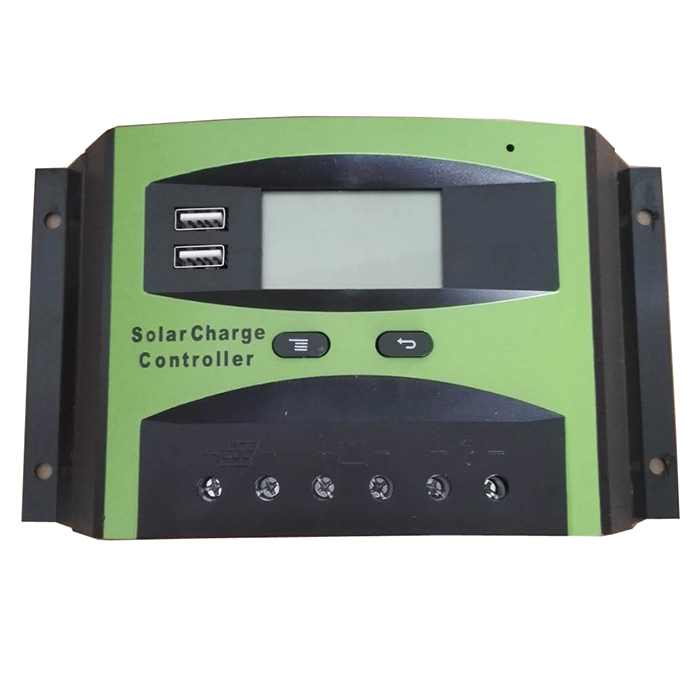
Best Battery Types for a 30A PWM Solar Controller
| Battery Type | Compatibility | Charge Voltage (12V system) | Lifespan | Advantages | Limitations |
|---|---|---|---|---|---|
| Flooded Lead-Acid (FLA) | Excellent | 14.4V - 14.8V (equalization possible) | 3-5 years | Low cost, tolerant to partial charging | Requires maintenance, venting needed |
| Sealed Lead-Acid (AGM / Gel) | Very Good | 14.2V - 14.4V (no equalization for Gel) | 4-7 years | Maintenance-free, spill-proof | Higher initial cost, sensitive to overvoltage |
| Lithium Iron Phosphate (LiFePO4) | Good with correct settings | 14.2V - 14.6V (BMS required) | 8-10+ years | Lightweight, high efficiency, long cycle life | Expensive, requires compatible charge profile |
| Calcium / Hybrid Batteries | Moderate | 14.8V - 15.0V | 3-6 years | Low self-discharge | Rarely used in solar; may need higher voltage |
Key Insight: A 30A PWM Solar Controller works best with lead-acid batteries (FLA, AGM, Gel) because the PWM charging algorithm (pulse width modulation) performs ideally with stable, lower-absorption voltage profiles. Lithium batteries can be used but require manual configuration and an external Battery Management System (BMS) to avoid controller damage.
Why PWM Controllers Favor Lead-Acid Chemistry
Kosun engineers note that PWM controllers deliver current in short pulses to gradually raise voltage. This method matches lead-acid’s natural absorption behavior. In contrast, MPPT controllers are better for lithium, but a properly set 30A PWM Solar Controller still works safely with LiFePO4 if you adjust absorption and float voltages manually.
30A PWM Solar Controller FAQ
Does a 30A PWM Solar Controller automatically detect battery type
No, most 30A PWM Solar Controller devices including Kosun models require manual battery type selection via dip switches or menu settings. Flooded lead-acid, sealed (AGM), gel, and user-defined modes are common. Lithium batteries must use the user-defined mode with custom voltage limits. Always verify your controller’s manual before connecting.
Can I use a 30A PWM Solar Controller with two different battery types at the same time
No, you should never connect different battery types (e.g., AGM and LiFePO4) simultaneously to one 30A PWM Solar Controller. The controller applies a single charging profile to the entire battery bank. Mixed chemistries lead to undercharging one battery and overcharging another, causing permanent damage or fire risk. Use identical batteries in parallel or separate controllers.
What happens if I connect a 30A PWM Solar Controller to a battery bank larger than 30A
The 30A PWM Solar Controller limits charge current to 30 amps maximum, regardless of battery bank capacity. A larger battery bank (e.g., 400Ah) will simply take longer to fully charge. This is safe because the battery determines how much current it absorbs. However, do not exceed the controller’s rated solar panel input voltage or wattage (typically ~450W for 12V, 900W for 24V). Exceeding these limits will destroy the controller.
Optimizing Your Solar Setup with Kosun
Using a 30A PWM Solar Controller from Kosun ensures reliable performance for small to medium solar installations. We recommend pairing it with deep-cycle AGM batteries for maintenance-free operation or flooded lead-acid batteries for budget-friendly systems. Always match your solar array wattage so that the maximum charge current stays at or below 30A. For 12V systems, the safe solar panel wattage is 400W to 450W.
Contact us today for expert advice on choosing the right 30A PWM Solar Controller and battery combination. Visit Kosun official website or email our support team – we are ready to help you build a safe and efficient solar power system.