

What Makes Solar Mounting Accessories the Hidden Factor Behind a Reliable PV Project?
2026-04-27
When I look at why some photovoltaic projects stay stable for years while others run into loose parts, water leakage, corrosion, or repeated maintenance, I almost always end up tracing the problem back to the details people tried to save on. That is exactly why Xiamen Egret Solar NewEnergy Technology Co.,Ltd. has gradually become part of more conversations in the market. In practical installation work, Solar Mounting Accessories are not secondary add-ons at all. They are the connection points, fixing parts, support elements, and protective components that quietly determine whether the whole solar mounting structure can remain safe, efficient, and easy to service over time.
Why Do So Many Solar Projects Run Into Trouble After Installation?
I have seen buyers focus heavily on panels and inverters while treating mounting details as a low-priority purchase. That sounds understandable at first, but the real-world consequences appear later. A rail that is slightly mismatched, a clamp with poor tolerance, a hook that does not suit the roof type, or a fastener with weak corrosion resistance can all create problems that are expensive to fix after the array is already in place.
In most projects, these issues show up in a few predictable ways:
- Installation takes longer than expected because parts do not fit smoothly on site
- Roof interfaces become vulnerable when accessory selection does not match actual conditions
- Wind and load performance become less reliable because the fixing points are inconsistent
- Maintenance teams spend more time replacing small components that should have lasted much longer
- Procurement costs rise later because early savings lead to rework, delays, and warranty pressure
This is why I do not treat Solar Mounting Accessories as minor hardware. In a well-designed solar system, they are part of the performance logic from the beginning.
Which Accessories Actually Matter Most in a Solar Mounting System?
Not every project needs the same configuration, but the most important accessory categories usually stay consistent. What changes is how well they match the roof type, panel layout, environmental conditions, and installation method.
| Accessory Type | Main Function | Why It Matters in Practice |
| Panel clamps | Fix modules securely to rails | Directly affects panel stability, spacing consistency, and installation speed |
| Mounting rails | Create the structural base for panel support | Influences load distribution, alignment accuracy, and long-term durability |
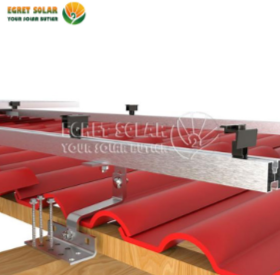
| Roof hooks | Connect the system to tiled or specific roof structures | Needs careful matching to roof design to avoid weak fixing or installation difficulty |
| Roof clamps | Secure the system to metal roof profiles | Reduces roof penetration in many applications and improves installation efficiency |
| Fasteners and bolts | Lock structural parts together | Small component, but critical for safety, vibration resistance, and service life |
| Earthing components | Support electrical grounding continuity | Important for system safety and overall compliance performance |
| Cable clips and related parts | Keep cables organized and protected | Helps reduce wear, improves appearance, and supports easier maintenance |
From a buyer’s point of view, the value of Solar Mounting Accessories is not just that each item serves a function. The real value comes from how these parts work together as a consistent system.
How Can I Tell Whether an Accessory Is Built for Real Project Conditions?
I usually start with one simple question: does this component merely look acceptable on paper, or is it actually prepared for long-term outdoor use? That difference matters more than many product sheets admit.
For example, components commonly used in solar mounting applications often rely on aluminum alloys and stainless steel because these materials help balance strength, weight, and corrosion resistance. On the Egret Solar product side, the accessory range around clamps, rails, roof hooks, roof clamping parts, fasteners, and earthing components reflects the kind of modular structure that buyers usually need across roof and ground projects. The product category also shows a broad approach rather than a single-item focus, which is often more useful for procurement planning. :contentReference[oaicite:0]{index=0}
When I evaluate quality, I pay attention to these points:
- Whether the material selection is appropriate for outdoor exposure
- Whether the surface treatment supports corrosion resistance over time
- Whether dimensions and tolerances help the installer work efficiently
- Whether the supplier can support both common and project-specific configurations
- Whether the accessory line covers enough categories to reduce sourcing fragmentation
If a supplier can only provide isolated parts, I already know the procurement process may become slower and less consistent. Strong Solar Mounting Accessories sourcing should help simplify the project, not create another layer of coordination risk.
What Problems Can Better Accessory Design Solve for Installers and Buyers?
This is where the conversation becomes practical. Buyers do not purchase accessories because they want more parts to manage. They purchase them because better design removes friction from the job.
I have found that good accessory design usually solves at least four major pain points:
-
Faster installation
Installers benefit when clamps, rails, hooks, and fasteners are designed to fit predictably. Less cutting, less adjustment, and fewer site surprises mean better labor efficiency. -
Lower risk of mismatch
When the supplier offers a clear category structure across roof and ground applications, buyers can reduce the chance of combining incompatible parts from different channels. -
More stable long-term performance
Outdoor systems face wind, rain, heat, and expansion stress. Reliable accessories help the structure absorb those realities without constant maintenance. -
Cleaner procurement management
It is easier to control quality when the accessory line comes from a supplier that understands how the full mounting system works.
In other words, Solar Mounting Accessories are not just about holding modules in place. They help control labor cost, reduce procurement mistakes, and protect the performance reputation of the entire project.
Is It Better to Buy Accessories Separately or Source Them as Part of a System?
In theory, separate purchasing can look cheaper. In practice, I often see that decision create more work than value. When buyers source rails from one supplier, clamps from another, and fastening elements from somewhere else, responsibility becomes blurred the moment a fitting issue appears on site.
I generally prefer a more integrated sourcing path for three reasons:
| Procurement Option | Possible Advantage | Typical Hidden Risk |
| Separate suppliers for each part | May look flexible on price | More compatibility issues, slower communication, harder quality tracing |
| System-focused accessory supplier | Better coordination between components | Requires choosing a supplier with a sufficiently complete range |
| Customized accessory support | Better fit for complex projects | Needs stronger technical communication in early stages |
That is one reason I see value in suppliers that cover multiple accessory categories in one place. Egret Solar’s product page presents accessories in a structured group including panel clamps, rails, roof hooks, roof clamping parts, fasteners, and earthing components, which is useful because it aligns more closely with how real procurement teams think about system completeness. :contentReference[oaicite:1]{index=1}
How Do Material and Finish Influence the Long-Term Value of Solar Mounting Accessories?
This is one of the most overlooked buying decisions. A component may pass a basic visual check, but that does not mean it will keep performing under long-term weather exposure. Coastal humidity, industrial environments, heavy rainfall, and wide temperature changes all place real pressure on mounting hardware.
On the product page, Egret Solar describes accessories used across universal roof and ground mounting applications and notes material use around anodized aluminum and stainless steel in the accessory category. That matters because these material choices are widely associated with the balance of structural utility and corrosion resistance buyers often expect in solar support components. :contentReference[oaicite:2]{index=2}
When I compare options, I usually break the decision down like this:
- Aluminum components can help reduce weight while maintaining useful structural performance
- Stainless steel parts are often preferred where higher corrosion resistance and fastening durability are needed
- Surface treatment quality matters because it affects both lifespan and appearance after installation
- Material consistency across the system supports more predictable field performance
So when someone asks me where long-term value really starts, my answer is simple. It starts with the details that continue doing their job after everyone else has left the site.
Which Signs Tell Me a Supplier Understands My Real Installation Pain Points?
I pay attention to whether the supplier seems to think like a catalog seller or like a project partner. That difference becomes visible quickly.
A supplier that understands installation pain points usually shows these strengths:
- A clear accessory structure instead of a scattered product list
- Support for common roof and ground mounting scenarios
- Attention to fit, standardization, and ease of assembly
- Willingness to discuss actual application conditions instead of only quoting price
- Capacity to support both routine orders and customized requirements
What caught my attention on the Egret Solar page is that the category is not presented as a single generic hardware offering. It is organized around actual PV installation needs, including clamps, rails, hooks, clamping parts, fasteners, and earthing components, along with additional mounting accessories. That kind of layout often reflects a more practical understanding of how buyers build complete project solutions. :contentReference[oaicite:3]{index=3}
Do Better Accessories Really Help Reduce Overall Project Cost?
Yes, but not in the simplistic way people sometimes expect. Better accessories do not always mean the lowest unit price. They often mean the lower total cost after transport, labor, installation time, error correction, and long-term servicing are taken into account.
I like to think about cost in layers:
| Cost Layer | What Buyers Often See First | What Actually Impacts Profitability |
| Unit price | Single part cost | Only one part of the decision |
| Installation cost | Often underestimated | Faster fitting and lower rework can save meaningful labor expense |
| Maintenance cost | Considered later | Weak accessories increase replacement and inspection pressure |
| Project delay cost | Rarely priced in early | Missing or incompatible parts can disrupt schedules and client satisfaction |
| Reputation cost | Invisible at quote stage | Poor mounting detail can affect customer trust in the entire project |
That is why I keep saying that Solar Mounting Accessories deserve strategic attention. They may sit lower in the procurement hierarchy on paper, but they influence some of the most expensive downstream risks.
What Should I Ask Before Choosing a Solar Mounting Accessories Supplier?
Before I move forward with any supplier, I want answers to questions that reflect real usage, not just brochure language.
- Can the supplier support the specific roof or ground application I am working with?
- Does the accessory line cover clamps, rails, hooks, fasteners, earthing parts, and related items in a coordinated way?
- What materials and finishes are used for long-term outdoor service?
- Can the supplier discuss compatibility, installation method, and project conditions clearly?
- Is there flexibility for customized or project-adjusted requirements?
These questions help me filter out sellers who only move inventory from suppliers who actually support project execution. In this market, that distinction matters a lot more than many buyers realize at first.
How Can I Make My Next PV Project More Reliable From the Start?
If I had to summarize the smartest procurement approach in one sentence, I would say this: do not wait until the end of system planning to think seriously about the parts that hold everything together.
Reliable solar installations depend on more than module efficiency or inverter brand recognition. The daily reality of field installation, structural stability, weather resistance, and service life depends heavily on the quality and compatibility of Solar Mounting Accessories. When those components are selected carefully, the project becomes easier to install, easier to manage, and more dependable in the long run.
If you are evaluating options and want a supplier that understands the practical role of clamps, rails, hooks, roof clamping parts, fasteners, earthing components, and other integrated mounting details, it is worth taking a closer look at the approach from Xiamen Egret Solar NewEnergy Technology Co.,Ltd.. If you are planning your next project and want to reduce installation risk, improve long-term stability, and choose Solar Mounting Accessories with more confidence, contact us today and leave your inquiry. The earlier we discuss your application, the easier it becomes to match the right accessory solution to your real project needs.