

When I evaluate a ground-mounted solar project, I rarely start with the panel brand or the inverter model. I usually look at the land first, because the ground condition, wind load, installation schedule, and long-term maintenance plan will decide whether the whole system performs smoothly or becomes expensive to manage later. That is why I paid close attention to the mounting solutions developed by Xiamen Egret Solar New Energy Technology Co., Ltd., especially its Solar Carbon Steel Ground Mounting System, which is designed for solar farms, commercial PV plants, and open-area renewable energy projects that need strength, cost control, and practical installation efficiency at the same time.
In my view, a solar mounting structure should not only “hold panels.” It should reduce engineering uncertainty, adapt to real site conditions, and help investors keep the project stable over many years. Carbon steel ground mounting has become a common choice in large PV projects because it offers a strong load-bearing structure, reliable surface protection, and a good balance between budget and durability.
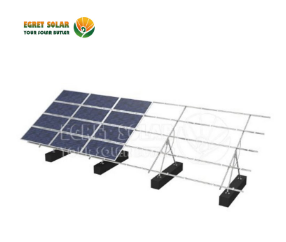
Why Do Project Owners Choose Carbon Steel for Ground Mounted Solar Structures?
I often see project owners hesitate between aluminum and steel mounting systems. Aluminum is lightweight and corrosion-resistant, but for large ground projects, carbon steel often gives a stronger sense of structural security. A well-designed Solar Carbon Steel Ground Mounting System can support large panel arrays, handle demanding outdoor conditions, and remain cost-effective when the project scale becomes bigger.
For solar farms, material strength is not a small detail. The mounting structure must face wind pressure, snow load, soil movement, installation tolerance, and years of outdoor exposure. Carbon steel gives engineers more confidence when they need a rigid framework for long rows of modules.
- I would choose carbon steel when the project requires strong load capacity and long-span structural support.
- I would consider it for utility-scale solar farms where material cost and installation efficiency directly affect ROI.
- I would recommend it for open land, agricultural PV projects, and commercial power stations with repeated module layouts.
- I would pay attention to surface treatment, because corrosion protection determines the real service life of steel structures.
How Does a Solar Carbon Steel Ground Mounting System Solve Real Site Challenges?
Ground-mounted PV projects are rarely installed on perfectly flat, perfectly compacted land. Some sites have soft soil, uneven terrain, drainage concerns, or limited access for heavy equipment. A practical Solar Carbon Steel Ground Mounting System should be flexible enough to match different foundations and layouts while keeping the structure easy to assemble.
I like solutions that can be adjusted according to panel size, tilt angle, row spacing, wind requirements, and project location. When a mounting system is too rigid in design, contractors may spend extra time correcting site deviation. That delay can become expensive, especially when labor cost, equipment rental, and grid connection deadlines are all involved.
| Project Pain Point | How Carbon Steel Ground Mounting Helps | Why It Matters |
|---|---|---|
| High wind load in open areas | Strong steel posts and beams provide stable structural support | Reduces movement risk and improves long-term safety |
| Large project scale | Modular design supports repeated installation patterns | Improves construction speed and cost control |
| Budget pressure | Carbon steel offers a practical balance between strength and material cost | Helps investors protect project profitability |
| Outdoor corrosion risk | Galvanized or coated steel improves resistance against weather exposure | Supports longer service life with lower maintenance concern |
| Different panel layouts | Custom design can match portrait or landscape installation | Makes the structure more suitable for real engineering plans |
Which Features Should I Check Before Buying a Solar Carbon Steel Ground Mounting System?
I would never judge a mounting system only by the product name. Before choosing a supplier, I would check whether the system can match the actual site drawings, panel specifications, foundation type, local wind speed, snow load, and installation method. A good supplier should understand these details instead of offering a one-size-fits-all answer.
For the Solar Carbon Steel Ground Mounting System, the most valuable features are usually related to structural strength, corrosion resistance, installation convenience, and customization. These features directly affect how smoothly the project moves from design to construction.
- Material quality should be suitable for outdoor PV structures and long-term load-bearing use.
- Surface treatment should protect the steel from rain, humidity, and environmental corrosion.
- Foundation compatibility should support different ground conditions, such as pile foundations or other engineered base solutions.
- Adjustable design should help installers handle practical site deviation without wasting too much time.
- Project customization should cover panel size, tilt angle, row spacing, module arrangement, and load requirements.
- Clear installation guidance should reduce mistakes during construction and support faster project delivery.
Is a Solar Carbon Steel Ground Mounting System Suitable for Large Solar Farms?
Yes, I believe it is especially suitable when the project requires strong support, repeated installation, and cost-effective scaling. In a large solar farm, small differences in structural design can create major differences in total cost. If the mounting system is easy to install, contractors save labor. If the system is strong and stable, owners reduce maintenance risk. If the supplier can provide project-based customization, engineers avoid unnecessary redesign work.
A Solar Carbon Steel Ground Mounting System also works well for commercial and industrial sites where land is available and the owner wants to build a reliable solar generation asset. It can be used in open fields, factory land, power station projects, agricultural areas, and other ground-based PV applications.
| Application Scenario | Why This System Fits | Buyer Concern It Addresses |
|---|---|---|
| Utility-scale solar farm | Strong steel structure supports large module arrays | Long-term stability and investment security |
| Commercial ground PV project | Custom layout can match available land and power demand | Better land utilization and predictable construction |
| Industrial energy project | Durable mounting frame supports continuous outdoor operation | Reduced maintenance pressure for facility owners |
| Agrivoltaic project | Structure can be designed around ground clearance and spacing needs | Balance between power generation and land function |
| Remote open-area installation | Modular parts help simplify transportation and assembly | Lower installation difficulty in less accessible locations |
How Can Better Mounting Design Reduce Hidden Solar Project Costs?
When people talk about solar project cost, they often focus on visible expenses such as panels, inverters, cables, and labor. I think the hidden cost of poor mounting design is just as important. If a mounting system is difficult to install, the project may need more workers. If components do not match site drawings, the team may lose time adjusting on site. If corrosion protection is weak, maintenance costs may rise after several years.
This is where a well-engineered Solar Carbon Steel Ground Mounting System becomes more valuable than a simple low-price structure. It can help reduce mistakes, improve installation flow, and create a more predictable construction process.
- Fewer installation complications can help shorten the project timeline.
- Stronger structural design can reduce future repair and reinforcement needs.
- Better corrosion protection can lower long-term maintenance concerns.
- Project-based customization can reduce mismatch between design drawings and actual site conditions.
- Stable module support can help protect panel alignment and power generation efficiency.
What Information Should I Prepare Before Requesting a Quotation?
If I were sending an inquiry for a solar ground mounting system, I would prepare the project details before asking for a price. A serious supplier cannot give an accurate quotation from only one keyword. The more complete the project information is, the easier it becomes to receive a practical proposal.
For a Solar Carbon Steel Ground Mounting System, I would usually prepare the following information:
- Solar panel size and wattage
- Total panel quantity and planned array layout
- Installation direction, such as portrait or landscape
- Project location and local climate conditions
- Maximum wind speed and snow load requirements
- Soil type or foundation preference
- Required tilt angle and ground clearance
- Expected project timeline and delivery plan
These details help the supplier calculate material usage, check structural feasibility, and recommend a more suitable mounting solution. It also prevents the buyer from receiving a vague quote that looks attractive at first but becomes complicated later.
Why Do I See Egret Solar as a Practical Supplier for Ground Mounting Projects?
I pay attention to suppliers that understand both product manufacturing and project application. For ground-mounted PV structures, the supplier should not only provide steel components. It should also support engineering communication, layout adjustment, installation guidance, and customized project matching.
Egret Solar focuses on solar mounting systems across roof mounting, ground mounting, carport mounting, agricultural mounting, balcony solar support, and related accessories. That product range matters because many buyers do not only need one bracket. They may need a complete mounting solution for different project areas, especially when a company is developing several PV sites at the same time.
What I value most is the practical positioning of the Solar Carbon Steel Ground Mounting System. It is not presented as a decorative product or a vague green-energy concept. It is a structural solution for real solar projects that need durability, adaptability, and cost efficiency.
Is This System Worth Considering for My Next Solar Project?
If your project requires a strong, economical, and customizable ground-mounted PV structure, I would place carbon steel mounting high on the comparison list. It is especially worth considering when the site is large, the structure must carry long rows of modules, and the buyer wants a practical balance between performance and budget.
A dependable Solar Carbon Steel Ground Mounting System can help solve several common buyer concerns at once: whether the structure is strong enough, whether the installation can stay efficient, whether the design can match the site, and whether the long-term maintenance risk is manageable. Those are the questions that matter when a solar project moves from planning to real construction.
If you are planning a solar farm, commercial PV plant, industrial ground-mounted project, or agrivoltaic installation, I recommend sharing your project drawings, panel specifications, wind load, snow load, and site requirements with the Egret Solar team. For a tailored solution and a detailed quotation, please leave your inquiry or contact us today to discuss how this mounting system can support your next solar project.