

What Makes a Smart Modular Nitrogen Production Unit a Better Choice for Modern Industry?
2026-10-26
Nitrogen plays an essential role in modern manufacturing, helping protect products from oxidation, improve process stability, and maintain consistent production quality. However, relying on bottled nitrogen or bulk liquid nitrogen can create challenges involving transportation, storage, supply scheduling, and long-term operating costs. As industrial facilities pursue greater efficiency and smarter production management, the Smart Modular Nitrogen Production Unit is becoming a practical solution for on-site nitrogen generation.
Designed around modular architecture and intelligent control, this equipment enables manufacturers to produce nitrogen according to their actual process requirements. GSE Tech (Suzhou) Co., Ltd. provides nitrogen generation solutions designed to support different industrial applications, offering businesses a more flexible approach to gas supply management. By combining modular configuration with automated operation, a smart nitrogen production system can help companies improve production flexibility while preparing for future capacity expansion.
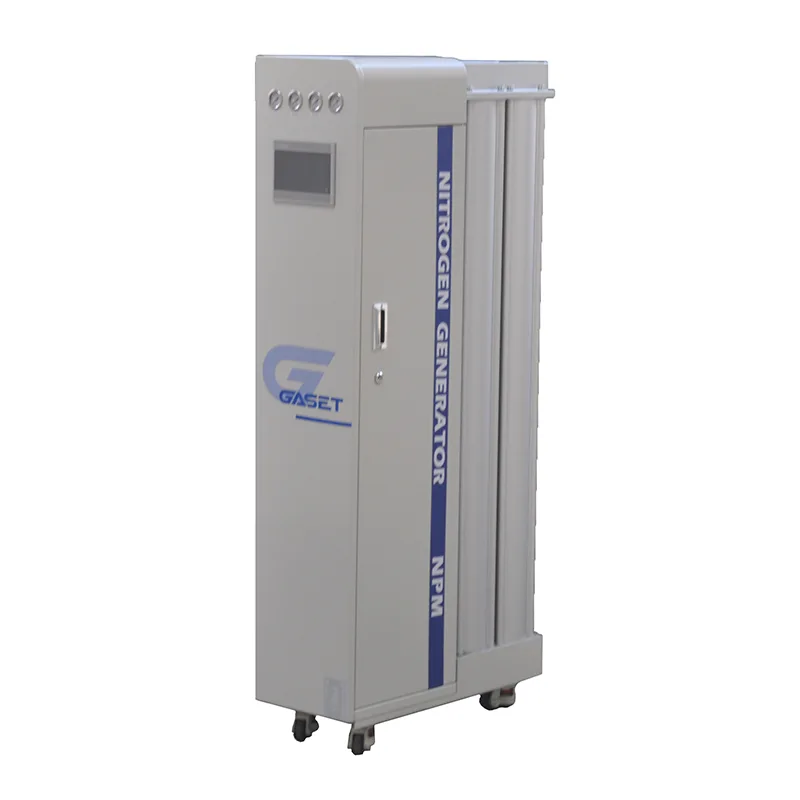
How Does a Smart Modular Nitrogen Production Unit Work?
A Smart Modular Nitrogen Production Unit generates nitrogen from compressed air through gas separation technology. Depending on the system configuration, this process commonly uses Pressure Swing Adsorption (PSA) or membrane separation.
In a PSA system, compressed air passes through carbon molecular sieve material that preferentially adsorbs oxygen under pressure, allowing nitrogen to pass through. Multiple adsorption modules can operate in coordinated cycles to provide a continuous nitrogen supply. A membrane system separates gases according to their different permeation rates through specialized hollow fibers.
The smart modular design integrates several essential functions into a coordinated system, including air treatment, nitrogen separation, gas monitoring, and automated control.
Key operating stages generally include:
-
Compressed air preparation: Filters and drying equipment help remove oil, moisture, and particles that could affect separation performance.
-
Nitrogen generation: The separation modules extract nitrogen from the prepared air.
-
Purity and pressure monitoring: Sensors monitor operating parameters to help maintain the required gas quality.
-
Intelligent system control: The control unit manages operating cycles, displays system status, and provides alarms when abnormal conditions occur.
-
Nitrogen delivery: The generated nitrogen is supplied to connected production equipment or stored temporarily in a buffer tank when required.
The exact configuration depends on the selected technology, nitrogen purity, flow rate, inlet air quality, and operating pressure.
Why Is Modular Design Important for Industrial Nitrogen Supply?
Traditional nitrogen generation systems may be designed around a fixed production capacity. When demand increases, manufacturers can face additional equipment investment, installation work, and production interruptions during system upgrades.
A Smart Modular Nitrogen Production Unit addresses these challenges through a flexible architecture that allows capacity to be configured around current requirements and expanded as demand grows.
Flexible Capacity Expansion
Different production lines rarely consume nitrogen at exactly the same rate. Modular equipment allows manufacturers to select an appropriate initial configuration and add compatible modules when production requirements increase.
This approach can reduce the need to replace an entire nitrogen generation system simply because the factory has expanded. It also helps businesses plan equipment investment in stages.
More Efficient Space Utilization
Industrial floor space is valuable, particularly in electronics factories, precision manufacturing facilities, and compact production workshops. Integrating key components into a modular arrangement can help reduce installation footprint compared with some conventional configurations.
A compact layout may also simplify equipment positioning and connections to existing production lines, subject to site conditions and maintenance clearances.
Intelligent Monitoring and Automated Operation
Modern nitrogen generation equipment can incorporate programmable controllers, human-machine interfaces, pressure sensors, oxygen analyzers, and alarm functions.
These features help operators monitor important parameters, identify abnormal operating conditions, and manage nitrogen production more efficiently. Depending on the system design, automated controls can also coordinate module operation with changing demand.
Improved Supply Flexibility
On-site nitrogen generation reduces dependence on scheduled gas deliveries. When properly designed and maintained, the system can provide nitrogen when production requires it, helping businesses manage supply continuity and reduce exposure to delivery delays.
What Benefits Can Businesses Expect from Smart Nitrogen Generation?
The value of a Smart Modular Nitrogen Production Unit extends beyond the gas production process. Its operational benefits can influence purchasing decisions, production planning, and long-term equipment management.
| Key Feature | Practical Benefit | Business Value |
|---|---|---|
| Modular architecture | Allows compatible capacity expansion | Supports future production growth |
| On-site generation | Reduces dependence on delivered nitrogen | Improves supply planning |
| Intelligent controls | Monitors operating conditions | Helps simplify daily operation |
| Compact configuration | Supports space-conscious installation | Improves equipment layout flexibility |
| Adjustable output | Matches system configuration to process demand | Helps manage operating costs |
| Integrated monitoring | Supports early identification of abnormalities | Helps reduce avoidable downtime |
Actual results depend on nitrogen consumption, purity requirements, compressed air efficiency, electricity prices, maintenance practices, and the cost of alternative nitrogen supplies. A detailed assessment of these factors is recommended before equipment selection.
Which Industries Use Smart Modular Nitrogen Production Units?
Nitrogen is valued for its relatively inert properties and its ability to displace oxygen in many industrial processes. The required purity and flow rate vary significantly across applications, making a modular system attractive to manufacturers with different production needs.
Electronics Manufacturing
Electronics production processes, including reflow soldering and wave soldering, can use nitrogen to create a controlled atmosphere that helps reduce oxidation. A properly specified nitrogen generation system supports consistent gas delivery to production equipment.
For electronics manufacturers, stable nitrogen quality and reliable pressure are important considerations when selecting equipment.
Food Packaging and Processing
Modified atmosphere packaging uses selected gas mixtures to help control the environment surrounding food products. Nitrogen can help displace oxygen in suitable applications, supporting product quality and shelf-life objectives when combined with appropriate packaging materials and processes.
The required gas purity and hygiene provisions should be determined according to the product, packaging process, and applicable food safety requirements.
Laser Cutting and Metal Processing
Nitrogen is widely used as an assist gas in certain laser-cutting applications. Depending on the material, thickness, cutting parameters, and desired edge quality, nitrogen can help reduce oxidation on cut surfaces.
Manufacturers should evaluate the required gas pressure and flow carefully because high-demand laser cutting applications may require substantial nitrogen production capacity.
Chemical and Pharmaceutical Manufacturing
Nitrogen can provide an inert atmosphere for selected chemical processes, storage tanks, and material handling operations. In appropriate applications, it helps reduce oxygen exposure and supports process protection.
These applications may require specific purity levels, monitoring arrangements, and safety controls based on the substances involved and the applicable operating standards.
Smart Modular Nitrogen Production Unit vs. Traditional Nitrogen Supply
Choosing the right nitrogen supply method requires balancing investment, operating expenses, reliability, and production requirements.
| Comparison Factor | On-Site Modular Generation | Bottled or Bulk Delivered Nitrogen |
|---|---|---|
| Supply method | Produced at the facility | Delivered by an external supplier |
| Capacity management | Can be configured and potentially expanded | Depends on delivery arrangements and storage capacity |
| Storage requirements | May reduce the need for delivered-gas storage | Requires suitable cylinder or tank storage |
| Cost structure | Equipment investment, electricity, maintenance, and compressed air | Gas purchase, delivery, rental, and handling costs |
| Operational responsibility | Requires equipment maintenance and monitoring | Requires delivery coordination and safe storage management |
| Best-fit scenario | Regular demand and a suitable on-site installation | Lower or intermittent demand, or situations where on-site generation is impractical |
Neither option is universally superior. Delivered nitrogen may be suitable for small or occasional consumption, while on-site generation can be attractive for facilities with consistent demand and favorable operating economics. A comparison of total ownership costs helps determine the most appropriate solution.
How to Select the Right Smart Modular Nitrogen Production Unit
Selecting equipment based only on its nominal capacity can lead to inefficient operation or insufficient nitrogen supply. Buyers should evaluate the complete application before making a purchasing decision.
Consider these five factors:
-
Nitrogen purity: Define the acceptable oxygen content and required nitrogen grade for the application.
-
Flow rate: Calculate average and peak consumption, including simultaneous demand from connected equipment.
-
Operating pressure: Confirm the pressure requirements at the point of use and account for pressure losses throughout the distribution network.
-
Installation conditions: Assess available floor space, compressed air infrastructure, ventilation, ambient temperature, and maintenance access.
-
Automation and expansion: Determine whether remote monitoring, data communication, automatic standby, or future capacity upgrades are required.
It is also important to assess the quality of the compressed air supply, the efficiency of the nitrogen separation process, spare parts availability, and the supplier's technical support capabilities.
Why Consider GSE Tech (Suzhou) Co., Ltd.?
For industrial buyers, selecting nitrogen generation equipment is not simply about purchasing a machine. It involves matching technical specifications to production requirements and ensuring that the system can operate reliably within the existing facility.
GSE Tech (Suzhou) Co., Ltd. offers Smart Modular Nitrogen Production Unit solutions intended for industrial on-site nitrogen generation. The modular concept supports flexible equipment configuration, while intelligent control functions can help operators monitor system performance and manage nitrogen production.
When evaluating a solution from GSE Tech, buyers should discuss their required nitrogen purity, flow rate, working pressure, operating schedule, installation conditions, and expansion plans. These details help establish an appropriate technical configuration and provide a more meaningful basis for comparing equipment and operating costs.
A well-matched nitrogen production system can help manufacturers improve supply flexibility, streamline gas management, and support long-term production planning.
Conclusion
A Smart Modular Nitrogen Production Unit offers modern manufacturers a flexible approach to nitrogen supply by combining on-site generation, modular configuration, and intelligent monitoring. Its potential advantages include easier capacity expansion, reduced reliance on external deliveries, more organized equipment layouts, and better alignment between nitrogen production and actual demand.
The best solution depends on the specific industrial process, gas quality requirements, consumption patterns, and total operating costs. With careful system selection and proper maintenance, modular nitrogen generation can become a valuable part of an efficient manufacturing infrastructure.
If you are looking for a nitrogen generation solution tailored to your industrial requirements, contact us at GSE Tech (Suzhou) Co., Ltd. to discuss your application, explore suitable Smart Modular Nitrogen Production Unit configurations, and identify an approach that supports your production goals.