

Is a Solid Oxide Fuel Cell the Practical Path to Cleaner Power Without Compromising Reliability?
2025-12-16
I used to think “clean energy” always meant trade-offs—either the system was too fragile, too expensive to run, or too hard to integrate with real-world sites. That changed as I spent more time evaluating high-efficiency electrochemical power solutions and seeing how a Solid Oxide Fuel Cell can fit into demanding environments. If you’re exploring options and you’ve come across VET, you’re probably asking the same thing I did at the beginning—can this technology actually solve my pain points without adding new ones?
In this article, I’ll walk through what I look for when assessing a Solid Oxide Fuel Cell system, where it performs best, and how it can help buyers who are tired of unstable power, high fuel costs, strict emissions targets, and complicated maintenance schedules.
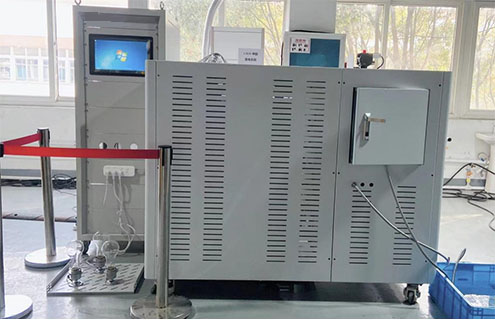
Why are so many energy buyers frustrated with “efficient” power systems that still feel inefficient?
Most projects don’t fail because the concept is wrong—they fail because day-to-day operations don’t match the brochure. When I talk to facility managers, OEM engineers, and project purchasers, the complaints are consistent:
- Fuel bills keep rising and ROI becomes unpredictable.
- Local emissions requirements are getting stricter year by year.
- Grid interruptions create costly downtime and safety risks.
- Some “clean” systems are hard to maintain or require specialized labor.
- Heat is wasted instead of recovered, even though many sites need it.
This is where a Solid Oxide Fuel Cell tends to stand out in my evaluations—especially when the project needs both efficiency and stable output, not just a green label.
What makes a Solid Oxide Fuel Cell different from the options buyers usually compare it with?
When I compare power technologies, I focus on how they behave in real operating windows—continuous run, partial loads, hot/cold conditions, and maintenance constraints. A Solid Oxide Fuel Cell is fundamentally different because it generates electricity through electrochemical conversion rather than combustion. In practice, that can translate into:
- High electrical efficiency that helps reduce fuel consumption for the same usable power.
- Low local pollutant emissions compared with many combustion-based generators.
- Valuable heat output that can be captured for CHP use cases, improving total energy utilization.
- Consistent power quality that’s attractive for sensitive loads and continuity-focused sites.
If you’re considering VET solutions, the key is not to treat a Solid Oxide Fuel Cell like a drop-in replacement for a traditional generator. It’s better to think of it as a system you design around efficiency, uptime, and total energy use.
Which applications actually benefit most from a Solid Oxide Fuel Cell instead of just “liking the idea”?
I’m blunt about this: not every site needs this technology. But when the project fits, it can be one of the cleanest ways to generate stable on-site power while improving energy economics. Here are the scenarios where I see a Solid Oxide Fuel Cell make the most sense:
- Commercial and industrial facilities that need steady baseload power and can use recovered heat.
- Distributed energy projects where grid resiliency and predictable output matter.
- Energy cost control for sites that want to reduce dependence on volatile electricity pricing.
- Low-emission zones where permitting and compliance are major project constraints.
- OEM integration where system efficiency and footprint planning are part of the product roadmap.
In many of these cases, the value isn’t just “clean power.” It’s how a Solid Oxide Fuel Cell supports a broader operational goal—lower fuel spend, better reliability, easier compliance, and smarter use of heat.
How do I evaluate product advantages without getting trapped in vague claims?
When I evaluate a Solid Oxide Fuel Cell product, I avoid generic promises and ask practical questions that reveal whether the solution fits my site conditions:
- Can the system match my required duty cycle and expected run hours?
- What does routine servicing look like and how often is it needed?
- How is heat managed and can I realistically recover it for my process?
- What integration support exists for controls, monitoring, and safety design?
- How does the supplier handle commissioning and long-term support?
A strong supplier earns my trust by answering these questions clearly, in operational language, not just technical keywords. This is one reason I recommend buyers look closely at how VET frames system use cases and implementation—because execution is where projects win or lose.
Can you compare a Solid Oxide Fuel Cell with common alternatives in a buyer-friendly way?
| Buyer Concern | Solid Oxide Fuel Cell | Traditional Combustion Generator | Battery-Only Backup |
|---|---|---|---|
| Fuel-to-power efficiency | Typically strong for continuous operation and optimized energy use | Varies widely and can lose efficiency depending on load and maintenance | No fuel conversion, but depends on charging cost and availability |
| Local emissions and permitting | Often favorable for projects aiming to reduce local pollutants | May face tighter restrictions in regulated areas | On-site emissions are minimal, but upstream power source matters |
| Operational continuity | Designed for stable output when properly integrated and maintained | Common solution, but performance depends on fuel supply and upkeep | Limited by storage capacity and recharge strategy |
| Heat recovery potential | Well suited for CHP strategies where heat can be utilized | Possible, but often less optimized for efficient heat utilization | Not applicable |
| Best-fit use case | Baseload power, efficiency-driven projects, CHP-oriented sites | Short-term backup, flexible deployments, quick replacement | Short duration backup, silent operation, fast response |
This comparison is exactly why I keep coming back to Solid Oxide Fuel Cell discussions for the right projects—it’s not “better at everything,” but it can be better at the things that actually decide total cost and reliability over time.
What implementation mistakes should I avoid when planning a Solid Oxide Fuel Cell project?
I’ve seen good technology underperform because the planning was sloppy. If you want a Solid Oxide Fuel Cell installation to deliver the results you’re expecting, these are the pitfalls I recommend avoiding:
- Ignoring heat utilization even when the site can benefit from CHP.
- Underestimating integration needs for monitoring, controls, and safety architecture.
- Choosing specs without load profiling and then blaming the equipment for mismatch.
- Planning support too late instead of confirming commissioning and service pathways early.
If you’re working with VET or comparing suppliers, I suggest you treat implementation as part of the product—not an afterthought. That’s how you protect performance, uptime, and ROI.
What should I do next if I want pricing, specs, or a quick feasibility check?
If you’re evaluating a Solid Oxide Fuel Cell for a specific project, I’d start with your load profile, site constraints, and whether heat recovery is realistic. From there, it becomes much easier to shortlist system configurations and confirm what’s achievable.
If you want to move faster, contact us with your application details and target goals. I recommend reaching out directly to VET for a feasibility discussion, configuration guidance, and a quotation pathway that matches your actual operating scenario rather than a generic template.