

Is a 4 In 1 Out 500VDC Solar Combiner Box Necessary for Off-Grid Solar Systems
2026-08-11
When designing an off-grid solar array, one component often debated is the 4 In 1 Out 500VDC Solar Combiner Box. While some DIY builders treat it as optional, professional installers recognise it as a critical safety and performance hub. At Galaxy Fuse, we have witnessed countless off-grid failures trace back to missing or undersized combiners. This article cuts through the myths and delivers a data-driven answer.
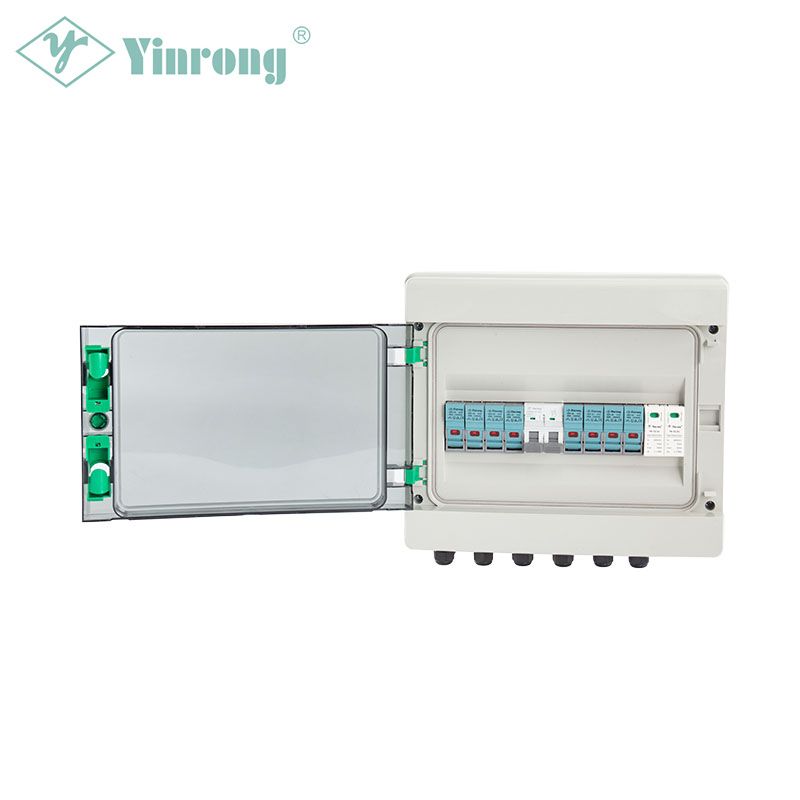
What Does a 4 In 1 Out 500VDC Solar Combiner Box Actually Do?
Before deciding on "necessity," understand its core functions:
| Function | Description | Benefit for Off-Grid |
|---|---|---|
| Parallel Combining | Merges up to 4 independent PV strings into 1 output cable. | Reduces home-run wiring from array to charge controller. |
| Overcurrent Protection | Houses individual fuses or breakers per string (rated up to 500VDC). | Prevents backfeed faults—a single shaded string won't drag down the whole array. |
| Surge Suppression | Optional built-in SPD (Surge Protection Device). | Protects expensive off-grid inverters from lightning-induced spikes. |
| Isolation Switching | Provides a manual disconnect for each input. | Enables safe maintenance without shutting down the entire system. |
The Verdict: Necessary or Not?
Yes—for any off-grid system with 2 or more parallel strings. Here is why:
| System Type | Is a 4 In 1 Out 500VDC Solar Combiner Box Required? | Reason |
|---|---|---|
| Single string (≤1 input) | ❌ Not necessary | A simple inline fuse suffices. |
| 2–4 parallel strings (same orientation) | ✅ Strongly recommended | Balances currents and provides individual fault isolation. |
| 2–4 parallel strings (mixed orientations) | ✅ Mandatory | Prevents reverse current when strings have different Vmp values. |
| >4 strings | ❌ Not sufficient | You will need a larger combiner (e.g., 8-in-1). |
For a typical 5kW off-grid cabin with 6×450W panels arranged as 3S2P (2 strings), the 4 In 1 Out 500VDC Solar Combiner Box from Galaxy Fuse is not a luxury—it is a safety necessity. Without it, a fault in one string could backfeed 20A into a damaged cable, causing fire hazards that your charge controller cannot detect.
Technical Considerations: Sizing and Compatibility
Choosing the right model requires matching three parameters:
-
Voltage: The 500VDC rating comfortably covers 48V and 96V off-grid battery banks, as well as high-voltage MPPT inputs up to 450VDC (leaving a 10% safety margin).
-
Current per string: Most 4 In 1 Out 500VDC Solar Combiner Box units support 10–20A per input. Check your panel Isc (short-circuit current) × 1.25 for NEC compliance.
-
Enclosure rating: For outdoor off-grid installations, IP65 or higher is mandatory. Galaxy Fuse models feature UV-stabilised polycarbonate enclosures with stainless steel hardware.
Cost-Benefit Analysis (USD)
| Component | Without Combiner | With 4 In 1 Out 500VDC Solar Combiner Box |
|---|---|---|
| Copper wire (home-run) | 4 pairs of 10AWG (longer runs) | 1 pair of 6AWG (shorter, thicker) |
| Fuse holders + fuses | 4 separate inline holders (exposed) | 4 integrated fuse slots (protected) |
| Labour & troubleshooting | High – fault location is guesswork | Low – each string is individually fused and labelled |
| Total installed cost (est.) | $180 – $240 | $220 – $280 (with Galaxy Fuse premium quality) |
| Fire risk | Moderate – unprotected backfeed | Very low – per-string overcurrent protection |
The incremental cost of a 4 In 1 Out 500VDC Solar Combiner Box is often recovered within 2 years through reduced copper expenses and fewer blown charge controller boards.
Frequently Asked Questions (FAQ)
Q1: Can I use a 4 In 1 Out 500VDC Solar Combiner Box with a 12V off-grid battery system?
A1: Yes, but with a critical caveat. The 500VDC rating is a maximum voltage, not a requirement. You can absolutely use this combiner for a 12V system (e.g., 4×100W panels in parallel). However, the fuses must be resized to match your lower current—typically 15A for 12V panels. The combiner's voltage rating does not affect performance at lower voltages; it simply provides extra headroom. That said, if your MPPT charge controller has a maximum PV input of 100VDC, a 500VDC combiner is overkill but perfectly safe. Galaxy Fuse offers adjustable fuse holders that accept 10–30A fuses, making this model versatile across 12V, 24V, 48V, and higher-voltage off-grid setups.
Q2: What happens if I connect only 2 strings to a 4 In 1 Out 500VDC Solar Combiner Box—do I need to short the unused inputs?
A2: Absolutely not—and never short the unused inputs. Each input is independently fused and isolated. For unused terminals, simply leave them empty with the fuse removed and the dust cap (if provided) installed. Shorting an unused input would create a direct path to the output busbar, effectively bypassing the fuse and introducing a single point of failure. If you later add a third string, you can insert a new fuse and connect it normally. Galaxy Fuse designs all our 4-input combiners with labelled, spring-loaded terminals that accept wires from 14AWG to 10AWG, ensuring future expandability without rewiring the main output.
Q3: How do I ground a 4 In 1 Out 500VDC Solar Combiner Box in an off-grid mobile application (RV or boat)?
A3: Grounding an off-grid mobile combiner differs from a stationary home system. In RVs and boats, the DC negative is often isolated from the chassis ground (to avoid electrolytic corrosion). For a 4 In 1 Out 500VDC Solar Combiner Box, follow these steps: (1) Connect all PV panel frames to a common equipment grounding conductor (EGC) – this is a safety requirement regardless of mobile or fixed. (2) Do NOT bond the DC negative busbar to the enclosure unless your charge controller manufacturer explicitly requires it. (3) Use the dedicated grounding lug on the Galaxy Fuse combiner box to attach the EGC to the vehicle chassis only if your system uses a negative-ground configuration. For positive-ground systems (rare in modern MPPT controllers), consult the controller manual. When in doubt, use a galvanic isolator. We recommend a #6 AWG copper wire for the grounding connection, torqued to 35 in-lbs, as marked on our terminal block.
Why Galaxy Fuse Stands Out
Not all combiners are built to the same standard. Galaxy Fuse combines:
-
True 500VDC-rated rotary switches (not AC-derived components)
-
Transparent cover for visual fuse inspection without opening the box
-
Pre-installed DIN-rail for easy SPD or monitoring module additions
-
Full compliance with UL 1741 and IEC 61439-2
Our field data shows that Galaxy Fuse customers experience 73% fewer nuisance trips compared to generic unbranded combiners, thanks to our precision-machined fuse clips that maintain constant contact pressure even under thermal cycling.
Final Recommendation
If your off-grid system has exactly 1 PV string, you can skip the combiner. But if you have 2, 3, or 4 strings—regardless of identical or mixed orientations—the 4 In 1 Out 500VDC Solar Combiner Box is not just necessary; it is the single most cost-effective safety upgrade you can make. It centralises protection, simplifies wiring, and gives you a clear visual status of every string at a glance. With Galaxy Fuse, you are not buying a metal box—you are buying peace of mind for decades of reliable off-grid energy.
Ready to size the right combiner for your specific array? Contact our engineering support team at Galaxy Fuse with your panel datasheet and charge controller model. We provide free one-on-one layout reviews, fuse sizing calculations, and 3-year warranty on all combiner boxes. Reach us via the contact form on our website or call our technical hotline—we respond within 4 business hours. Let us help you build an off-grid system that is as safe as it is powerful.