

How Does the Design of Multiple Row Type Solar Farmland Mounts Influence Light Distribution for Crops
2026-03-11
The integration of solar energy with agriculture requires careful consideration of how mounting structures affect crop growth. The design of Multiple Row Type Solar Farmland Mount systems directly determines the amount and pattern of sunlight reaching crops beneath and between panel rows. At Xiamen Honor Energy, we specialize in engineering agrivoltaic solutions that balance energy generation with optimal light distribution for various crop types.
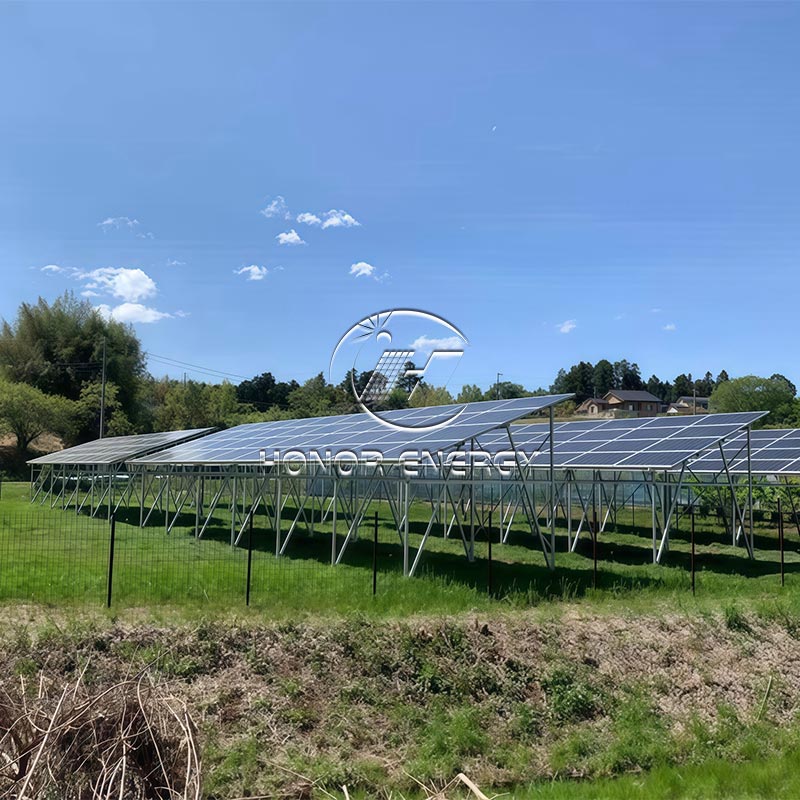
Key Design Factors Affecting Light Distribution
Several structural parameters influence how Multiple Row Type Solar Farmland Mount systems shape light patterns across agricultural land:
| Design Parameter | Impact on Light Distribution | Agricultural Consideration |
|---|---|---|
| Row Spacing | Determines duration of direct sunlight between panel rows | Wider spacing benefits tall crops requiring full sun |
| Mounting Height | Affects shaded area size and light diffusion underneath | Greater height allows light penetration under panels |
| Panel Tilt Angle | Controls reflection and direct light transmission | Seasonal tilt adjustments optimize for crop cycles |
| East-West vs. North-South Orientation | Creates different daily light patterns | Cool-season crops may prefer morning light exposure |
Light Distribution Patterns and Crop Suitability
Multiple Row Type Solar Farmland Mount designs create distinct light zones that can be matched to specific crop requirements:
-
Direct Light Zones: Areas between rows receiving full sunlight ideal for high-light crops like corn or tomatoes
-
Partial Shade Zones: Transition areas under panel edges suitable for leafy greens like lettuce or spinach
-
Deep Shade Zones: Areas directly beneath panels appropriate for shade-tolerant crops like mushrooms or certain herbs
Optimizing Design for Dual Land Use
Xiamen Honor Energy engineers Multiple Row Type Solar Farmland Mount systems with adjustable parameters to accommodate different farming needs. Research indicates that properly designed multi-row systems can maintain 70-85% of normal crop yield while generating substantial solar revenue. The key lies in matching light transmission patterns to the photosynthetic requirements of specific crops grown in each zone.
Multiple Row Type Solar Farmland Mount FAQ
How does row spacing in Multiple Row Type Solar Farmland Mount systems affect the types of crops that can be grown?
Row spacing determines the width and duration of sunlight exposure between panel arrays. For Multiple Row Type Solar Farmland Mount installations, standard spacing ranges from 6 to 15 meters depending on equipment size and solar objectives. Wider spacing of 10-15 meters creates generous full-sun zones suitable for field crops like wheat or soybeans that require several hours of direct sunlight. Narrower spacing of 6-8 meters produces more diffused light patterns ideal for shade-adapted crops such as leafy greens or root vegetables. The spacing must be calculated based on the solar altitude angle at your latitude to ensure that shadows from one row do not excessively shade adjacent rows during critical growing periods.
What is the optimal mounting height for Multiple Row Type Solar Farmland Mount structures to benefit crop production?
The optimal mounting height for Multiple Row Type Solar Farmland Mount systems typically ranges from 2.5 to 5 meters above ground level, with the ideal height determined by both farming equipment requirements and light diffusion needs. Higher mounting at 4-5 meters allows full-size tractors and harvesters to operate beneath the structure while creating larger light diffusion zones that benefit under-panel crops. Lower mounting at 2.5-3 meters may be acceptable for hand-farmed operations or grazing applications. Research from agrivoltaic installations demonstrates that increased height improves light uniformity across the day, reducing intense morning and evening shadows while allowing more diffused light to reach crops during peak sun hours when panels are most productive.
Can the panel tilt angle in Multiple Row Type Solar Farmland Mount systems be adjusted seasonally to benefit both energy and crop production?
Yes, adjustable tilt mechanisms in Multiple Row Type Solar Farmland Mount systems offer significant advantages for dual-use applications. Many Xiamen Honor Energy installations incorporate manual or motorized adjustment capabilities that allow farmers to optimize light transmission based on seasonal crop requirements. During summer months when crops need maximum protection from intense heat and light, panels can be tilted to provide more shade coverage. In spring and fall, shallower tilt angles allow greater light penetration for young plants requiring higher radiation levels. Adjustable systems typically allow tilt variations from 10 to 35 degrees, providing flexibility to respond to changing solar angles and crop growth stages throughout the year while maintaining 95% of optimal energy production.
Conclusion
The design of Multiple Row Type Solar Farmland Mount systems fundamentally shapes agricultural potential beneath solar arrays. By understanding how structural choices influence light patterns, farmers and developers can create truly integrated systems that maximize both harvests. Xiamen Honor Energy brings years of engineering expertise to every agrivoltaic project, ensuring your investment delivers optimal performance for both energy and crop production.
Contact us today to discuss how our customizable Multiple Row Type Solar Farmland Mount solutions can transform your land into a dual-income agricultural asset.