
How Does an Intelligent Tracker Communication Box Enable Remote Monitoring?
2026-10-14
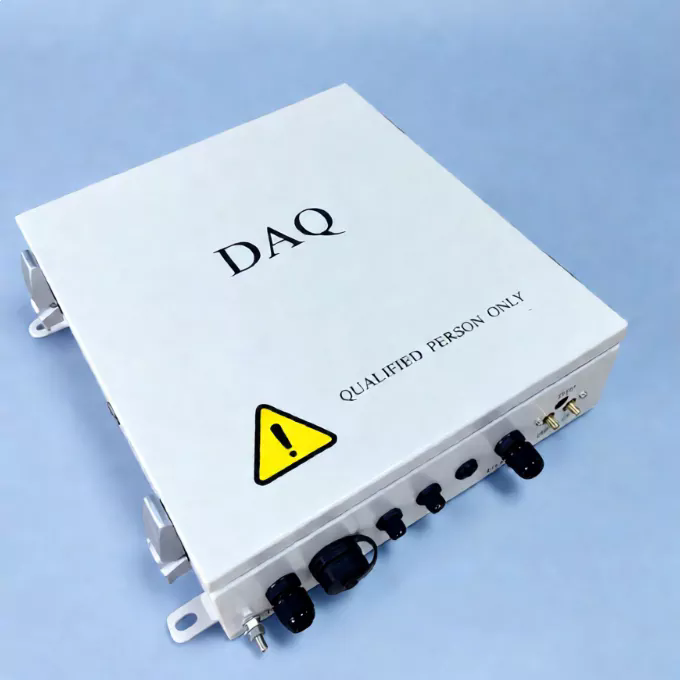
An O&M engineer at a 50 MW solar plant reviews the monitoring dashboard. Twelve trackers are showing "communication lost" for the past 48 hours. The maintenance crew has been dispatched twice, but the problem is intermittent. When the crew arrives, the communication is restored. When they leave, it drops again. The engineer suspects the issue is not the tracker controller but the Intelligent Tracker Communication Box. The box houses the communication module, the power supply, and the surge protection. If the box is not properly sealed, moisture enters and corrodes the connectors. If the power supply is not backed up, a brief grid outage shuts down the communication. If the antenna is not properly grounded, lightning surges damage the module. This guide explains how the communication box enables reliable remote monitoring and what to check when the data stops flowing.
1. What Communication Protocols Are Used in an Intelligent Tracker Communication Box?
The Intelligent Tracker Communication Box is the interface between the tracker controller and the monitoring platform. It supports multiple communication protocols to accommodate different site conditions. The most common are RS-485 for wired connection to the tracker controller, Ethernet for local area network connection, and 4G/LTE for wide area connection to the cloud. Some boxes also support LoRaWAN for long-range, low-power communication in remote areas. The table below compares the communication protocols and their typical applications.
| Protocol | Typical range | Data rate | Power consumption | Best application |
| RS-485 | Up to 1,200 m | 10 – 100 kbps | Low | Wired connection to tracker controller |
| Ethernet | Up to 100 m | 10 – 100 Mbps | Moderate | Local area network in the plant |
| 4G/LTE | Several kilometers | 1 – 50 Mbps | Moderate to high | Remote sites without wired infrastructure |
| LoRaWAN | 2 – 15 km | 0.3 – 50 kbps | Very low | Remote sites with low data volume |
In our factory, we design the Intelligent Tracker Communication Box with a modular communication interface. The customer can choose the protocol that matches the site conditions. For a plant with a fiber optic backbone, we recommend Ethernet. For a remote plant in a desert or mountain area, we recommend 4G/LTE with a LoRaWAN fallback. Suzhou Ruitai Automation Technology Co., Ltd. has been manufacturing communication boxes for solar tracker systems for over 8 years.
2. How Does Power Backup Ensure Continuous Monitoring During Grid Outages?
The Intelligent Tracker Communication Box must continue to operate during a grid outage. If the communication box loses power, the monitoring platform loses visibility of the tracker position, the battery voltage, and the fault status. The power backup can be a small UPS with a lithium battery or a supercapacitor. The backup must provide enough energy to keep the communication module alive for at least 30 minutes, which is the typical duration of a grid fault. The table below shows the power backup options and their performance.
| Backup type | Energy storage | Backup time | Cycle life | Cost |
| Supercapacitor | 10 – 50 F | 5 – 15 minutes | > 500,000 cycles | Moderate |
| Lithium-ion battery | 5 – 20 Wh | 30 – 120 minutes | 2,000 – 5,000 cycles | Moderate to high |
| LiFePO₄ battery | 10 – 30 Wh | 60 – 180 minutes | 3,000 – 7,000 cycles | High |
| No backup | None | 0 minutes | N/A | Low |
In our factory, we use a LiFePO₄ battery for the power backup in our Intelligent Tracker Communication Box. The battery provides 60 to 120 minutes of backup, which is sufficient for most grid faults. The battery is managed by a battery management system that monitors the voltage, current, and temperature. The system also reports the battery status to the monitoring platform so that the operator can see when the backup is active. Suzhou Ruitai Automation Technology Co., Ltd. provides a 5-year warranty on the battery.
3. How Does Environmental Protection Affect Long-Term Reliability?
The Intelligent Tracker Communication Box is installed outdoors, often in harsh environments. It must be protected against dust, water, temperature extremes, and lightning surges. The enclosure must have an IP rating of at least IP65, which means it is dust-tight and protected against water jets. The internal components must be protected against condensation, which can cause corrosion and short circuits. The table below shows the environmental protection requirements for different installation environments.
| Environment | Recommended IP rating | Temperature range | Additional protection |
| Desert | IP65 | -20°C to +60°C | Dust filter, sun shield |
| Coastal | IP66 | -20°C to +50°C | Corrosion-resistant coating |
| Mountain | IP65 | -40°C to +50°C | Heater, UV-resistant enclosure |
| Tropical | IP66 | -10°C to +55°C | Anti-condensation heater, fungus-resistant coating |
Field tip: Condensation is the most common cause of communication box failure in tropical and coastal environments. The box heats up during the day and cools down at night. The moisture in the air condenses on the cold surfaces of the circuit boards. To prevent this, we install a small heater inside the box that keeps the temperature above the dew point. We also use a breathable membrane vent that allows air to pass but blocks water. In our factory, every Intelligent Tracker Communication Box is tested in a humidity chamber at 95% RH and 40°C for 48 hours before shipment.
4. How Does the Communication Box Integrate With the Monitoring Platform?
The Intelligent Tracker Communication Box collects data from the tracker controller and transmits it to the monitoring platform. The data includes the tracker angle, the motor current, the battery voltage, the fault status, and the communication status. The box also receives commands from the platform, such as "move to stow position" or "reset fault." The integration is based on standard protocols such as Modbus TCP or MQTT. The table below shows the data points and their update rates.
| Data point | Update rate | Typical range | Purpose |
| Tracker angle | 1 minute | 0 – 60° | Verify tracking accuracy |
| Motor current | 1 minute | 0 – 10 A | Detect mechanical binding |
| Battery voltage | 5 minutes | 10 – 14 V | Monitor power backup |
| Fault status | On change | 0 or 1 | Alert operator |
| Communication status | 1 minute | Online/offline | Detect communication failure |
In our factory, we provide a monitoring platform that can be hosted on the cloud or on the customer's server. The platform displays the data in real time and generates alarms if any parameter is out of range. We also provide an API for integration with third-party platforms. Suzhou Ruitai Automation Technology Co., Ltd. has integrated our Intelligent Tracker Communication Box with monitoring platforms from major inverter manufacturers.
Frequently Asked Questions About Intelligent Tracker Communication Boxes
Summary for O&M Engineers and Plant Managers
The Intelligent Tracker Communication Box is the key component that enables remote monitoring of solar tracker systems. It supports multiple communication protocols, provides power backup during grid outages, protects the electronics from harsh environments, and integrates with the monitoring platform. The reliability of the communication box determines the visibility of the plant and the speed of fault response. By selecting the right communication protocol, power backup, and environmental protection, O&M engineers can ensure that the data flows continuously and the plant operates at maximum availability. Suzhou Ruitai Automation Technology Co., Ltd. has been manufacturing communication boxes for solar tracker systems for over 8 years and provides full technical support for our customers.
Suzhou Ruitai Automation Technology Co., Ltd. manufactures Intelligent Tracker Communication Box units with RS-485, Ethernet, 4G/LTE, and LoRaWAN interfaces, LiFePO₄ power backup, and IP65/IP66 enclosures. We provide monitoring platform integration and remote diagnostic support.