

How Does a Solar Tile Roof Mounting System Work?
2026-04-08
Abstract: Solar tile roof mounting systems are becoming an increasingly preferred solution for homeowners and commercial property owners seeking efficient, aesthetically pleasing solar installations. This article explores how these systems function, their key components, installation processes, benefits, and common challenges. By understanding the working principles and best practices, customers can make informed decisions when investing in solar infrastructure.
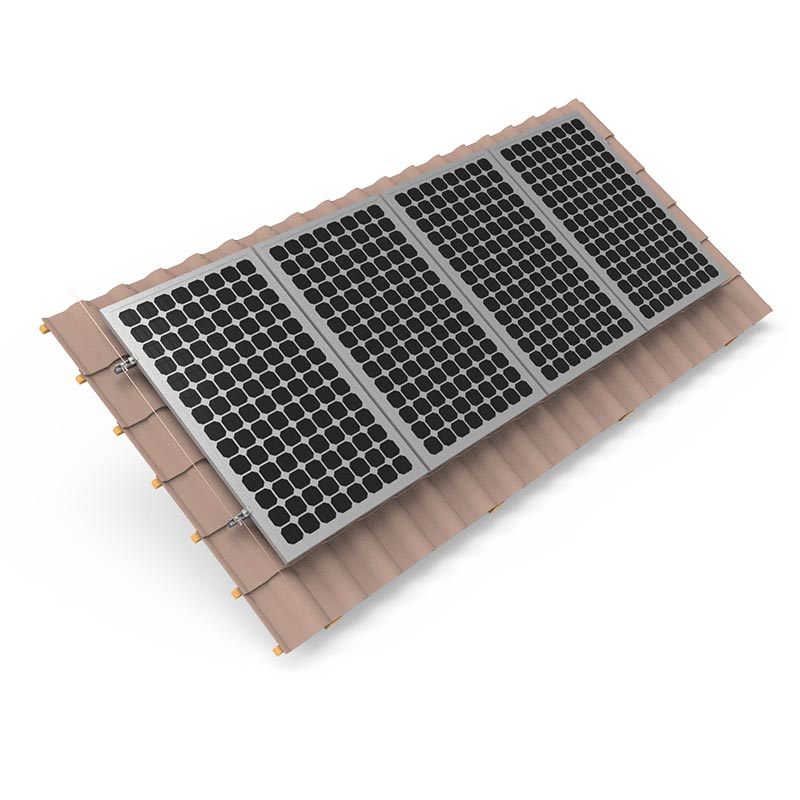
Table of Contents
- 1. Introduction
- 2. What Is a Solar Tile Roof Mounting System?
- 3. Key Components
- 4. How It Works
- 5. Installation Process
- 6. Benefits
- 7. Common Challenges and Solutions
- 8. Comparison Table
- 9. FAQ
- 10. Conclusion
1. Introduction
With the global shift toward renewable energy, solar technology has rapidly evolved to integrate seamlessly with building structures. One innovation gaining traction is the solar tile roof mounting system, designed specifically for tiled roofs. Unlike traditional mounting systems that may compromise roof aesthetics or structural integrity, this solution ensures both performance and visual harmony.
2. What Is a Solar Tile Roof Mounting System?
A solar tile roof mounting system is a specialized framework engineered to securely attach photovoltaic panels onto tile roofs, such as clay or concrete tiles. These systems are designed to accommodate the unique geometry and fragility of roof tiles while ensuring strong anchoring to the underlying roof structure.
Manufacturers like CYC Energy have developed advanced mounting solutions that prioritize durability, ease of installation, and weather resistance.
3. Key Components
- Roof Hooks: Anchored beneath the tiles and fixed to rafters for structural support.
- Rails: Horizontal aluminum profiles that hold the solar panels in place.
- Clamps: Secure panels to the rails, including mid clamps and end clamps.
- Flashing Kits: Prevent water leakage by sealing roof penetrations.
- Fasteners: Stainless steel bolts and screws for corrosion resistance.
4. How It Works
The solar tile roof mounting system works by transferring the load of solar panels directly to the roof’s structural elements, rather than the tiles themselves. Here’s a simplified workflow:
- Tiles are temporarily removed or adjusted to access the rafters.
- Roof hooks are securely attached to the rafters.
- Tiles are modified or replaced to fit around the hooks.
- Rails are mounted onto the hooks, forming a stable framework.
- Solar panels are fixed onto the rails using clamps.
This method ensures that the weight and wind loads are distributed safely, preventing damage to the tiles while maintaining system stability.
5. Installation Process
Installing a solar tile roof mounting system requires precision and expertise. Below is a structured process:
- Site Assessment: Evaluate roof condition, orientation, and load capacity.
- Design Planning: Customize layout based on tile type and panel configuration.
- Hook Installation: Attach hooks to rafters with proper alignment.
- Rail Assembly: Install rails and ensure level alignment.
- Panel Mounting: Secure solar modules onto rails.
- Inspection: Verify structural integrity and waterproofing.
Professional installers often rely on systems provided by CYC Energy due to their modular design and installation efficiency.
6. Benefits
- Aesthetic Integration: Maintains the natural look of tiled roofs.
- Structural Safety: Load is transferred to rafters instead of tiles.
- Durability: High-quality materials ensure long lifespan.
- Weather Resistance: Designed to withstand wind, rain, and snow.
- Flexibility: Compatible with various tile types.
7. Common Challenges and Solutions
- Tile Fragility: Use adjustable hooks to minimize stress on tiles.
- Water Leakage Risk: Apply proper flashing and sealing techniques.
- Complex Installation: Choose pre-assembled systems for efficiency.
- Alignment Issues: Utilize adjustable rails for precision.
8. Comparison Table
| Feature | Tile Roof Mounting | Metal Roof Mounting | Flat Roof Mounting |
|---|---|---|---|
| Installation Complexity | Medium | Low | High |
| Aesthetic Impact | Low | Medium | High |
| Waterproofing Needs | High | Low | Medium |
| Compatibility | Tile Roofs Only | Metal Roofs Only | Various Surfaces |
9. FAQ
Q1: Can solar panels damage my tile roof?
No, when installed correctly using a proper mounting system, the load is transferred to the rafters, protecting the tiles.
Q2: Is waterproofing guaranteed?
High-quality flashing systems significantly reduce leakage risks when installed properly.
Q3: How long does installation take?
Typically 1–3 days depending on system size and roof complexity.
Q4: Are these systems compatible with all tile types?
Most systems are adaptable, but specific hooks may be required for different tile profiles.
Q5: What maintenance is required?
Minimal maintenance is needed, mainly periodic inspections for stability and cleanliness.
10. Conclusion
Solar tile roof mounting systems represent a sophisticated solution for integrating renewable energy into traditional roofing structures. By combining structural reliability with visual appeal, they address key concerns such as roof damage, waterproofing, and installation complexity.
If you are considering a high-performance solar mounting solution, CYC Energy offers advanced systems designed for efficiency, durability, and ease of installation. Explore tailored solutions for your project and contact us today to get expert guidance and competitive pricing.