
How Does a Solar Roof Mounting System Work?
2026-04-21
Article Summary:
A solar roof mounting system is the foundational structure that secures photovoltaic panels to residential, commercial, or industrial rooftops. This article explains how these systems work, their components, installation process, types, advantages, and real-world challenges. It is designed to help property owners, installers, and project developers make informed decisions when planning solar energy systems.
Outline
- Introduction to Solar Roof Mounting Systems
- Key Components Explained
- How Solar Roof Mounting Systems Work
- Types of Roof Mounting Systems
- Benefits and Value
- Installation Challenges and Practical Solutions
- Maintenance and Long-Term Durability
- Comparison Table of Mounting Types
- Frequently Asked Questions
- Conclusion and Professional Recommendation
Table of Contents
- Introduction to Solar Roof Mounting Systems
- Key Components Explained
- How Solar Roof Mounting Systems Work
- Types of Roof Mounting Systems
- Benefits and Value
- Installation Challenges and Solutions
- Maintenance and Durability
- Comparison Table
- FAQ
- Conclusion
Introduction to Solar Roof Mounting Systems
A solar roof mounting system is the structural framework that connects solar panels to a roof surface. It plays a critical role in ensuring stability, optimal panel orientation, and long-term performance of the solar energy system. Without a reliable mounting structure, even the most efficient solar panels cannot operate safely or effectively.
These systems are engineered to withstand environmental stress such as wind, rain, snow loads, and thermal expansion while maintaining panel alignment for maximum energy output.
Key Components Explained
A typical solar roof mounting system consists of several engineered parts:
- Rails: Aluminum structures that support solar panels.
- Roof Hooks / Brackets: Connect rails to the roof structure.
- Clamps: Secure panels in place.
- Flashing Kits: Ensure waterproof installation.
- Fasteners: Bolts and screws designed for structural integrity.
Each component must be carefully selected based on roof type, climate conditions, and panel weight.
How Solar Roof Mounting Systems Work
Solar roof mounting systems work by distributing the mechanical load of solar panels evenly across the roof structure. The process can be understood in several stages:
- Structural Anchoring: Roof hooks or anchors are fixed to rafters or structural beams.
- Rail Installation: Aluminum rails are attached to anchors, forming a stable framework.
- Panel Placement: Solar modules are positioned onto rails.
- Clamping: Mid and end clamps secure panels firmly.
- Electrical Integration: Panels are wired for energy transmission.
This modular system ensures flexibility, allowing adjustments for tilt angle and orientation to maximize solar exposure.
Types of Roof Mounting Systems
Different roofing conditions require different mounting solutions:
- Flush Mount Systems: Panels installed parallel to the roof surface.
- Ballasted Systems: Used mainly on flat roofs; rely on weight instead of penetration.
- Penetrating Systems: Anchored directly into roof structure for maximum stability.
- Tile Roof Systems: Designed for curved or fragile tile roofs.
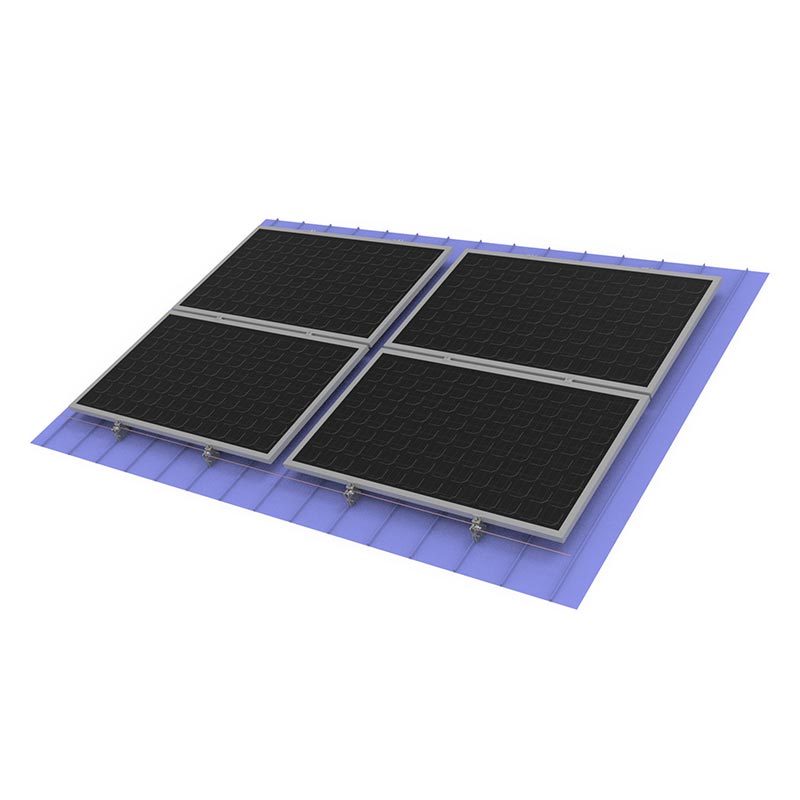
- Metal Roof Clamps: Clamp onto standing seam metal roofs without drilling.
Benefits and Value
Installing a solar roof mounting system provides multiple long-term advantages:
- Improved energy efficiency through optimal panel alignment
- Enhanced structural safety under extreme weather conditions
- Extended lifespan of solar installations
- Reduced maintenance costs over time
- Compatibility with different roof types
When properly engineered, the mounting system becomes a silent but essential foundation for solar energy performance.
Installation Challenges and Practical Solutions
Despite its advantages, installation can present challenges:
- Roof Leakage Risk: Mitigated by proper flashing systems.
- Structural Limitations: Requires pre-installation roof assessment.
- Wind Load Pressure: Solved by reinforced rail systems.
- Alignment Issues: Prevented through precision leveling tools.
Professional design and certified installation are essential to overcome these challenges effectively.
Maintenance and Long-Term Durability
Solar roof mounting systems require minimal maintenance, but periodic inspections ensure long-term reliability:
- Check fasteners for loosening every 12–24 months
- Inspect for corrosion in coastal environments
- Ensure waterproof seals remain intact
- Verify structural alignment after extreme weather events
High-quality aluminum and stainless steel components significantly extend system lifespan, often exceeding 25 years.
Comparison Table of Mounting Types
| Type | Best For | Installation Method | Durability |
|---|---|---|---|
| Flush Mount | Residential roofs | Roof penetration | High |
| Ballasted | Flat roofs | Weight-based | Medium |
| Standing Seam Clamp | Metal roofs | Non-penetrating clamp | Very High |
| Tile Roof System | Clay/ceramic roofs | Custom hooks | High |
Frequently Asked Questions
Q1: Do solar roof mounting systems damage roofs?
No, when installed correctly with proper sealing and certified components, they do not damage roofs.
Q2: How long do mounting systems last?
Most high-quality systems last 20–30 years, matching solar panel lifespans.
Q3: Can they be installed on all roof types?
Yes, there are tailored systems for metal, tile, flat, and asphalt roofs.
Q4: Is professional installation necessary?
Yes, professional installation ensures safety, compliance, and optimal performance.
Conclusion and Professional Recommendation
A solar roof mounting system is not just an accessory—it is the structural backbone of any solar energy installation. Its design determines safety, efficiency, and long-term performance. Choosing the right system based on roof type, environmental conditions, and engineering quality is essential for maximizing return on solar investment.
For reliable, durable, and precision-engineered solar mounting solutions, CYC Energy delivers advanced system designs tailored for residential and commercial applications. To explore customized solutions and expert guidance, CYC Energy contact us today and take the next step toward a stable and efficient solar installation.