

How Does a Solar PV Round Wire Machine Reduce Ribbon Consumption Compared to Flat Wire Alternatives
2026-05-26
In the photovoltaic manufacturing industry, the transition from flat ribbon to round wire has gained significant momentum. A Solar PV Round Wire Machine from GRM enables module producers to drastically lower silver paste and ribbon usage while improving current collection. Understanding the mechanics behind this reduction is essential for cost-driven production lines.
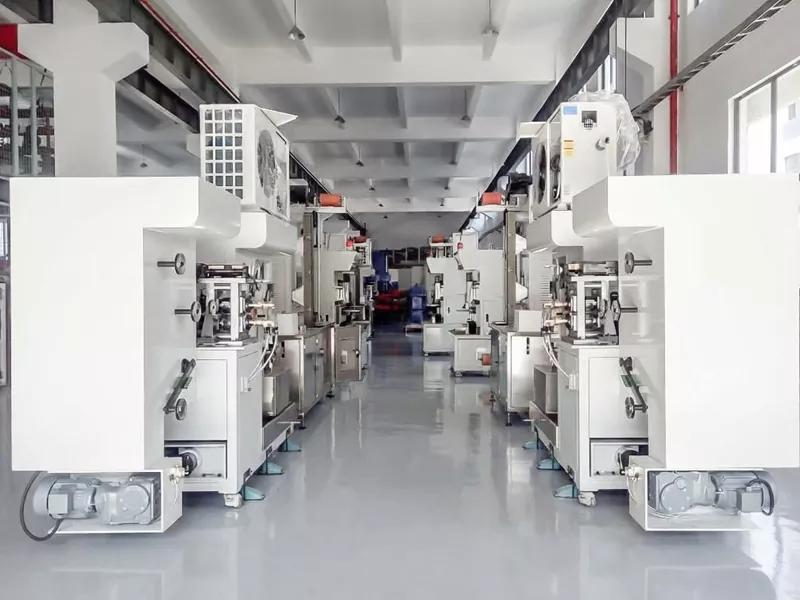
The Core Mechanism of Material Saving
Traditional flat ribbon covers more busbar surface area, requiring thicker silver paste layers for adhesion. A Solar PV Round Wire Machine produces wires with a smaller contact footprint but superior light trapping geometry. Round wires reflect less incident light and cast shorter shadows on the cell surface, allowing manufacturers to use thinner wires with the same or higher conductivity.
| Parameter | Flat Wire (Conventional) | Round Wire (GRM Machine) |
|---|---|---|
| Ribbon width (mm) | 1.0 – 1.5 | 0.3 – 0.5 |
| Cross-section area (mm²) | 0.20 – 0.35 | 0.12 – 0.18 |
| Silver paste consumption (mg/cell) | 25 – 35 | 12 – 18 |
| Ribbon weight per panel (kg) | 0.48 – 0.62 | 0.26 – 0.38 |
How GRM Technology Lowers Ribbon Input
The GRM Solar PV Round Wire Machine applies precision tension control and die forming to eliminate flattening deformation. Less deformation means no edge burrs or width swelling, two major causes of ribbon waste. Flat wire processes often overcompensate for alignment errors by increasing ribbon width. Round wire, due to its symmetrical shape, tolerates minor placement shifts without extra material.
Three Key Reduction Mechanisms
-
Lower coating thickness – Round wire accepts thinner metal coating layers because current crowding is minimized.
-
Narrower pitch spacing – The Solar PV Round Wire Machine enables fine pitch down to 1.5 mm, fitting more wires per cell without overlapping.
-
No edge scrap – Flat wire stamping generates edge trim waste; round wire drawing uses nearly 100% of input material.
Solar PV Round Wire Machine FAQ
Question 1: How much ribbon material can a Solar PV Round Wire Machine save compared to flat wire equipment per 1 MW of solar panels?
Answer: On average, a Solar PV Round Wire Machine saves approximately 38–42% of ribbon weight per megawatt. For a 1 MW installation using 540 W modules, flat wire consumes about 52 kg of copper ribbon. Round wire produced by GRM machines reduces this to 30–32 kg, translating to direct material cost savings of USD 120–150 per MW.
Question 2: Does switching to round wire affect the soldering reliability or pull strength of interconnections in PV modules?
Answer: Round wire soldering with a Solar PV Round Wire Machine typically achieves pull strengths above 1.8 N/mm, exceeding IEC 61215 requirements. GRM machines integrate flux monitoring and temperature profiling to ensure consistent wetting. Flat wire often experiences delamination at edges due to uneven stress; round wire distributes stress uniformly, improving long-term reliability in thermal cycling tests.
Question 3: Can existing tabber and stringer lines be retrofitted to accept round wire from a Solar PV Round Wire Machine without major changes?
Answer: Yes, most modern tabber and stringer lines can be retrofitted with GRM-supplied wire guides and adjustable clamps. The Solar PV Round Wire Machine produces wire with precise circularity tolerance of ±0.005 mm, compatible with standard shank-type bond heads. Retrofitting costs typically range from USD 8,000 to 15,000 per line, with payback periods under six months due to ribbon savings.
Conclusion and Contact Call-to-Action
Adopting a Solar PV Round Wire Machine from GRM directly reduces ribbon consumption by reshaping how current collectors contact cells. Lower material input, less silver paste, and finer pitch design make round wire the logical upgrade over flat alternatives. For module producers targeting cost per watt leadership, GRM provides fully automated solutions ready for gigawatt-scale lines.
Contact us today at GRM to request a ribbon saving simulation for your specific module design or to schedule a live demonstration of our Solar PV Round Wire Machine in action.