

How Does a Solar Mid Clamp Secure Photovoltaic Panels in Mounting Systems?
2026-03-10
Article Summary
Solar photovoltaic systems rely on multiple structural components to ensure panels remain stable and properly aligned for decades of operation. Among these components, the Solar Mid Clamp plays a critical role in holding adjacent solar modules firmly on mounting rails. This article explains how solar mid clamps work, their structural design, key technical parameters, installation procedures, and how to select the right clamp for different photovoltaic projects. The guide also addresses common buyer concerns such as durability, compatibility, and installation efficiency.
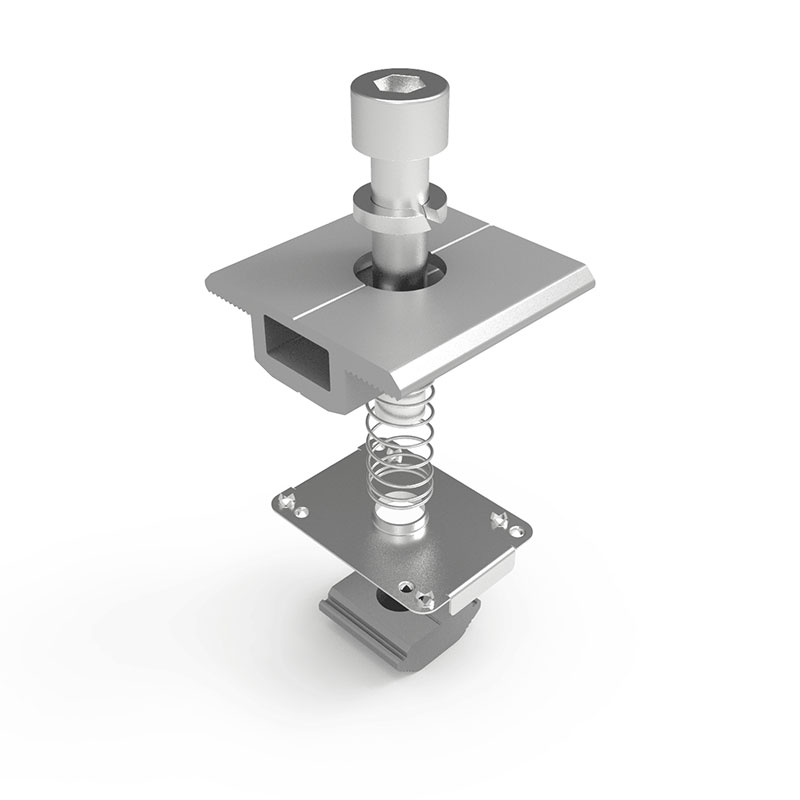
Table of Contents
- 1. Introduction to Solar Mid Clamp
- 2. Why Solar Mid Clamps Are Essential in PV Systems
- 3. Structural Design and Components
- 4. Typical Technical Parameters
- 5. How Solar Mid Clamps Work in Solar Panel Installation
- 6. Key Benefits of High-Quality Solar Mid Clamps
- 7. Common Installation Mistakes and How to Avoid Them
- 8. How to Choose the Right Solar Mid Clamp
- 9. Frequently Asked Questions
- 10. Conclusion
1. Introduction to Solar Mid Clamp
A Solar Mid Clamp is a fastening component used in photovoltaic mounting systems to secure two adjacent solar panels on a mounting rail. It is installed between the frames of neighboring modules and works together with end clamps to form a stable solar panel array. :contentReference[oaicite:0]{index=0}
Most solar mid clamps are manufactured from high-strength aluminum alloys combined with stainless steel bolts. These materials provide corrosion resistance, structural durability, and long service life in outdoor environments exposed to wind, rain, and UV radiation. :contentReference[oaicite:1]{index=1}
The primary function of the mid clamp is to maintain proper spacing and alignment between solar panels while firmly locking them to the mounting rails. This ensures the entire photovoltaic array remains stable even under heavy wind or snow loads.
2. Why Solar Mid Clamps Are Essential in PV Systems
Solar panels installed on rooftops or ground-mounted structures experience constant environmental stress. Wind uplift, thermal expansion, and vibration can cause modules to shift if they are not properly secured.
Solar mid clamps address these challenges by providing a reliable connection between panels and mounting rails.
- Panel stability – Prevents movement caused by wind or vibration.
- Uniform spacing – Ensures consistent gaps between modules for thermal expansion.
- Structural integrity – Distributes mechanical loads evenly across the mounting system.
- Improved installation safety – Reduces the risk of loose modules.
- System durability – Helps maintain long-term photovoltaic performance.
Without properly installed mid clamps, the structural reliability of a solar array can be compromised.
3. Structural Design and Components
Although designs vary slightly across manufacturers, most solar mid clamps share a similar mechanical structure.
| Component | Function |
|---|---|
| Clamp Body | Main aluminum structure that grips the panel frames. |
| T-Bolt or Hammer Bolt | Connects the clamp to the mounting rail slot. |
| Stainless Steel Screw | Tightens the clamp and secures panel frames. |
| Rubber or EPDM Pad | Protects panel frames and increases friction. |
| Rail Interface | Locks the clamp into the mounting rail system. |
The two-piece design allows the clamp to grip the edges of adjacent solar panels while anchoring securely into the mounting rail structure. :contentReference[oaicite:2]{index=2}
4. Typical Technical Parameters
When selecting a solar mid clamp, installers typically evaluate several technical parameters to ensure compatibility with the photovoltaic modules and mounting structure.
| Parameter | Typical Range |
|---|---|
| Material | AL6005-T5 Aluminum Alloy + SUS304 Stainless Steel |
| Panel Thickness Compatibility | 30mm – 45mm |
| Surface Treatment | Anodized or Black Anodized |
| Wind Load Resistance | Up to 60 m/s |
| Snow Load Capacity | 1.4 kN/m² or higher |
| Service Life | 20–25 Years |
These specifications ensure that mid clamps can withstand harsh environmental conditions while maintaining secure panel positioning.
5. How Solar Mid Clamps Work in Solar Panel Installation
Understanding the working process of solar mid clamps helps installers improve efficiency and avoid installation mistakes.
Step 1 – Install Mounting Rails
The rails are fixed onto the roof structure or ground mounting framework. These rails act as the base support for solar modules.
Step 2 – Position the First Solar Panel
The first panel is placed on the rail and secured using an end clamp.
Step 3 – Insert the Solar Mid Clamp
The mid clamp is inserted into the rail slot between two adjacent panels.
Step 4 – Align the Panels
The frames of the two panels are positioned on each side of the clamp to maintain consistent spacing.
Step 5 – Tighten the Bolt
Using a torque wrench, the installer tightens the clamp bolt to the specified torque value, locking both panels securely in place.
Step 6 – Repeat Across the Array
This process continues across the entire solar array until all modules are fixed securely.
The result is a structurally stable and visually uniform photovoltaic installation.
6. Key Benefits of High-Quality Solar Mid Clamps
- Faster installation – Pre-assembled clamps reduce installation time.
- Universal compatibility – Adjustable design fits most panel frames.
- Strong corrosion resistance – Aluminum alloy construction ensures long-term durability.
- Reduced maintenance – Stable panel positioning minimizes system adjustments.
- Improved system safety – Secure panel fixation protects against extreme weather.
These benefits make solar mid clamps one of the most important hardware components in photovoltaic mounting systems.
7. Common Installation Mistakes and How to Avoid Them
Improper installation of solar mid clamps can compromise the reliability of a PV system.
- Over-tightening bolts – Can deform panel frames.
- Incorrect clamp size – May not fit the panel thickness.
- Misaligned panels – Leads to uneven load distribution.
- Missing clamps – Reduces structural integrity.
- Poor corrosion protection – Shortens service life.
Professional installers follow torque specifications and manufacturer guidelines to prevent these issues.
8. How to Choose the Right Solar Mid Clamp
When selecting solar mid clamps for a photovoltaic project, buyers should consider the following factors:
- Panel frame thickness compatibility
- Material strength and corrosion resistance
- Ease of installation
- Load capacity and structural certification
- Compatibility with mounting rails
Reliable suppliers such as CYC Energy provide engineered solar mounting components designed for efficient installation and long-term durability. Their solar mid clamp solutions are widely used in residential, commercial, and utility-scale photovoltaic systems.
More product details can be viewed here:
https://www.cycsolar.com/solar-mid-clamp.html
9. Frequently Asked Questions
Q1: What is the difference between a mid clamp and an end clamp?
A mid clamp is installed between two adjacent solar panels, while an end clamp secures the outermost panels at the edge of the array.
Q2: Are solar mid clamps universal?
Most mid clamps are designed to fit common panel frame thicknesses such as 30mm, 35mm, or 40mm. However, installers must verify compatibility with the mounting rail system.
Q3: What material is best for solar mid clamps?
Aluminum alloy combined with stainless steel hardware is widely used due to its strength, corrosion resistance, and lightweight properties.
Q4: How many mid clamps are needed per solar panel?
Typically two mid clamps are used for each panel edge shared with adjacent modules, depending on the mounting design.
10. Conclusion
Solar mid clamps are small components but play a major role in maintaining the stability, safety, and efficiency of photovoltaic installations. By securely fixing adjacent solar panels onto mounting rails, these clamps ensure proper alignment, even load distribution, and long-term system reliability.
Selecting high-quality mid clamps from trusted manufacturers helps installers reduce installation time, improve structural integrity, and extend the lifespan of solar power systems.
CYC Energy provides durable and precisely engineered solar mounting components designed to meet the demands of modern photovoltaic projects.
If you are planning a solar installation project or looking for reliable mounting hardware, contact us today to receive professional guidance, detailed product specifications, and customized solutions for your solar energy system.