
How Does a Solar Metal Roof Mounting System Improve Solar Installation Efficiency?
2026-04-14
Abstract:
A Solar Metal Roof Mounting System is a critical component in photovoltaic installations, directly affecting durability, safety, installation speed, and long-term energy output. For property owners and project developers, choosing the right mounting system can reduce labor costs, prevent roof damage, and maximize panel performance. In this article, we explore how these systems work, their advantages, common customer concerns, and how to select the best solution for commercial and industrial solar projects.
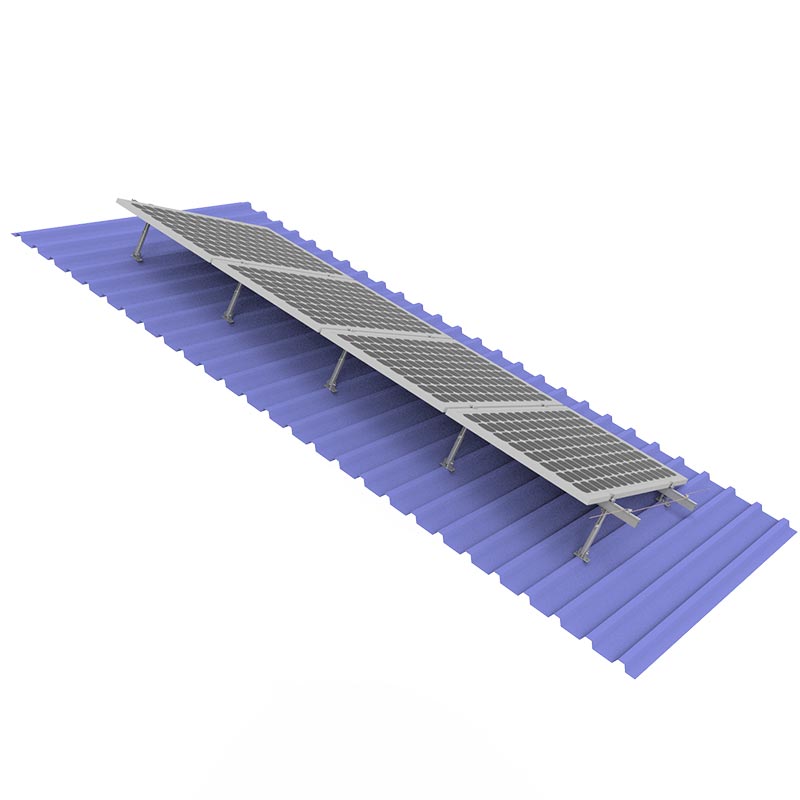
Table of Contents
- What Is a Solar Metal Roof Mounting System?
- How Does It Work?
- Key Benefits for Customers
- Common Customer Pain Points Solved
- Types of Metal Roof Mounting Systems
- System Comparison Table
- How to Choose the Right System
- Installation Considerations
- FAQ
- Conclusion
What Is a Solar Metal Roof Mounting System?
A Solar Metal Roof Mounting System is a structural framework designed to securely attach solar panels to metal rooftops without compromising roof integrity. It ensures that photovoltaic modules remain stable under wind, snow, rain, and thermal expansion conditions.
These systems are widely used in factories, warehouses, agricultural buildings, and commercial facilities where metal roofs are common. Unlike generic mounting brackets, specialized metal roof systems are engineered to match roof profiles such as standing seam, corrugated sheet, trapezoidal sheet, and ribbed panels.
Xiamen CYC Energy Co.,Ltd. provides professionally engineered mounting solutions tailored for diverse roof types, helping customers achieve safer and faster solar deployment.
How Does It Work?
The mounting system acts as the foundation between the roof and the solar modules. Its main components typically include:
- Roof clamps or brackets
- Aluminum rails
- Mid clamps and end clamps
- Fasteners and grounding accessories
The process works in three stages:
- Attachment points are fixed to the metal roof structure.
- Rails or rail-less supports are aligned and secured.
- Solar panels are mounted and locked into position.
This design distributes load evenly while minimizing roof penetration and preserving waterproof performance.
Key Benefits for Customers
- Fast Installation: Pre-assembled parts reduce on-site labor time.
- Roof Protection: Non-penetrating clamps reduce leakage risk.
- High Durability: Corrosion-resistant aluminum and stainless steel extend lifespan.
- Cost Savings: Lower labor and maintenance costs improve ROI.
- Strong Structural Stability: Designed to withstand extreme weather conditions.
For many buyers, installation speed and waterproof reliability are the top concerns. A properly engineered system solves both simultaneously.
Common Customer Pain Points Solved
Many solar investors face recurring issues during rooftop projects. A high-quality Solar Metal Roof Mounting System addresses these pain points:
| Customer Pain Point | How the System Solves It |
|---|---|
| Roof leakage after installation | Uses waterproof clamp-based fixation with fewer penetrations |
| High labor cost | Pre-assembled components reduce installation time |
| Weak wind resistance | Engineered load-tested structures improve stability |
| Corrosion in humid climates | Anodized aluminum and SUS304 materials resist rust |
| Complex roof compatibility issues | Custom clamp designs adapt to multiple roof profiles |
Types of Metal Roof Mounting Systems
Different roof structures require different mounting approaches:
- Standing Seam Clamp System: No drilling required, ideal for seam roofs.
- L-Foot Bracket System: Suitable for corrugated metal sheets.
- Mini Rail System: Compact design with lower material usage.
- Rail-Less System: Lightweight and efficient for smaller installations.
Choosing the wrong type may increase installation complexity or compromise long-term safety.
System Comparison Table
| System Type | Best For | Installation Speed | Roof Penetration |
|---|---|---|---|
| Standing Seam Clamp | Seam Roofs | Fast | No |
| L-Foot Bracket | Corrugated Roofs | Moderate | Yes |
| Mini Rail | Trapezoidal Roofs | Very Fast | Minimal |
| Rail-Less | Lightweight Projects | Fastest | Depends on design |
How to Choose the Right System
Before selecting a mounting system, evaluate these factors:
- Roof sheet profile and thickness
- Wind and snow load requirements
- Local climate conditions
- Solar panel dimensions
- Desired installation lifespan
A professional supplier like Xiamen CYC Energy Co.,Ltd. can provide engineering analysis to ensure compatibility and structural safety before project launch.
Installation Considerations
Successful installation depends on proper planning:
- Conduct roof structural assessment
- Verify roof load capacity
- Use accurate clamp spacing calculations
- Follow torque specifications during fastening
- Inspect waterproof sealing after installation
Ignoring these details may lead to long-term system failure or roof damage.
FAQ
1. Can solar panels be installed without drilling into metal roofs?
Yes, standing seam clamp systems allow non-penetrating installation.
2. How long does a metal roof mounting system last?
High-quality systems typically last 25 years or more.
3. Are these systems suitable for high-wind areas?
Yes, if properly engineered and tested according to regional standards.
4. What materials are best for corrosion resistance?
Anodized aluminum alloy and stainless steel are preferred choices.
5. Can one system fit all roof types?
No, each roof profile requires compatible mounting hardware.
Conclusion
A Solar Metal Roof Mounting System is more than just a support structure—it directly influences project safety, installation efficiency, maintenance cost, and long-term solar performance. Investing in a well-designed system reduces risk while improving return on investment.
If you are planning a rooftop solar project and need a reliable, durable, and efficient mounting solution, Xiamen CYC Energy Co.,Ltd. is ready to help. Contact us today to get expert guidance and customized support for your next solar installation.