

How Does a Solar Agricultural Mounting System Support Modern Agrivoltaics?
2026-01-05
Article Abstract
A Solar Agricultural Mounting System is a structural solution designed to integrate photovoltaic power generation with agricultural land use. This article provides a comprehensive explanation of how such systems function, why they are increasingly adopted in global agrivoltaic projects, and how their technical design supports both crop cultivation and solar energy output. By focusing on system parameters, engineering logic, and real-world operational considerations, this content addresses the most common technical and commercial questions surrounding Solar Agricultural Mounting Systems while aligning with current search behavior and industry terminology.
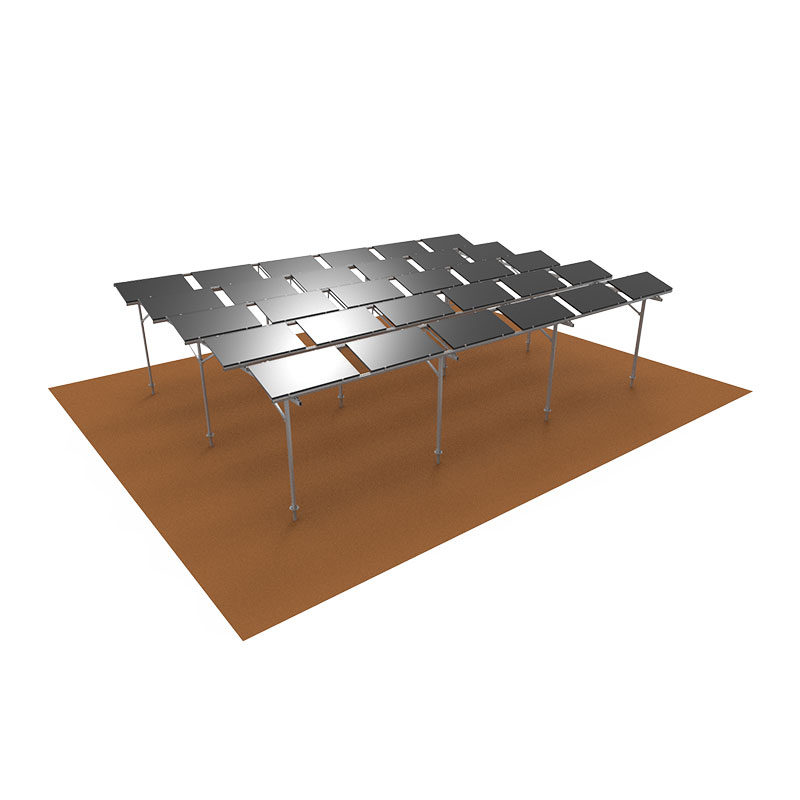
Table of Contents
- 1. Product Overview and Core Objective
- 2. Technical Parameters and Structural Specifications
- 3. Application Scenarios and Functional Design Logic
- 4. Common Questions About Solar Agricultural Mounting Systems
- 5. Development Direction of Agrivoltaic Mounting Systems
- 6. Industry Perspective and Contact Information
1. Product Overview and Core Objective
A Solar Agricultural Mounting System is an engineered support structure that allows photovoltaic modules to be installed above or alongside agricultural land without compromising farming activities. The central objective of this system is to achieve dual land utilization: enabling stable solar power generation while preserving or enhancing agricultural productivity beneath the array.
Unlike conventional ground-mounted solar racking, agricultural mounting systems emphasize elevated clearance, optimized row spacing, and adaptable foundations. These design elements ensure sufficient sunlight distribution, airflow, and machinery access for crops or livestock. As global demand for renewable energy accelerates and arable land becomes increasingly valuable, Solar Agricultural Mounting Systems are emerging as a practical infrastructure solution for sustainable energy development.
2. Technical Parameters and Structural Specifications
The performance and reliability of a Solar Agricultural Mounting System depend on its structural parameters, material selection, and load-bearing design. These systems are typically engineered to withstand diverse environmental conditions while maintaining long-term stability in agricultural environments.
| Parameter | Typical Specification Range |
|---|---|
| Structure Material | Hot-dip galvanized steel / Aluminum alloy |
| Surface Treatment | ≥ 80 μm galvanization or anodized coating |
| Ground Clearance | 2.5 m – 4.5 m (customizable) |
| Wind Load Capacity | Up to 45 m/s |
| Snow Load Capacity | Up to 1.6 kN/m² |
| Foundation Type | Screw pile / Concrete footing / Driven pile |
| Panel Orientation | South-facing or East-West |
| Design Lifetime | 25–30 years |
These parameters are adjusted based on local climate conditions, soil characteristics, crop height, and farming equipment requirements. The modular nature of the structure allows scalable deployment across small farms or large agricultural solar parks.
3. Application Scenarios and Functional Design Logic
Solar Agricultural Mounting Systems are deployed across a wide range of agricultural environments. Each application scenario influences structural height, spacing, and tilt angle.
3.1 Crop Cultivation Integration
For crop-based agrivoltaic projects, mounting systems are elevated to allow sufficient sunlight penetration and tractor access. Adjustable row spacing reduces shading stress on crops while enabling efficient photovoltaic layout.
3.2 Livestock and Pasture Use
In grazing applications, the structure provides shaded areas for animals while generating electricity. Reinforced columns and higher ground clearance are prioritized to ensure safety and durability.
3.3 Greenhouse and Specialty Agriculture
Some Solar Agricultural Mounting Systems are combined with greenhouse structures, using semi-transparent modules or strategic panel placement to balance light transmission and energy yield.
4. Common Questions About Solar Agricultural Mounting Systems
How does a Solar Agricultural Mounting System affect crop growth?
When properly designed, the system can moderate temperature extremes, reduce evaporation, and protect crops from excessive sunlight or hail. Crop selection and layout optimization are key factors in achieving positive agronomic outcomes.
How is structural stability ensured in soft or cultivated soil?
Engineers conduct geotechnical analysis to select appropriate foundation solutions such as screw piles or reinforced concrete footings. These foundations minimize soil disturbance while providing sufficient pull-out resistance.
How does maintenance differ from standard ground-mounted systems?
Maintenance access is integrated into the design through elevated walkways and wider row spacing. Agricultural mounting systems are engineered to allow simultaneous farming and photovoltaic maintenance without operational conflict.
5. Development Direction of Agrivoltaic Mounting Systems
The evolution of Solar Agricultural Mounting Systems is driven by policy support for agrivoltaics, advances in structural engineering, and increasing demand for land-efficient renewable energy solutions. Future designs emphasize higher adaptability, digital monitoring integration, and compatibility with diverse crop systems.
As agrivoltaic standards mature, mounting systems are expected to incorporate adjustable tilt mechanisms, lightweight composite materials, and standardized modular components to reduce installation time and lifecycle costs.
6. Industry Perspective and Contact Information
Within the global renewable energy supply chain, experienced solution providers play a critical role in delivering reliable Solar Agricultural Mounting Systems. CYC Energy continues to focus on structural optimization, material quality, and application-specific engineering to support agrivoltaic projects across different regions.
For project consultation, system configuration, or technical documentation related to Solar Agricultural Mounting Systems, interested parties are encouraged to contact CYC Energy to explore tailored solutions aligned with local agricultural and energy requirements.