
How Do Solar Tracking Mounts Improve Energy Efficiency?
2026-04-16
Abstract
Solar energy systems are no longer static installations fixed at a single angle. Modern photovoltaic infrastructure increasingly relies on dynamic positioning technologies to maximize energy harvest. Among these innovations, solar tracking mounts play a critical role in improving system efficiency by continuously aligning solar panels with the sun’s movement. This article explains how solar tracking mounts work, the challenges they solve, their technical variations, and their impact on long-term energy yield and project ROI. It also provides practical selection considerations for commercial and industrial buyers.
Table of Contents
- 1. Understanding Solar Tracking Mounts
- 2. Why Fixed Mounts Limit Solar Efficiency
- 3. Types of Solar Tracking Systems
- 4. How Tracking Mechanisms Work
- 5. Performance Comparison Table
- 6. Key Benefits for Commercial Projects
- 7. Design Challenges and Engineering Considerations
- 8. Real-World Application Scenarios
- 9. Maintenance and Lifecycle Factors
- 10. Conclusion and Industry Outlook
- FAQ
1. Understanding Solar Tracking Mounts
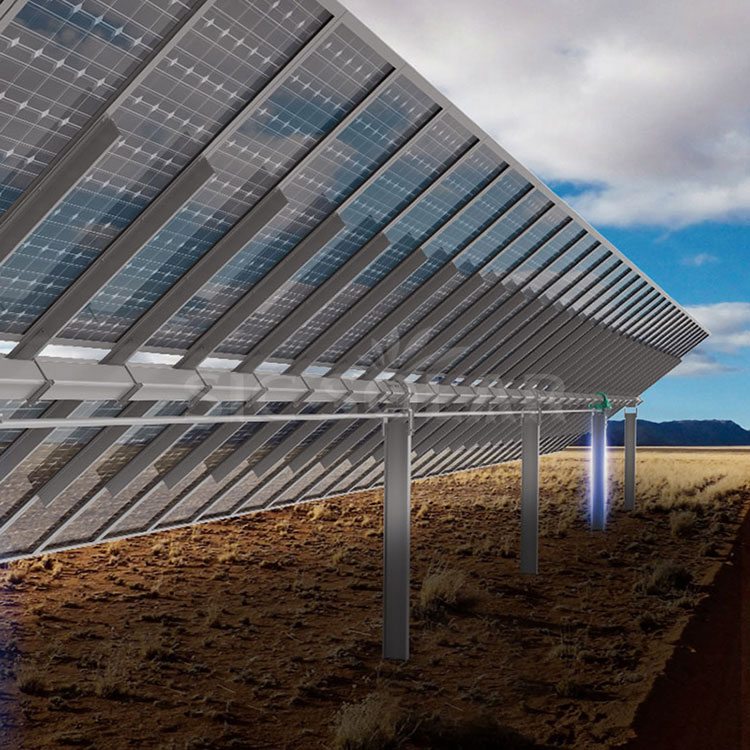
Solar tracking mounts are mechanical support systems designed to orient photovoltaic panels toward the sun throughout the day. Unlike fixed-tilt systems, these mounts actively adjust panel angles to follow solar azimuth and elevation changes. The primary objective is to maximize direct irradiance capture and minimize angular losses caused by suboptimal positioning.
In utility-scale solar farms and high-efficiency commercial installations, tracking mounts are becoming a standard choice due to their ability to significantly increase annual energy yield without requiring additional panel surface area.
2. Why Fixed Mounts Limit Solar Efficiency
Fixed mounting systems are structurally simpler but inherently constrained by geometry. Since the sun’s position changes continuously, a static panel orientation results in only partial alignment for most of the day. This leads to:
- Reduced peak power generation hours
- Seasonal efficiency variation
- Higher land-use requirements for equivalent output
These limitations create inefficiencies that become more pronounced in large-scale energy projects where every percentage of output gain translates into significant financial impact.
3. Types of Solar Tracking Systems
Solar tracking technology is generally categorized into two major types based on movement geometry.
- Single-axis tracking systems: Rotate panels along one axis, typically east-to-west, following daily solar movement.
- Dual-axis tracking systems: Adjust both azimuth and tilt, allowing full three-dimensional alignment with the sun.
Single-axis systems are widely adopted due to their balance between cost and performance, while dual-axis systems are used in high-precision or high-latitude environments requiring maximum irradiance capture.
4. How Tracking Mechanisms Work
Solar tracking mounts rely on a combination of sensors, controllers, and mechanical actuators. Light sensors or astronomical algorithms determine the sun’s position. The controller processes this data and signals motors or hydraulic systems to reposition the panels.
Core components include:
- Drive motors or linear actuators
- Control units with tracking algorithms
- Structural torque tubes and support frames
- Wind load sensors and safety stow systems
In advanced systems, predictive tracking based on GPS and time-based solar modeling reduces sensor dependency and increases long-term reliability.
5. Performance Comparison Table
| Feature | Fixed Mount System | Single-Axis Tracker | Dual-Axis Tracker |
|---|---|---|---|
| Energy Yield | Baseline | +15% to +25% | +25% to +40% |
| Mechanical Complexity | Low | Medium | High |
| Maintenance Requirement | Minimal | Moderate | Higher |
| Land Efficiency | Standard | Improved | Maximum |
6. Key Benefits for Commercial Projects
For developers and EPC contractors, solar tracking mounts offer measurable advantages that directly influence project viability.
- Higher energy output: Increased generation without expanding panel area
- Improved ROI: Better revenue per installed watt
- Grid optimization: More consistent daytime production curve
- Scalability: Suitable for both utility-scale and industrial installations
These benefits are especially relevant in regions with high direct normal irradiance (DNI), where tracking systems can significantly outperform fixed configurations.
7. Design Challenges and Engineering Considerations
While performance gains are substantial, solar tracking systems introduce additional engineering complexity. Structural stability under wind loads is a major concern. Dynamic systems must withstand torque fluctuations while maintaining precise alignment.
Key considerations include:
- Wind resistance and stow positioning strategies
- Corrosion protection for long-term outdoor exposure
- Control system redundancy
- Terrain adaptability for uneven land
Proper engineering design ensures that energy gains are not offset by increased downtime or maintenance costs.
8. Real-World Application Scenarios
Solar tracking mounts are widely used in multiple sectors:
- Utility-scale solar farms
- Large industrial manufacturing facilities
- Agricultural solar integration systems
- Remote power generation sites
In desert regions and high-sunlight zones, tracking systems are often the preferred solution due to their ability to maximize energy yield per square meter of land.
9. Maintenance and Lifecycle Factors
Although tracking systems involve moving parts, modern designs prioritize durability and low maintenance. Routine inspections typically focus on mechanical joints, actuator health, and controller calibration.
Lifecycle advantages include:
- Extended system efficiency over 20+ years with proper maintenance
- Predictive maintenance capabilities in smart systems
- Modular component replacement reducing downtime
Manufacturers like Xiamen Sic New Energy Co., Ltd. integrate corrosion-resistant materials and intelligent control systems to enhance long-term operational stability.
10. Conclusion and Industry Outlook
Solar tracking mounts represent a strategic evolution in photovoltaic infrastructure. By dynamically aligning panels with the sun’s trajectory, these systems unlock higher energy yields and improve overall system economics. As solar adoption accelerates globally, tracking technology is expected to play an increasingly central role in large-scale renewable deployments.
Future developments are likely to focus on AI-driven predictive tracking, lighter composite structures, and fully autonomous maintenance diagnostics. These advancements will further reduce operational costs while improving energy efficiency metrics across diverse environments.
FAQ
Q1: Are solar tracking mounts worth the extra investment?
Yes. In most commercial scenarios, the additional energy yield compensates for higher upfront costs within a predictable payback period.
Q2: Do tracking systems require a lot of maintenance?
Maintenance requirements are moderate but manageable, especially with modern sealed actuators and automated diagnostics.
Q3: Can tracking mounts withstand strong wind conditions?
Yes. Systems are designed with stow modes that minimize wind resistance during extreme weather events.
Q4: What is the main advantage of dual-axis systems?
They provide maximum sun alignment accuracy, leading to the highest possible energy capture.
Q5: Where can I source reliable solar tracking systems?
Professional manufacturers such as Xiamen Sic New Energy Co., Ltd. provide engineered solutions tailored for different project scales and environmental conditions.
For customized solar tracking solutions, engineering support, and project consultation, reach out to Xiamen Sic New Energy Co., Ltd.. Our technical team is ready to support your project requirements with efficient, durable, and performance-driven mounting systems.
Contact us today to discuss your solar tracking mount project and explore how we can help improve your system’s energy output and long-term return on investment.