

How Do Solar Panel Cable Connectors Improve PV System Reliability?
2026-09-30
Solar power systems depend on more than efficient photovoltaic modules and high-performance inverters. Every connection between panels, cables, combiner boxes, and other DC components must remain electrically stable and mechanically secure throughout years of outdoor operation. Solar Panel Cable Connectors provide this essential connection point, helping transfer generated electricity while protecting the circuit from moisture, dust, ultraviolet exposure, temperature changes, and mechanical stress. For installers, distributors, EPC contractors, and solar equipment buyers, choosing suitable connectors can directly influence installation quality, maintenance requirements, and long-term system reliability.
What Are Solar Panel Cable Connectors?
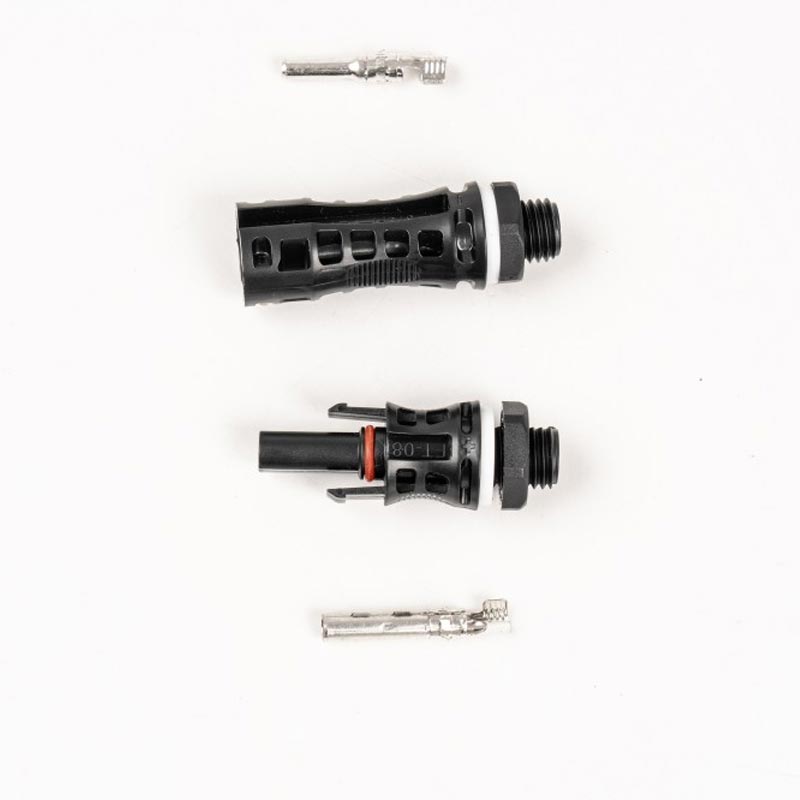
Solar Panel Cable Connectors are specialized DC connectors designed to join photovoltaic cables and electrical components in solar power systems. MC4-style connectors are widely used because their locking structure allows relatively fast installation while providing a secure connection.
A typical connector consists of a male and female housing, conductive metal contacts, insulation components, sealing elements, and a cable-entry structure. Depending on the application, connectors may also be available in branch, fuse, diode, or panel-mount configurations.
Modern PV connectors can be designed for systems rated up to 1000V or 1500V DC, while protection levels such as IP67 are commonly specified for outdoor applications. IEC 62852 establishes safety and performance requirements for connectors used in photovoltaic DC circuits.
Why Are Solar Panel Cable Connectors Important?
A solar connector may be relatively small compared with a photovoltaic module, but it performs a critical electrical and mechanical function. A poorly selected or improperly installed connection can increase contact resistance, create unwanted heat, reduce energy transmission, and increase maintenance risks.
High-quality Solar Panel Cable Connectors can provide several important benefits:
-
Stable electrical conductivity: Properly designed metal contacts help maintain a low-resistance electrical path.
-
Weather protection: Sealed connector structures help protect internal contacts from water and dust.
-
UV resistance: Outdoor PV systems are continuously exposed to sunlight, making UV-resistant housing materials important.
-
Mechanical security: Locking mechanisms reduce the possibility of accidental separation caused by vibration or cable movement.
-
Installation efficiency: Plug-and-lock structures can simplify cable connection and reduce installation time.
-
Long-term durability: Suitable materials and appropriate ratings help connectors withstand temperature cycling and demanding outdoor conditions.
For example, commercially available PV connectors commonly specify IP67 protection, temperature ranges extending below freezing and rated currents around 30A, although actual specifications vary by product and manufacturer.
Which Features Should Buyers Check?
Selecting a connector based only on its appearance or the phrase "MC4 compatible" can create unnecessary risks. Buyers should evaluate the complete electrical and mechanical specification.
| Selection Factor | What to Check | Why It Matters |
|---|---|---|
| Voltage Rating | 1000V or 1500V DC | Must match the PV system |
| Current Rating | Rated operating current | Prevents unsuitable current loading |
| Cable Size | Conductor cross-section and cable diameter | Ensures proper termination and sealing |
| Protection Rating | IP67 or applicable requirement | Helps protect against environmental exposure |
| Temperature Range | Project-specific operating conditions | Supports outdoor reliability |
| Contact Material | Copper or plated conductive material | Influences conductivity and corrosion resistance |
| Certification | Applicable IEC/UL requirements | Supports project compliance |
| Connector Compatibility | Approved mating connector | Helps avoid connection problems |
IEC 62852 covers photovoltaic DC connectors up to 1500V DC, while specific products may have different current, temperature, cable-size, and certification specifications. Buyers should therefore verify the actual datasheet rather than assuming all connectors with a similar appearance have identical performance.
How Do Connectors Affect Solar System Performance?
The primary role of a connector is to establish a reliable electrical pathway. When the contact interface is properly designed and correctly terminated, electrical current can pass through with minimal additional resistance.
A secure connection can support:
-
Consistent power transmission – reducing unnecessary electrical losses at connection points.
-
Stable string operation – helping maintain reliable connections between PV modules.
-
Better environmental protection – limiting exposure of conductive components to moisture and contaminants.
-
Reduced maintenance requirements – durable connections can reduce the frequency of connection-related service work.
-
Faster installation – standardized connector structures can simplify field assembly.
However, connector performance depends on the entire connection system. Cable selection, crimping quality, installation tools, connector matching, and correct torque are all important. NREL has specifically highlighted concerns around intermatability between connectors from different manufacturers, so "compatible-looking" products should not automatically be treated as safely interchangeable.
Where Are Solar Panel Cable Connectors Used?
Solar Panel Cable Connectors can be incorporated into a wide range of photovoltaic applications, including:
-
Residential rooftop solar systems
-
Commercial and industrial rooftop installations
-
Ground-mounted solar farms
-
Utility-scale photovoltaic projects
-
Solar agricultural systems
-
Off-grid and hybrid solar systems
-
Battery-connected PV applications
-
Portable and modular solar equipment
Different projects may require different connector configurations. Standard male/female connectors are suitable for basic cable connections, while Y or T branch connectors can be used for specific parallel connection arrangements. Fuse and diode connector variants can also serve specialized circuit requirements.
What Makes a Reliable Solar Connector Supplier?
For solar installers and international buyers, product quality is only one part of the purchasing decision. A reliable supplier should also understand cable specifications, application conditions, customization requirements, quality control, and international project needs.
Ningbo Dsola New Energy Technical Co., Ltd. focuses on solutions for the new energy sector and can provide professional support for buyers seeking Solar Panel Cable Connectors for different photovoltaic applications. For OEM projects, customized specifications, bulk purchasing, or application-specific requirements, supplier communication should cover connector type, cable size, electrical ratings, environmental conditions, and applicable certifications before production.
For B2B buyers, several factors can help streamline procurement:
-
Confirm technical specifications before ordering.
-
Match connector ratings with the complete PV system.
-
Verify cable compatibility.
-
Request relevant test reports or certifications.
-
Confirm approved mating combinations.
-
Consider project environment and installation conditions.
-
Establish consistent quality requirements for bulk orders.
Solar Panel Cable Connectors vs. Ordinary Electrical Connectors
Ordinary electrical connectors are not automatically suitable for photovoltaic DC applications. Solar connectors are specifically developed for the electrical and environmental conditions associated with PV installations.
| Feature | Solar PV Connector | Ordinary Electrical Connector |
|---|---|---|
| Application | Photovoltaic DC systems | General electrical equipment |
| Outdoor Exposure | Designed for outdoor conditions | Depends on product |
| UV Resistance | Commonly required | Not always required |
| Waterproof Design | Often available at IP67 level | Varies significantly |
| PV Standards | May comply with IEC 62852 | May follow other standards |
| DC Voltage Requirements | Designed for PV voltage levels | Application dependent |
| Locking Structure | Common in PV connectors | Depends on design |
This distinction is particularly important when purchasing connectors for long-term outdoor solar installations.
How Can Ningbo Dsola Support Solar Cable Procurement?
For distributors, installers, EPC companies, and solar equipment importers, purchasing decisions often involve more than selecting a standard connector. Projects may require different cable sizes, voltage levels, connector structures, packaging configurations, or private-label requirements.
Ningbo Dsola New Energy Technical Co., Ltd. can support buyers looking for practical photovoltaic connection solutions by combining product knowledge with project-oriented communication. Whether the requirement involves standard Solar Panel Cable Connectors or larger-volume customized procurement, clear technical specifications can help buyers achieve better consistency from product selection through installation.
The right connector should be treated as an integral component of the PV system rather than a simple accessory. With appropriate electrical ratings, environmental protection, mechanical security, and verified compatibility, Solar Panel Cable Connectors can contribute to stable and dependable solar power infrastructure.
If you are sourcing reliable Solar Panel Cable Connectors for residential, commercial, industrial, or utility-scale photovoltaic projects, contact us at Ningbo Dsola New Energy Technical Co., Ltd. to discuss your application, specifications, bulk requirements, and customized solar connection needs.