

How Do Roof Hooks Compare to Other Solar Mounting Solutions
2026-03-16
When planning a photovoltaic installation, the choice of mounting hardware is as critical as the panels themselves. For homeowners and installers dealing with tiled roofs, the debate often centers on whether to use a universal system or specialized components. Roof hooks for solar mounting systems have emerged as a leading solution, but how do they stack up against alternatives like rail-less brackets or ballasted mounts? At Egret Solar, we specialize in engineering mounting solutions that balance structural integrity with ease of installation.
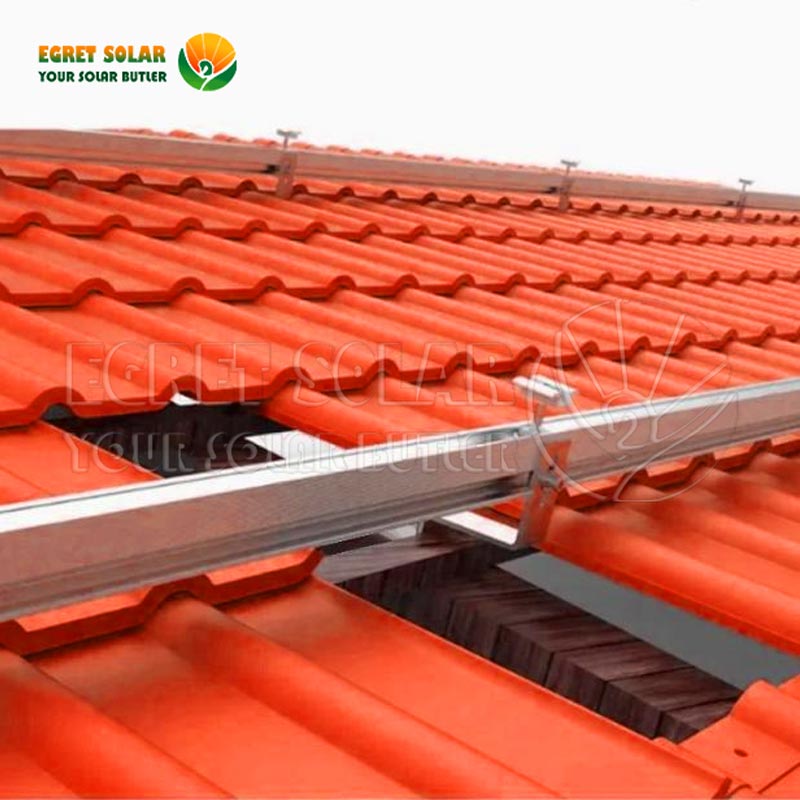
The Core Comparison: Roof Hooks vs. Alternatives
To understand the value of roof hooks for solar mounting systems, it is essential to compare them against the two most common alternatives: Ballasted Mounts (often used on flat roofs) and Rail-Less Standoffs (common on comp shingle roofs).
| Feature | Roof Hooks for Solar Mounting System (Egret Solar) | Rail-Less Brackets | Ballasted Mounts |
|---|---|---|---|
| Roof Type | Pitched Tiled Roofs (Clay/Concrete) | Shingle/Composite Roofs | Flat Roofs |
| Penetration Point | Single point under tile | Single point through shingle | None (weight-based) |
| Aesthetics | High (Hidden under tiles) | Moderate (Visible flashing) | Low (Visible structure) |
| Wind Resistance | Excellent (Mechanical grip) | Excellent | Dependent on ballast weight |
| Installation Speed | Fast (Tile adjustment) | Fast (Direct deck mounting) | Slow (Material handling) |
Why Installers Prefer the Hook Method
The primary engineering advantage of roof hooks for solar mounting systems lies in how they manage water runoff. Unlike rail-less systems that require a top-mounted flashing sealed with asphalt, roof hooks allow the existing roof tile to sit flush over the hook base.
-
Structural Integrity: The hook is driven directly into the rafter, providing a solid mechanical bond that wind uplift cannot compromise.
-
Tile Preservation: Instead of cutting tiles to fit around a bracket, the tile sits on top of the hook. This maintains the original integrity of the roofing material.
-
Versatility: Egret Solar designs hooks that are adjustable, accommodating various tile profiles from flat Roman tiles to high-profile S-tiles.
Key Advantages of Egret Solar Roof Hooks
Choosing the right hook can simplify an entire project. Here are the primary benefits that set Egret Solar hardware apart in the market:
-
Universal Compatibility: Our hooks are designed to fit most standard aluminum rails, reducing the need for adapter kits.
-
Corrosion Resistance: Made from high-grade aluminum and stainless steel, ensuring a lifespan that matches your solar panels.
-
Load Distribution: The wide base of the hook spreads the weight, preventing point loads that can crack tiles during thermal expansion.
Roof Hooks for Solar Mounting System: FAQ
1. Can roof hooks be used on any type of tiled roof?
Yes, but the specific model matters. Roof hooks for solar mounting systems are generally designed for interlocking tiles such as concrete, clay, or slate. However, the profile of the tile dictates the shape of the hook. For example, a hook designed for a flat concrete tile will not fit correctly under a curved Marseille tile. Egret Solar offers a range of profiles to match specific tile geometries, ensuring the hook sits flush without forcing the tile, which could cause cracking.
2. How do roof hooks guarantee that my roof will not leak?
The waterproofing mechanism of a roof hook relies on the roof's natural layering. Unlike a bracket that penetrates the waterproof membrane from above, a roof hook is installed on top of the rafter and underlayment. The tile is then placed over the hook's base. The hook does not break the plane of the tile where water flows; it hides beneath it. Egret Solar hooks are designed with a slight curve to match the tile, ensuring that water runs over the hook and down the tile as intended, making the penetration point virtually invisible to water.
3. Are roof hooks strong enough to handle heavy snow loads?
Absolutely. Roof hooks for solar mounting systems are engineered for tensile and shear strength. Because the hook is anchored directly into the rafter with a lag bolt (usually 8mm or 10mm), the connection point is stronger than the tile itself. In areas with heavy snow, the load is transferred from the panel, to the rail, to the hook, and directly into the structural framing of the house. Egret Solar hooks are load-tested to exceed international standards, ensuring they can withstand extreme weather conditions without deforming.
Conclusion and Call to Action
Selecting the right mounting solution ensures the longevity of both your roof and your solar investment. While ballasted and rail-less systems have their place, the mechanical grip and water-shedding design of roof hooks for solar mounting systems make them the superior choice for tiled roofs.
Ready to secure your next project with industry-leading hardware?
Contact Us today at Egret Solar for a quote or technical consultation on our complete range of mounting solutions.