

How Can Solar Fuse Protection Prevent Hidden PV System Failures Before They Turn Expensive?
2026-04-27
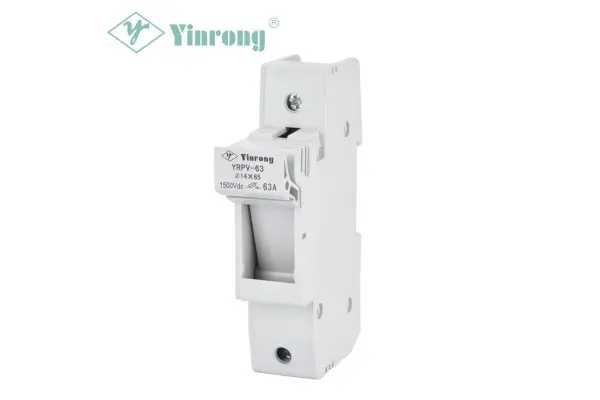
When I look at the way modern solar systems are designed, I see one issue that still gets underestimated far too often: circuit protection on the DC side. As more rooftop and ground-mounted projects move toward higher voltage, higher power density, and longer service-life expectations, choosing the right Solar Fuse Protection solution is no longer a minor detail. It becomes part of the project’s long-term safety strategy. That is exactly why manufacturers such as Zhejiang Galaxy Fuse Co., Ltd. have drawn attention in the photovoltaic protection field. In real projects, I have found that reliable Solar Fuse Protection helps prevent overheating, reverse current damage, nuisance downtime, and difficult maintenance events that can quietly erode system profitability.
For buyers, EPC contractors, panel builders, and maintenance teams, the pain point is rarely just “Which fuse should I buy?” The real question is usually more practical: how can I avoid repeated replacements, uncertain fault isolation, and avoidable fire risk while keeping the PV system stable year after year? In this article, I will break that problem down in a way that matches how engineers and procurement teams actually evaluate photovoltaic components.
Why Do So Many Solar Projects Still Struggle With Protection Problems?
Many people assume a fuse is a basic commodity part, so they focus on price first and technical fit later. That habit creates trouble in solar applications because PV circuits behave differently from ordinary AC systems. A photovoltaic array operates on DC power, and DC arcs do not extinguish as easily as AC arcs. Once a fault occurs, the fuse is expected to interrupt current under much more demanding conditions.
I often see the same three issues behind repeat failures:
- Underrated voltage selection for modern PV strings
- Using general DC fuses instead of photovoltaic-specific products
- Ignoring high rooftop temperatures and long-term environmental stress
When these issues are overlooked, the result may not be immediate catastrophic failure. Sometimes the damage appears gradually through heat buildup, poor contact performance, aging of nearby components, and unstable system output. That is why a well-matched Solar Fuse Protection design should be treated as a reliability measure, not just a compliance checkbox.
What Makes PV Fuse Requirements Different From Standard Electrical Protection?
In a solar installation, the fuse has to work in a circuit where reverse current, sustained DC voltage, and changing outdoor conditions all matter at the same time. A standard fuse that looks acceptable on paper may still perform poorly in actual PV service if its arc-extinguishing capability, material structure, or certification scope does not match photovoltaic duty.
I usually evaluate PV fuse requirements from four angles:
- DC voltage capability
- Current carrying stability under temperature stress
- Interrupting performance during fault conditions
- Compatibility with fuse holders and installation layout
This is where dedicated photovoltaic products stand out. Based on the company’s product direction, Zhejiang Galaxy Fuse Co., Ltd. focuses on solar PV fuse links and fuse holders in configurations used for 1000VDC, 1100VDC, and 1500VDC systems, which is important because system voltage has become a decisive selection factor in current solar designs.
Which Buyer Concerns Should Be Solved Before Choosing a Fuse Supplier?
When I discuss fuse selection with buyers, I notice they usually care about much more than amperage and dimensions. They want to know whether the product will reduce field complaints, simplify sourcing, and support consistent system performance across different project types.
The most common concerns include:
- Will the fuse match high-voltage PV applications safely?
- Will the holder and fuse fit standard DIN rail or combiner box layouts?
- Will the product be easy to replace and inspect during maintenance?
- Will the supplier provide consistent quality for repeat orders?
- Will the protection scheme reduce service calls instead of creating them?
These are practical concerns, and they matter because a fuse is rarely judged on its own. It is judged by what happens after installation. Good Solar Fuse Protection should lower operating risk, shorten troubleshooting time, and help buyers avoid the hidden cost of cheap but unstable components.
How Can the Right Solar Fuse Protection Improve System Safety and Stability?
From a performance point of view, the right photovoltaic fuse improves more than one part of the system. It helps isolate faulted strings, reduces the chance of thermal escalation, and supports safer maintenance because the fault location becomes easier to identify. In projects where uptime matters, these advantages directly affect return on investment.
I would summarize the value this way:
| Project Need | How Proper PV Fuse Design Helps | Why It Matters to Buyers |
| String fault isolation | Interrupts reverse overcurrent before damage spreads | Protects modules, cables, and combiner components |
| High-voltage operation | Supports 1000VDC to 1500VDC system demands | Matches current commercial and utility PV trends |
| Heat resistance | Performs better under rooftop temperature stress | Reduces nuisance failures and unstable output |
| Maintenance efficiency | Works with dedicated holders and visible replacement logic | Saves labor time during inspection and service |
| Procurement consistency | Standardized PV-focused product range | Helps simplify repeat purchasing and project expansion |
That is why I do not treat Solar Fuse Protection as an isolated part number. I treat it as a risk-control component inside the whole PV protection chain.
What Product Advantages Matter Most in Real Solar Applications?
In real buying decisions, technical suitability has to connect with product advantages that translate into field value. Based on the product positioning visible from Galaxy Fuse, several strengths are especially relevant for solar projects.
- Coverage for mainstream photovoltaic voltage platforms
- Dedicated product lines for PV fuse links and fuse holders
- Configurations that support practical installation needs
- Manufacturing focus on fuse technology rather than unrelated product mixing
- Long-term orientation toward solar protection applications
I consider this specialization important because PV protection products should not feel like a side category. A focused supplier is more likely to understand application details such as holder compatibility, thermal performance, dimensional consistency, and the expectations of installers who need fast replacement and reliable fit.
Another advantage worth noticing is the integration of fuse holder solutions alongside fuse links. In field maintenance, mismatched holders can create contact resistance issues or installation inconvenience. When the protection scheme is considered as a matched combination rather than a loose assortment of parts, the result is usually more stable.
How Should I Compare Solar Fuse Options Without Falling Into a Price-Only Decision?
Price matters, of course, but I never think it should be the first filter. A cheap fuse that causes one preventable site visit may already cost more than the original savings. For that reason, I prefer a comparison method that balances technical fit, project risk, and purchasing efficiency.
Here is the framework I would use:
| Comparison Factor | What I Check | Why It Is Important |
| Voltage rating | Whether it suits the PV system design range | Prevents under-specification in higher-voltage systems |
| Application focus | Whether it is clearly built for PV protection | Reduces misuse of generic electrical fuses |
| Holder compatibility | Whether matched holders are available | Improves contact reliability and installation ease |
| Supplier specialization | Whether the manufacturer is experienced in fuse products | Supports consistency and technical understanding |
| Long-term supply support | Whether the range appears scalable for repeat procurement | Helps standardize future projects and spare parts planning |
If I apply that framework to photovoltaic sourcing, a specialized manufacturer with a defined solar product structure becomes much easier to evaluate than a seller offering scattered generic components. That is one reason why Zhejiang Galaxy Fuse Co., Ltd. can fit procurement conversations where buyers want both application relevance and product line clarity.
Is Fuse Holder Matching Really That Important in Solar Projects?
Yes, and I would say it is often underestimated. People tend to focus on the fuse link, but the holder plays a direct role in installation quality, replacement convenience, and long-term electrical contact stability. In rooftop or outdoor-adjacent environments, small weaknesses in mechanical retention or contact quality can become much more visible over time.
I pay attention to holder matching because it affects:
- Ease of maintenance access
- Secure fit under thermal cycling
- Electrical continuity and reduced contact loss
- Cleaner combiner box organization
- Replacement speed during service events
When a manufacturer offers both fuse links and compatible holders within the same solar category, it becomes easier for buyers to reduce compatibility guesswork. That also helps standardize spare parts management across projects.
What Mistakes Do Buyers Make When They Underestimate Solar Fuse Protection?
I usually see these mistakes repeated across both small commercial and larger industrial PV projects:
- Choosing based only on current rating while ignoring voltage requirements
- Using non-PV-specific parts to save short-term cost
- Buying fuse links without checking holder suitability
- Overlooking future maintenance and replacement convenience
- Splitting sourcing across too many unrelated vendors
Each of these decisions can look harmless at the purchasing stage, but together they create a protection scheme that is harder to maintain and easier to fail. Good Solar Fuse Protection should reduce uncertainty, not increase it.
How Can a Better Fuse Strategy Support Long-Term PV Project Profitability?
Some buyers focus heavily on upfront component cost because they want to keep the bill of materials under control. I understand that pressure. Still, the longer I work around electrical product selection, the more I see that reliability usually wins the cost argument in the end.
A stronger fuse strategy supports profitability in several ways:
- It helps prevent avoidable damage to higher-value PV components
- It reduces maintenance interruptions and troubleshooting hours
- It supports more stable power generation continuity
- It helps procurement teams build repeatable standards for future projects
- It lowers the risk of reputation damage caused by preventable failures
For installers and developers, that matters because system owners rarely remember the savings from a slightly cheaper fuse. They remember downtime, callbacks, replacement work, and safety concerns. That is why I view Solar Fuse Protection as a small component with unusually large influence.
Which Kind of Supplier Is More Useful When Projects Start Scaling Up?
Once a company moves from one-off orders to repeat solar projects, supplier choice becomes much more strategic. At that point, buyers often want technical continuity, cleaner communication, and a product range that can support multiple system configurations without forcing a complete sourcing reset every time.
I believe a useful supplier in this stage should offer:
- A clear solar-focused product structure
- Stable manufacturing orientation
- Practical options for both fuse links and holders
- Product lines that align with real PV voltage trends
- Enough specialization to support confidence in repeat procurement
That is where a company like Zhejiang Galaxy Fuse Co., Ltd. becomes easier to position. Rather than presenting fuse products as a vague electrical accessory category, it presents solar power protection as a defined product segment. From an SEO and buyer-conversion perspective, that kind of category clarity also helps the market understand exactly what problem the company solves.
What Should I Do If I Want Safer and More Reliable PV Protection?
If I were selecting components for a new PV project today, I would not leave protection decisions until the end of the purchasing process. I would review the operating voltage, the installation structure, the maintenance plan, and the holder compatibility at the same time. That gives me a much stronger basis for choosing the right Solar Fuse Protection product instead of patching protection gaps later.
If you are currently comparing solar fuse options, updating an existing PV design, or trying to reduce fuse-related failures in the field, this is a good moment to review products from Zhejiang Galaxy Fuse Co., Ltd. and assess whether their solar fuse links and holders fit your application. A better protection choice today can help prevent expensive service problems tomorrow. If you would like technical support, sourcing advice, or product details for your project, please contact us and leave your inquiry. We are ready to help you choose a more dependable Solar Fuse Protection solution for your solar system.