
How Can a Solar Tile Roof Mounting System Make Rooftop Solar Safer and Easier to Install?
2026-05-06
When I evaluate rooftop solar projects, I do not only look at panel efficiency or inverter selection. I also pay close attention to the mounting structure, because that is where long-term stability, waterproof reliability, and installation efficiency often begin. In that context, Xiamen Egret Solar New Energy Technology Co., Ltd. gradually came onto my radar as a supplier focused on practical solar mounting solutions for different roof applications. What interested me most was how a well-designed Solar Tile Roof Mounting System can help installers, distributors, and project owners solve real jobsite problems without overcomplicating the roof structure.
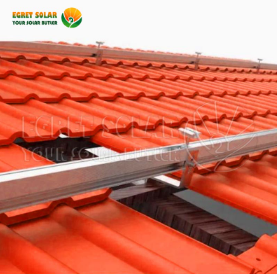
From my perspective, tile roofs are attractive but demanding. They look great, yet they can be fragile, uneven, and time-consuming to work with if the mounting approach is not matched to the roof profile. That is exactly why choosing the right Solar Tile Roof Mounting System matters so much. A good system is not just a set of brackets and rails. It is a complete structural idea that should reduce installation risk, protect the roof, adapt to different tile types, and keep maintenance manageable over the long term.
Why Do So Many Solar Projects on Tile Roofs Run into Delays?
I have seen many buyers assume that all roof mounting products are basically similar. In reality, tile roofs create a very different installation environment from metal roofs or flat roofs. The pain points usually show up early, and they keep affecting cost later if the wrong product is selected.
- I often find that tile breakage becomes a hidden cost when hooks do not match the roof shape well.
- I see installers lose time when too many parts require on-site cutting or repeated alignment.
- I notice waterproofing concerns rise quickly when penetrations and flashing details are not handled properly.
- I hear distributors worry about whether one solution can serve enough local roof types to be commercially practical.
- I also see project owners become cautious when they are not sure the structure can handle wind, corrosion, and long service life.
These are not minor concerns. They affect labor scheduling, warranty confidence, stock planning, and customer satisfaction. That is why I always treat the Solar Tile Roof Mounting System as a decision that directly influences project profitability rather than as a low-priority accessory purchase.
What Should I Actually Expect from a Good Tile Roof Mounting Solution?
For me, a dependable tile roof solar structure should do more than simply hold modules in place. It should help every stakeholder in the chain. The installer wants speed and flexibility. The distributor wants products that fit mainstream demand. The end user wants a secure solar array without worrying about the roof after every storm season.
A capable Solar Tile Roof Mounting System should usually deliver the following advantages:
- Strong compatibility with common tile roof types
- Reliable hook and rail connection for structural stability
- Reasonable adjustability to handle real roof deviations
- Fast assembly that reduces labor pressure on site
- Corrosion-resistant materials suitable for long outdoor exposure
- Clean layout that helps preserve roof appearance
- Predictable component selection for easier purchasing and stocking
When those basics are covered well, the system stops feeling like a technical burden and starts becoming a practical sales advantage.
Which Features Usually Make a Solar Tile Roof Mounting System More Competitive?
I pay the most attention to the features that affect installation speed, product lifespan, and site adaptability. Those are the areas where a buyer can clearly feel the difference between a generic support structure and a better-engineered option.
| Feature | Why I Care About It | How It Helps in Real Projects |
| Roof hook options | Different tile shapes need different contact and clearance conditions | Improves compatibility with Roman tile, slate-style tile, and other common roof formats |
| Adjustable hook design | Roofs are rarely perfectly uniform | Gives installers more freedom to align rails without excessive rework |
| Pre-assembled components | Labor time is expensive and mistakes happen during loose assembly | Speeds up installation and reduces on-site handling complexity |
| Aluminum rails and stainless steel hardware | Outdoor systems must resist corrosion over time | Supports long service life and stable mechanical performance |
| Fast clamp connection | Repetitive installation steps affect total labor cost | Helps crews complete projects more efficiently |
| Application-specific configurations | One roof type rarely represents the whole market | Makes product offering more useful for distributors and installers |
In my experience, these details are exactly where the value of a Solar Tile Roof Mounting System becomes visible. Buyers are not only purchasing metal parts. They are purchasing lower uncertainty on the roof.
How Does the Right System Help Me Reduce Installation Risk?
If I were advising a buyer or installer, I would say the first real benefit is risk control. Tile roofs can crack, shift, or create alignment challenges if the support structure is too rigid or poorly matched. A system designed specifically for tile roof applications helps reduce these issues by giving installers more appropriate hook selection, better rail support, and cleaner module positioning.
I also think labor efficiency matters far more than many first-time buyers expect. On paper, a lower-cost product may seem attractive. On the roof, however, difficult alignment, slow fastening, and repeated adjustments can erase that price advantage very quickly. A more installer-friendly Solar Tile Roof Mounting System often saves money in a less obvious but more meaningful way by cutting labor hours and reducing correction work.
What Do Buyers Usually Want to Know Before They Place an Order?
When I look at how real purchasing decisions are made, I see the same questions come up again and again. Buyers do not just want a price. They want confidence that the system can match their market and perform consistently after delivery.
- Will this system fit the tile roof styles my customers actually use?
- Can my installation team work with it quickly without extra training?
- Are the materials suitable for long-term outdoor exposure?
- Can I source standard parts easily for repeat orders?
- Will the structure help me reduce complaints related to roof disturbance or leakage concerns?
- Can the supplier support customized or market-specific configurations when needed?
These are sensible questions, and I think a supplier earns trust when it addresses them through product design rather than through marketing language alone.
Which Business Advantages Can Distributors and EPCs Gain from Better Mounting Design?
I think this is one of the most overlooked parts of the conversation. A reliable Solar Tile Roof Mounting System is not only a technical product. It can also become a business tool. For distributors, the ideal product range is one that covers enough roof scenarios without creating unnecessary stock pressure. For EPCs and installers, it is even more direct. Faster assembly and fewer site surprises can improve project margins and scheduling performance.
Here is how I would summarize the commercial value:
| Buyer Type | Main Concern | Practical Value of the System |
| Distributor | Product-market fit | Broader roof compatibility can improve sales potential across different local projects |
| Installer | On-site efficiency | Faster assembly and adjustment can reduce installation time |
| EPC contractor | Project consistency | Standardized components help improve planning and execution |
| Homeowner | Roof safety and appearance | Well-matched mounting design supports clean installation and stable performance |
| Commercial owner | Long-term reliability | Durable materials and proper structural support help reduce future maintenance concerns |
Is It Better to Choose a Standard Option or a More Flexible Solution?
My answer is that it depends on your market, but flexibility usually wins in the long run. Some regions may favor standard fixed hooks because they are familiar, economical, and easier to stock. Other markets may place more value on adjustable solutions because labor is expensive and installation speed matters more than the lowest hardware price.
That is why I pay attention to whether a supplier can offer both mainstream standard configurations and more adaptable designs. In practical sourcing, flexibility creates room for growth. It allows a business to serve more roof conditions without rebuilding its entire product strategy every time a new project appears.
How Can I Tell Whether a Supplier Understands Real Tile Roof Challenges?
I usually look for signs that the supplier is thinking beyond a simple catalog listing. A serious manufacturer should understand that tile roofs are not one-size-fits-all. Different profiles, spacing, roof age, and installer habits all affect final system selection. When a company talks about multiple hook types, different tile applications, efficient rail-and-clamp combinations, and customized service, I see that as a stronger signal than broad promotional claims.
That is one reason why solutions associated with Xiamen Egret Solar New Energy Technology Co., Ltd. are relevant in this category. From a buyer’s point of view, the value is not just in offering a single roof hook or rail profile. The value is in building a usable product pathway for residential and commercial tile roof solar projects that need stability, installation efficiency, and practical sourcing support at the same time.
What Makes This Decision So Important for Long-Term Solar Performance?
I always remind people that modules may get most of the attention, but the mounting structure is what keeps the solar array secure year after year. If the mounting choice is poor, problems show up in the form of difficult installation, damaged tiles, inconsistent layout, expensive labor, and unnecessary post-installation concerns. If the choice is good, the whole project feels smoother from procurement to commissioning.
That is why I see the Solar Tile Roof Mounting System as a core investment in project reliability. It supports structural safety, installation speed, roof compatibility, and long-term confidence. Those are the outcomes that matter to real buyers, not empty claims.
Why Should I Act Now If I Am Planning My Next Tile Roof Solar Project?
If you are comparing mounting options for upcoming residential or commercial installations, this is the right time to look more closely at what your roof type, labor conditions, and market demand actually require. The right supplier and the right Solar Tile Roof Mounting System can help you reduce installation headaches, improve project consistency, and make your solar offering easier to sell.
If you want a solution that is better aligned with real tile roof installation needs, now is a good moment to review your options carefully. If you are ready to discuss product details, compatibility, or customized support for your market, please contact us and leave your inquiry. A clear conversation today can save a lot of avoidable cost on the roof tomorrow.