

How Can a Solar Ground Mounting System Improve Project Value and Long-Term Reliability?
2026-04-17
When I evaluate a utility-scale or commercial solar project, I do not only look at module efficiency or inverter choice. I pay close attention to the supporting structure, because the frame under the panels affects installation speed, maintenance planning, weather resistance, and the project’s total return over time. That is why I keep coming back to Xiamen Egret Solar New Energy Technology Co., Ltd. when discussing practical ground-based solar solutions. A well-designed Solar Ground Mounting System can do much more than hold panels in place. It can help me reduce labor pressure, adapt to local soil conditions, improve structural stability, and make the whole power plant easier to scale.
In many real buying situations, customers are not simply asking for metal supports. They are trying to solve specific project problems. They may need a structure that performs well in windy areas, a layout that works on uneven land, or a solution that balances durability with budget control. A dependable Solar Ground Mounting System answers those concerns by combining sound engineering, flexible design options, and simpler site execution.
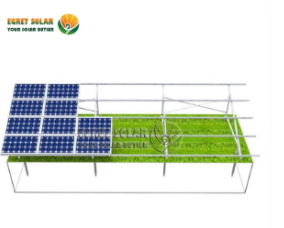
What Do Buyers Usually Want from a Solar Ground Mounting System?
In my experience, buyers rarely start with structure details. They start with project pressure. They want to finish on time, avoid rework, and keep long-term operating costs under control. When I talk with EPC contractors, distributors, and project developers, these are the concerns I hear most often:
- They want a structure that is strong enough for local wind and snow conditions
- They want material options that match climate, budget, and expected service life
- They want easier installation to reduce labor time on site
- They want compatibility with different module layouts and tilt requirements
- They want a supplier that can support custom design rather than offering only a fixed standard model
- They want predictable maintenance and reliable long-term performance
That is exactly why the right Solar Ground Mounting System matters. It sits at the intersection of structure, cost, speed, and reliability. If I choose the wrong one, small issues during procurement can become expensive problems during construction.
Why Does Ground Mounting Still Make Sense for Many Solar Projects?
I often see buyers compare roof systems and ground systems too quickly, as if one is automatically better than the other. In reality, open-land projects offer a different set of advantages. Ground installation gives me more freedom to optimize row spacing, orientation, and tilt angle. That flexibility helps improve energy yield and makes the site easier to maintain over time.
For agricultural land, industrial open areas, solar farms, and utility-scale projects, a Solar Ground Mounting System often gives me greater design freedom than a roof-mounted alternative. I can respond more precisely to terrain, geotechnical conditions, and module arrangement targets. I can also plan access routes and maintenance zones more clearly, which becomes very valuable once the project moves from design into daily operation.
Which Structural Features Make a System More Practical in the Real World?
I do not judge a mounting solution by appearance alone. I look at whether the structure helps me manage actual project variables. A practical system usually has several strong points working together:
- Reasonable structural strength for long-term outdoor exposure
- Material selection that fits project conditions rather than forcing one universal option
- Flexible foundation choices for different soil and terrain situations
- Pre-assembly or simplified connection design that shortens installation time
- Adaptability for both small commercial projects and large solar farms
- Component consistency that supports easier logistics and site organization
When these features come together, the Solar Ground Mounting System becomes more than a support frame. It becomes a tool for reducing project uncertainty.
How Do Material Choices Affect Performance and Cost?
One of the first decisions I consider is material. This choice shapes not only the purchase budget, but also corrosion resistance, transportation weight, handling convenience, and the overall feel of the installation process. In many projects, carbon steel and aluminum are both viable, but each has its own strengths.
| Material Option | Main Strength | Best Fit | What I Consider |
|---|---|---|---|
| Carbon Steel | High strength and strong load support | Large-scale projects and cost-sensitive applications | I usually look at budget efficiency, structural demand, and site scale |
| Aluminum Alloy | Light weight and strong corrosion resistance | Coastal areas, corrosive environments, and projects needing easier handling | I focus on easier transport, installation convenience, and environmental durability |
If I am planning a large utility installation where strength and cost balance matter most, steel can be a smart route. If I am dealing with a site that has demanding corrosion conditions or where lighter handling is helpful, aluminum becomes very attractive. A supplier that offers both approaches gives me more room to make a project-specific decision instead of pushing me toward a one-size-fits-all answer.
What Should I Review Before Requesting a Quotation?
Many quotation problems begin because buyers send only a basic product inquiry and expect an accurate structural answer immediately. I have learned that the better the project data I provide, the better the design response I receive. Before I ask for pricing on a Solar Ground Mounting System, I try to organize the following information:
- Panel dimensions and thickness
- Module layout in portrait or landscape
- Total number of panels or total installed capacity
- Preferred ground clearance
- Required tilt angle
- Local wind speed and snow load data
- Preferred material such as steel or aluminum
- Preferred foundation style such as pile, ground screw, or concrete base
- Project location and expected installation schedule
Once I provide these details, the supplier can move from generic selling language to a more useful engineering discussion. That is where a real solution begins.
Which Foundation Approach Works Better for Different Sites?
Foundation choice can strongly influence labor planning, civil work, and schedule stability. I never treat it as a minor detail. The same module array may require a very different support strategy depending on soil condition, slope, and construction preference.
| Foundation Type | Where It Often Fits | Main Advantage | Why It Matters to Me |
|---|---|---|---|
| Pile Foundation | Projects needing strong structural anchoring | Reliable support for demanding site conditions | I consider it when long-term stability is a top priority |
| Ground Screw Foundation | Sites aiming for faster field work | Efficient installation with less site disruption | I like it when speed and cleaner site execution matter |
| Concrete Foundation | Sites requiring a conventional and familiar base option | Stable support with broad project familiarity | I review it when local construction teams prefer established methods |
For me, the right foundation is not the one that looks most standard. It is the one that best matches the land, schedule, and construction method of the project. A capable supplier should be comfortable discussing these trade-offs early.
How Can Better Design Reduce Installation Pressure?
Installation time is never just a site issue. It affects labor cost, delivery timing, subcontractor coordination, and even cash flow. That is why I value design simplicity. A Solar Ground Mounting System that uses rational component organization, clear connection logic, and site-friendly assembly can reduce installation stress in a very practical way.
If the structure is designed for straightforward assembly, I can manage crews more efficiently and lower the chances of confusion during field work. This matters even more when the project is large, the site is remote, or the build window is tight. Faster installation does not only save time. It can reduce mistakes, improve consistency, and make handover smoother.
What Makes a Supplier More Useful Than Just a Product Seller?
I do not want a supplier who only sends a catalog and waits for an order. I want a partner who understands how buyers actually think. That means responsive communication, realistic design support, and a willingness to match structure choices with project requirements.
A supplier becomes more valuable to me when it can offer:
- Support for customized structural planning
- Material and foundation options instead of a single rigid path
- Manufacturing consistency for repeatable quality
- Experience with both small and large solar applications
- Clear communication during quotation and technical confirmation
That kind of support helps me move faster from inquiry to decision. In competitive projects, that speed matters.
Why Does Long-Term Reliability Matter More Than a Low Initial Price?
I understand why buyers compare quotations closely. Everyone wants competitive pricing. But I also know that the cheapest structure on paper is not always the best buying decision. If corrosion resistance is poor, if installation takes longer than expected, or if the design is not well matched to the site, those hidden costs show up later.
A stronger Solar Ground Mounting System buying decision is usually based on lifecycle thinking. I look at the relationship between upfront cost, construction efficiency, structural stability, and long-term maintenance confidence. When those factors are aligned, the project feels safer from both an engineering and business perspective.
What Should I Keep in Mind Before Making a Final Choice?
Before I finalize a supplier or structure type, I usually step back and ask a few direct questions:
- Does this system fit my site conditions rather than forcing compromises?
- Will the material choice make sense in my local environment over time?
- Can the design reduce labor complexity during installation?
- Is the supplier able to respond clearly to custom project requirements?
- Does the solution help me balance durability, budget, and construction speed?
If the answer is yes across those areas, I know I am not simply buying metal parts. I am choosing a structure that supports project performance from planning through operation.
How Can I Move Forward with More Confidence?
If you are comparing options for your next photovoltaic project, I believe it is worth looking beyond a simple price sheet and focusing on what the structure will actually do for your schedule, your site conditions, and your long-term output goals. A carefully selected Solar Ground Mounting System can help you build with more confidence, install with less friction, and operate with better peace of mind.
If you want a solution tailored to your panel size, layout, wind and snow conditions, foundation preference, or project timeline, now is the right time to start the conversation. Share your project details, discuss your technical needs, and let the right team help you build a more practical solar structure plan. Contact us today to request a quotation, discuss your project, and send your inquiry for a customized ground mounting solution.