

How Can a 1000VDC Solar PV Fuse Link Make Solar Power Protection More Reliable?
2026-05-19
When I look at a solar power project, I never treat fuse selection as a small accessory decision. It affects system safety, downtime risk, maintenance cost, and the confidence of the end user. That is why I pay close attention to manufacturers that understand DC protection in real photovoltaic environments. In this field, Zhejiang Galaxy Fuse Co., Ltd. has gradually built its reputation by focusing on practical fuse solutions for solar systems, and the 1000VDC Solar PV Fuse Link is one product I would seriously consider when a PV installation needs dependable overcurrent protection without complicating the electrical design.
A photovoltaic system may look simple from the outside. Panels collect sunlight, inverters convert energy, and cables carry current. In reality, the DC side of a solar array can be demanding. Current fluctuation, reverse current, high ambient temperature, long operating hours, and outdoor installation conditions all place pressure on protection devices. A fuse link must do more than fit into a holder. It must interrupt fault current safely, work consistently under DC voltage, and keep the solar system protected over years of service.
In this article, I want to explain why a properly selected PV fuse link matters, how I evaluate its advantages, and what buyers should check before placing an order. I will keep the explanation practical because most project engineers, distributors, EPC contractors, and purchasing teams do not need decorative language. They need clear reasons, reliable product logic, and fewer risks after installation.
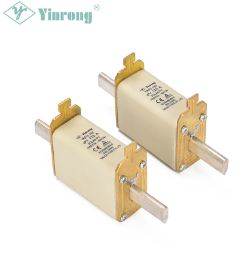
Why Does DC Protection Matter More Than Many Buyers Expect?
I often see people pay a lot of attention to solar panels and inverters while leaving fuse selection until the final stage. That is a mistake. The DC side of a PV system behaves differently from an AC circuit. Once a DC arc appears, it can be harder to extinguish because the current does not naturally cross zero like AC current. This means a fuse designed for ordinary low-voltage applications may not be suitable for photovoltaic protection.
A 1000VDC Solar PV Fuse Link is built for solar DC circuits where the system voltage can reach 1000 volts. This rating is not just a number printed on a label. It reflects the fuse link’s ability to interrupt current safely under high DC voltage conditions. For solar combiner boxes, PV array protection, and related DC distribution points, that capability becomes essential.
From a buyer’s point of view, the real pain points are usually simple but serious.
- Will the fuse protect the PV string during abnormal current conditions?
- Can it handle outdoor solar operation over long periods?
- Will it reduce the risk of damage to cables, modules, and downstream equipment?
- Can it fit existing fuse holders or combiner box designs?
- Will the supplier provide stable quality for repeat orders?
These questions matter because a fuse failure is rarely isolated. It can create system shutdowns, service costs, replacement delays, and customer complaints. I prefer to treat the fuse link as a risk-control component rather than a low-cost consumable.
What Should I Expect from a Good 1000VDC Solar PV Fuse Link?
When I evaluate a solar fuse link, I start with the working environment. Solar equipment may face heat, dust, moisture, current cycling, and daily load changes. The fuse link needs to respond quickly when a fault occurs, but it should not open unnecessarily during normal operating conditions. That balance is what separates a practical PV fuse from a generic electrical component.
The 1000VDC Solar PV Fuse Link is intended for photovoltaic protection, especially where DC circuits require safe isolation and overcurrent interruption. Its value comes from matching solar application needs rather than simply offering a broad electrical rating. For installers and system designers, this makes selection easier because the product is already aimed at PV use cases.
Here is how I usually compare the key expectations.
| Buyer Concern | What I Look For | Why It Matters in Solar Projects |
|---|---|---|
| Voltage suitability | Rated for 1000VDC photovoltaic circuits | Helps ensure the fuse can work safely on the DC side of the solar system |
| Overcurrent response | Designed to interrupt abnormal current effectively | Protects cables, PV strings, and connected equipment from damage |
| Application matching | Made for PV arrays, combiner boxes, and DC protection points | Reduces the risk of using a fuse that is not suitable for solar environments |
| Installation convenience | Clear specifications and compatible dimensions | Makes it easier for engineers and installers to select and replace the fuse |
| Supply reliability | Stable manufacturing and product consistency | Supports repeat procurement for distributors, EPCs, and maintenance teams |
This kind of comparison helps me avoid choosing only by price. Price matters, of course, but the cheapest fuse is not always the lowest-cost solution. If a poorly matched fuse causes downtime, the hidden cost can be much higher than the initial saving.
How Does the Right Fuse Link Help Reduce Solar System Downtime?
Downtime is one of the biggest concerns in solar power operation. When a PV system stops working, the owner loses energy output. If the problem is hard to locate, maintenance teams spend more time checking modules, cables, inverters, and protection devices. A correctly selected fuse link helps narrow the risk and supports faster fault isolation.
The 1000VDC Solar PV Fuse Link can be used as part of a protective strategy for solar arrays and DC circuits. When abnormal current appears, the fuse link is expected to open the circuit and prevent the fault from spreading. In practical terms, this helps protect the rest of the system and makes maintenance more controlled.
I also care about how fuse protection affects long-term operation. Solar farms, commercial rooftop systems, and distributed PV projects all need predictable maintenance. If the fuse link performs consistently, the operator can plan inspection and replacement more efficiently. This is especially important for projects where access is limited or labor cost is high.
- It helps isolate faulted strings instead of exposing the entire system to greater risk.
- It supports safer maintenance by separating affected circuits.
- It reduces the chance of secondary equipment damage.
- It gives engineers a clearer protection point during troubleshooting.
- It helps improve the overall reliability image of the PV project.
For me, that is the real product advantage. A fuse link is small, but its role is not small. It sits quietly in the system until something goes wrong. When that moment comes, quality becomes visible immediately.
Which Applications Are Most Suitable for This PV Fuse Link?
I would consider a 1000VDC Solar PV Fuse Link for projects where photovoltaic DC circuits need dependable overcurrent protection. It is especially relevant in systems built around 1000VDC architecture, which are common in many commercial and industrial solar installations.
The most typical application areas include PV string protection, solar combiner boxes, DC distribution units, and protection points before inverter input. In each case, the fuse link should be selected according to the actual system current, voltage, installation method, and coordination requirements with other devices.
| Application Area | How I Use the Fuse Link | Main Benefit |
|---|---|---|
| PV string circuit | Install protection for individual or grouped strings | Limits the impact of reverse current or overcurrent conditions |
| Combiner box | Use fuse links to protect incoming DC lines | Improves circuit organization and protection control |
| DC distribution section | Apply fuse protection before power is sent downstream | Helps prevent fault expansion across the DC side |
| Commercial rooftop PV | Select suitable ratings based on module string current | Supports compact and reliable system protection |
| Ground-mounted solar farm | Use consistent fuse models across repeated protection points | Simplifies procurement, installation, and maintenance |
I would not recommend selecting the fuse link only by copying a previous project. Module current, string configuration, ambient temperature, cable size, and local electrical requirements can all change the final choice. A responsible supplier should help buyers confirm the suitable model instead of pushing one general option for every project.
How Do I Choose the Right Rating Without Creating New Risks?
Choosing a PV fuse link is not about picking the largest rating available. Oversizing can reduce protection sensitivity, while undersizing may cause nuisance operation during normal current fluctuations. I usually check the system design first, then match the fuse link to actual operating conditions.
For a 1000VDC Solar PV Fuse Link, the voltage rating should match the DC system requirement. The current rating should be selected based on the string current, expected operating margin, temperature conditions, and the protection coordination of the system. I also check the physical size because fuse holders and combiner boxes have defined space limits.
Before I confirm a model, I usually review these points.
- What is the maximum DC system voltage?
- What is the rated current of the PV string or protected circuit?
- What is the expected ambient temperature around the fuse holder?
- Will the fuse be installed inside a combiner box or another enclosure?
- Does the fuse size match the holder and installation design?
- Is the fuse intended for PV DC protection rather than ordinary AC use?
- Can the supplier support stable repeat orders with consistent specifications?
This selection process may look careful, but it saves trouble later. In solar projects, the cost of returning to the site is often much higher than the cost of checking specifications at the purchasing stage.
Why Do I Pay Attention to Manufacturer Experience?
For electrical protection products, I do not only look at the product name. I also look at the manufacturer behind it. A PV fuse link needs stable material control, consistent production, and a clear understanding of solar protection requirements. When a company focuses on fuse products for electrical and renewable energy applications, it is easier for buyers to communicate technical needs.
Zhejiang Galaxy Fuse Co., Ltd. gives me a more focused impression because its product line is related to fuse protection rather than a random mix of unrelated electrical parts. That matters for distributors and project buyers who need more than a one-time shipment. They need continuity, technical communication, and products that can support different PV system layouts.
When I compare suppliers, I usually ask practical questions.
- Can the supplier explain which fuse link is suitable for my PV system?
- Can they provide clear product information for engineering review?
- Can they support different current ratings and installation requirements?
- Can they handle repeat orders with stable quality?
- Can they respond when a buyer needs help before final selection?
A good supplier does not make the buyer feel alone. In my experience, that communication is often as important as the product itself, especially for overseas buyers who need accurate information before placing orders.
What Product Advantages Should Buyers Notice Before Ordering?
The main advantage of a 1000VDC Solar PV Fuse Link is that it is designed around photovoltaic DC protection needs. It helps buyers avoid the common problem of using a fuse that looks acceptable on paper but is not ideal for solar applications. In PV systems, application matching is a serious advantage.
I would summarize the product value in several practical ways.
| Advantage | What It Means for Buyers | Where It Creates Value |
|---|---|---|
| PV-focused design | The fuse link is intended for solar DC circuit protection | Improves confidence in system compatibility |
| 1000VDC rating | Suitable for PV systems using 1000VDC architecture | Supports commercial and industrial solar projects |
| Overcurrent protection | Helps interrupt abnormal current conditions | Protects modules, cables, and other DC-side equipment |
| System maintenance support | Assists circuit isolation when faults occur | Reduces troubleshooting complexity |
| Procurement practicality | Suitable for repeated use across similar PV protection points | Helps distributors and EPC buyers manage stock more easily |
I also like products that make engineers’ work easier. If the specification is clear, the application is direct, and the supplier can answer selection questions, the whole procurement process becomes smoother. That is especially useful when projects have tight delivery schedules.
How Can This Fuse Link Support Safer Solar Project Procurement?
Procurement teams often face pressure from both sides. Engineers want reliable components, while project managers want controlled costs and timely delivery. A fuse link may not be the most expensive item in a solar project, but it can still cause serious delays if the wrong model is ordered.
That is why I prefer to select a 1000VDC Solar PV Fuse Link from a supplier that understands photovoltaic protection. It helps reduce uncertainty during purchasing. The buyer can communicate the application, current requirement, voltage level, and installation conditions, then confirm the suitable fuse link before shipment.
For distributors, this product type also has inventory value. PV projects often require repeated fuse use across many combiner boxes or string circuits. If the product quality is stable and the model range is practical, distributors can serve local installers more efficiently.
From my point of view, safer procurement means fewer surprises.
- Fewer specification mismatches before installation
- Fewer delays caused by unclear product selection
- Fewer complaints from installers during replacement
- Fewer risks from using non-PV-rated components
- Better long-term cooperation between buyer and supplier
This is the kind of value that does not always appear in a simple price comparison. A slightly better selection process can protect the buyer’s schedule, budget, and reputation.
Why Should I Treat Fuse Selection as Part of System Quality?
A solar power system is only as reliable as its weakest protection point. High-efficiency modules and advanced inverters cannot fully protect a project if the DC protection devices are poorly chosen. That is why I see the fuse link as part of system quality rather than an afterthought.
The 1000VDC Solar PV Fuse Link supports a more complete protection design for PV systems using 1000VDC DC circuits. It helps control overcurrent risk, supports fault isolation, and gives engineers a practical way to protect key DC-side equipment. For buyers who care about safety, reliability, and long-term operation, these advantages are worth serious attention.
I would recommend discussing the project details before ordering, especially if the application involves multiple PV strings, special ambient conditions, or large-scale installation. A short technical confirmation can prevent a long list of problems later.
How Can Buyers Move Forward with a Suitable Solar PV Fuse Link?
If I were sourcing this product for a solar project, I would prepare the system voltage, current requirement, fuse holder information, installation environment, and expected order quantity before contacting the supplier. That makes the conversation faster and more useful. It also helps Zhejiang Galaxy Fuse Co., Ltd. recommend a more suitable option instead of relying on guesswork.
For EPC contractors, distributors, solar installers, and electrical equipment buyers, the right fuse link can make PV protection more reliable and maintenance more manageable. If your project needs a dependable 1000VDC Solar PV Fuse Link for photovoltaic DC protection, I suggest reaching out with your technical requirements, drawings, or application details. To get product information, confirm model selection, or discuss bulk purchasing, please leave an inquiry or contact us today.