

How Are Solar Adjustable Tilt Brackets Influencing Solar Mounting Decisions?
2025-12-29
Article Abstract
Solar Adjustable Tilt Brackets have become a critical structural component in photovoltaic mounting systems across residential, commercial, and utility-scale projects. This article provides a comprehensive analysis of how Solar Adjustable Tilt Brackets operate, how their structural logic aligns with solar geometry, and how technical parameters support installation flexibility in diverse climates. The content focuses on installation methodology, engineering considerations, and performance optimization while addressing frequently asked questions encountered by installers and project planners.
Outline
- Product Overview and Core Objective
- How Do Solar Adjustable Tilt Brackets Work in Real Installations?
- Technical Parameters and Engineering Specifications
- How Do Adjustable Tilt Angles Affect Energy Output?
- Common Questions About Solar Adjustable Tilt Brackets
- Market Applications and Structural Adaptability
- Brand Perspective and Contact Guidance
Table of Contents
- 1. Product Overview and Core Objective
- 2. How Do Solar Adjustable Tilt Brackets Work?
- 3. Technical Parameters and Specifications
- 4. How Tilt Adjustment Impacts System Performance
- 5. Solar Adjustable Tilt Bracket FAQs
- 6. Application Scenarios and Adaptability
- 7. Brand Reference and Contact
1. Product Overview and Core Objective
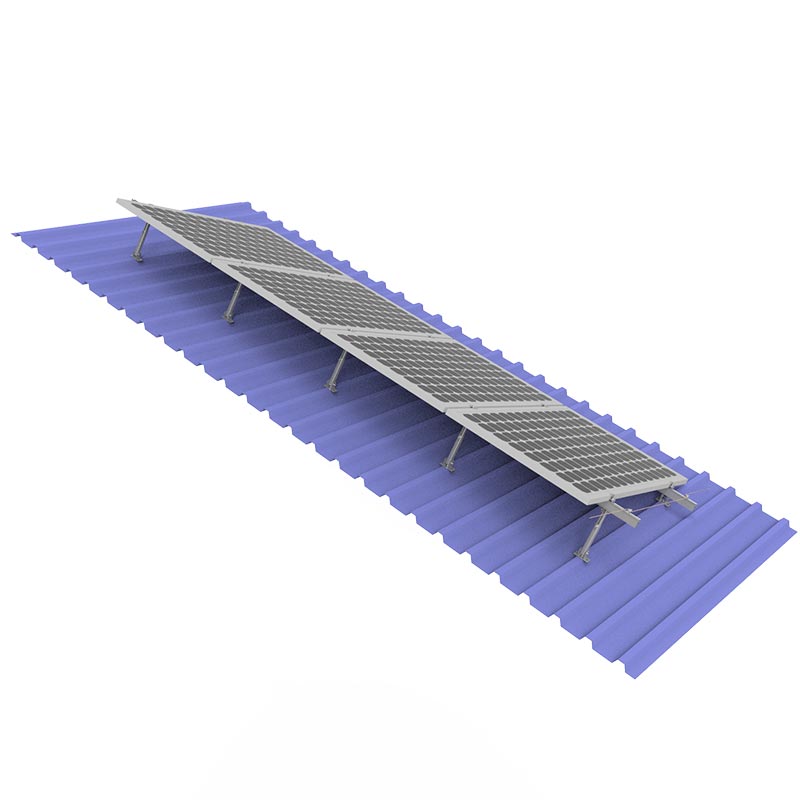
A Solar Adjustable Tilt Bracket is a mechanical mounting structure designed to support photovoltaic modules at variable inclination angles. Unlike fixed-angle mounting frames, this system allows the tilt angle of solar panels to be adjusted manually or semi-mechanically according to seasonal sun paths, geographical latitude, or site-specific shading conditions.
The central objective of this product category is to provide structural flexibility while maintaining mechanical stability. By enabling angle modification, Solar Adjustable Tilt Brackets support system optimization without altering the foundation or replacing core mounting components. This makes them suitable for rooftops, ground-mounted arrays, and off-grid systems where adaptability is required.
2. How Do Solar Adjustable Tilt Brackets Work in Real Installations?
Solar Adjustable Tilt Brackets operate on a hinged or slotted structural principle. The bracket assembly typically consists of a base plate, adjustable support arms, pivot points, and locking fasteners. During installation, the base is secured to the mounting surface, while the adjustable arm determines the inclination of the photovoltaic module.
Adjustment is achieved by repositioning the support arm along pre-drilled slots or telescopic rails. Once the desired angle is set, mechanical fasteners lock the bracket into position, ensuring resistance to wind uplift and snow load. This mechanism allows installers to reconfigure the tilt without dismantling the entire array.
3. Technical Parameters and Engineering Specifications
The performance and reliability of Solar Adjustable Tilt Brackets are directly influenced by material selection, dimensional tolerance, and load-bearing capacity. Below is a consolidated technical reference outlining commonly adopted parameters within this product category.
| Parameter | Specification Range |
|---|---|
| Material | Anodized Aluminum Alloy / Galvanized Steel |
| Adjustable Tilt Angle | 10° – 60° |
| Wind Load Resistance | Up to 2400 Pa |
| Snow Load Capacity | Up to 5400 Pa |
| Surface Treatment | Anodizing / Hot-Dip Galvanization |
| Compatible Module Size | Framed PV Modules (Various Widths) |
These parameters are indicative of standard engineering practices and may vary based on regional building codes and project requirements.
4. How Do Adjustable Tilt Angles Affect System Performance?
The tilt angle of a photovoltaic module determines the angle of incidence between sunlight and the panel surface. Solar Adjustable Tilt Brackets allow installers to align modules more closely with the sun’s seasonal trajectory. In higher latitudes, steeper angles are typically adopted during winter months, while flatter angles are suitable for summer conditions.
By adjusting tilt periodically, systems can maintain a more consistent irradiance profile throughout the year. This structural flexibility is particularly relevant for off-grid installations, agricultural solar projects, and locations with pronounced seasonal variation.
5. Common Questions About Solar Adjustable Tilt Brackets
How is the tilt angle determined during installation?
The tilt angle is typically calculated based on site latitude, roof orientation, and seasonal solar altitude. Installers may use solar path charts or simulation software to determine optimal settings.
Can Solar Adjustable Tilt Brackets be used on flat roofs?
Yes. These brackets are commonly deployed on flat roofs using ballast or anchored systems, allowing modules to be inclined without roof penetration when structural conditions permit.
Do adjustable brackets require frequent maintenance?
Routine inspection is recommended to ensure fasteners remain secure. However, when installed correctly with corrosion-resistant materials, maintenance requirements are minimal.
6. Application Scenarios and Structural Adaptability
Solar Adjustable Tilt Brackets are widely applied across residential rooftops, commercial buildings, agricultural sheds, and remote power stations. Their adaptability makes them suitable for both permanent installations and semi-mobile energy systems.
In regions with uneven terrain or variable sunlight exposure, adjustable brackets allow system designers to compensate for environmental constraints without redesigning the entire mounting layout. This adaptability contributes to broader deployment across diverse project scales.
7. Brand Reference and Contact Guidance
Within the global solar mounting ecosystem, CYC Energy focuses on providing structurally reliable and installation-oriented Solar Adjustable Tilt Bracket solutions. Product development emphasizes material durability, engineering precision, and compatibility with mainstream photovoltaic modules.
For project-specific technical consultation, customized parameters, or bulk procurement inquiries, stakeholders are encouraged to contact CYC Energy directly. A dedicated technical support team is available to assist with mounting design considerations and application guidance.