

Could a Solar Panel Fence Be the Smartest Way to Turn Your Boundary into Power?
2026-03-10
Many property owners today face a familiar challenge. We all want to generate renewable energy, yet not every building has the roof space, orientation, or structural conditions needed for traditional solar installations. While researching alternative solutions, I gradually came across the concept of the Solar Panel Fence, especially through the work of Xiamen Topfencesolar Co., Ltd., a company focusing on integrating solar technology with perimeter fencing systems. Instead of treating fences as passive structures, their approach transforms boundaries into productive infrastructure through the installation of a Solar Panel Fence that produces clean energy while still fulfilling its security function.
This idea immediately resonated with a practical question many landowners, industrial operators, and facility managers ask today. If we already need fencing for protection or site management, why not let that same structure generate electricity as well?
Why Are More Property Owners Considering a Solar Panel Fence Instead of Traditional Solar Installations?
When I first evaluated solar options for perimeter spaces, the traditional model seemed limiting. Rooftop systems often compete with HVAC equipment or structural limitations, while ground-mounted solar farms require dedicated land that many facilities simply cannot spare.
A Solar Panel Fence solves these issues by making use of the vertical boundary areas that already exist around many sites. From residential properties to industrial parks, these perimeter spaces often remain underutilized.
From my perspective, the shift toward fence-based solar systems is driven by several practical advantages.
- They utilize unused perimeter space instead of consuming additional land.
- They combine energy generation with security infrastructure.
- They can be easier to install in narrow or irregular sites.
- They create a visually modern boundary solution.
- They allow gradual expansion as energy demand increases.
Because of these factors, the Solar Panel Fence is increasingly appearing in commercial facilities, logistics parks, farms, and even residential communities where both energy efficiency and boundary security matter.
How Does a Solar Panel Fence Actually Work in Real-World Installations?
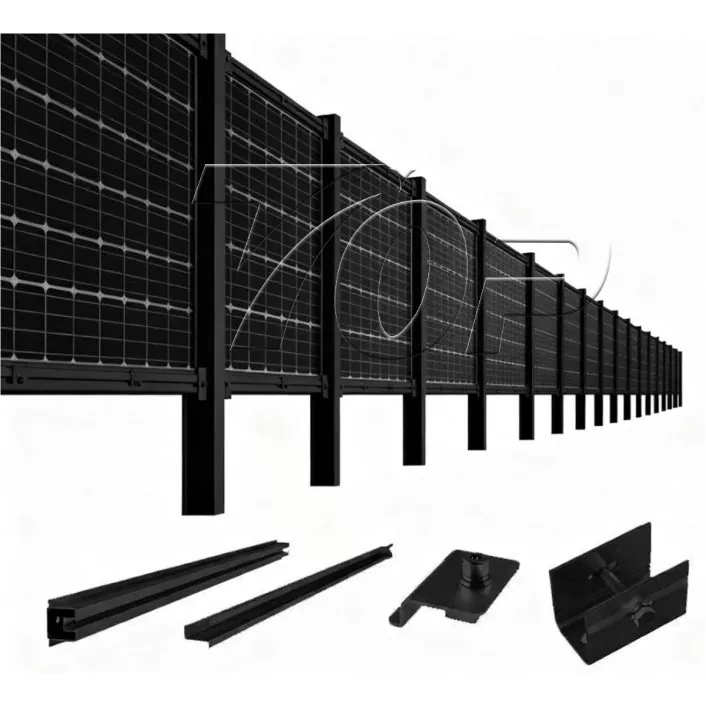
When I first examined the technical structure of a Solar Panel Fence, I realized that it is not simply a fence with solar panels attached. Instead, it is an integrated structural system where photovoltaic modules become part of the fencing design itself.
The solar modules are mounted vertically or slightly angled within specialized frames that also function as the fence structure. These panels convert sunlight into electricity while still maintaining the physical barrier required for the property.
In many projects developed by Xiamen Topfencesolar Co., Ltd., the design emphasizes durability, weather resistance, and modular installation so that the fence performs reliably in outdoor environments.
Typical system components include:
- High-efficiency photovoltaic panels integrated into fence frames
- Structural posts designed for long-term outdoor durability
- Electrical wiring and inverter systems
- Mounting hardware designed for vertical solar installation
- Optional energy storage integration
By combining these components, the Solar Panel Fence becomes both an energy asset and a physical infrastructure element.
What Problems Can a Solar Panel Fence Solve for Property Owners?
Many solar technologies promise sustainability benefits, but real decision-makers usually focus on solving practical operational problems. When I analyzed several installation scenarios, the Solar Panel Fence stood out because it addresses multiple issues simultaneously.
The following table summarizes common property challenges and how this solution responds to them.
| Property Challenge | Typical Limitation | How a Solar Panel Fence Helps |
| Limited roof space | Solar panels compete with building equipment | Fence installations use unused perimeter areas |
| Unused boundary infrastructure | Fences normally generate no value | The Solar Panel Fence converts fencing into energy infrastructure |
| Land efficiency concerns | Ground solar farms require large open areas | Vertical installations reduce land consumption |
| Rising electricity costs | Operational expenses increase annually | On-site solar generation offsets energy usage |
| Corporate sustainability goals | Facilities must reduce carbon footprint | The Solar Panel Fence supports renewable energy targets |
From my perspective, this dual-function approach is exactly what modern infrastructure design requires. Instead of building separate systems for energy and security, both needs can be addressed with one integrated solution.
Where Can a Solar Panel Fence Be Used Most Effectively?
During my research into different project types, I found that the Solar Panel Fence adapts well to several industries and environments. Its flexibility allows it to function in locations where other solar systems might be difficult to implement.
Common applications include:
- Industrial parks seeking energy independence
- Solar farms needing perimeter security fencing
- Residential communities pursuing sustainable living
- Agricultural facilities with large boundary lines
- Commercial properties wanting visible sustainability features
In many cases, installing a Solar Panel Fence also sends a strong visual signal that a company or property owner is investing in renewable energy. That public visibility can support environmental branding and corporate responsibility initiatives.
Is a Solar Panel Fence a Long-Term Investment for Sustainable Infrastructure?
Whenever I evaluate renewable energy infrastructure, I look beyond the initial installation. Long-term reliability, maintenance needs, and energy generation potential all matter.
Modern Solar Panel Fence systems are typically designed with corrosion-resistant materials, stable mounting systems, and photovoltaic modules engineered for long operational lifespans. When installed correctly, these systems can deliver energy generation for decades while still maintaining their fencing function.
In addition, many property owners appreciate the modular nature of these systems. A site can begin with a smaller section of Solar Panel Fence and expand the installation gradually as energy needs grow.
Could a Solar Panel Fence Be the Next Step for Your Property’s Energy Strategy?
After examining multiple renewable energy options, I believe the Solar Panel Fence represents one of the most practical ways to combine infrastructure with clean power generation. By transforming unused perimeter space into productive energy systems, property owners gain both functional security and renewable electricity.
Companies such as Xiamen Topfencesolar Co., Ltd. continue to refine these integrated fencing solutions so that businesses, farms, and residential properties can adopt solar energy in a more flexible way.
If you are currently exploring new ways to reduce energy costs or improve land efficiency, it may be worth evaluating whether a Solar Panel Fence could fit into your project.
If you would like to learn more about system configurations, installation options, or customized solar fencing solutions, please feel free to contact us for further information. Our team is always ready to discuss how a Solar Panel Fence can support your renewable energy goals and help transform your property boundary into a reliable power source.