

Are Ballast Flat Roof Solar Mounting Systems Compliant with Building Codes and Permits
2026-10-22
Commercial property owners and EPC contractors evaluating rooftop PV projects often ask whether a Ballast Flat Roof Solar Mounting System can pass local permitting without roof penetrations. The short answer is yes—provided the design is engineered to the applicable structural, wind, and fire provisions. Topfencesolar has supported hundreds of flat-roof deployments where code compliance was the deciding factor, and the pattern is consistent: compliance is not a product feature, it is a documentation and engineering outcome.
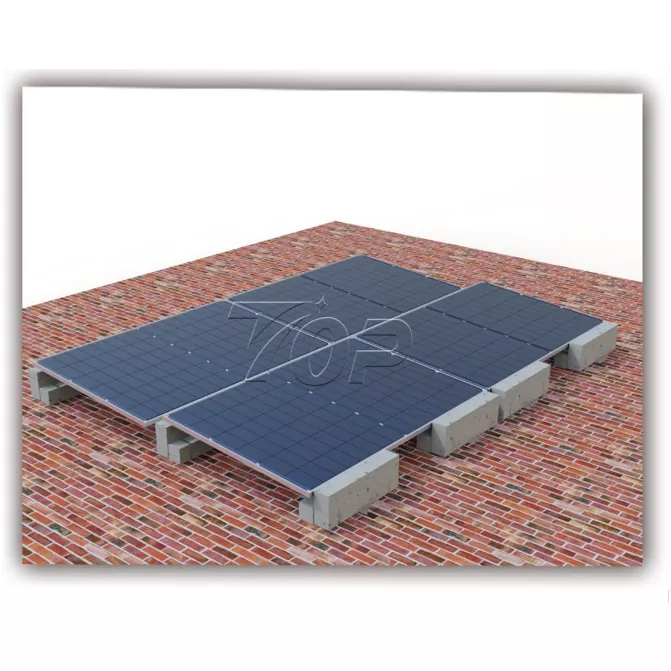
The Codes That Actually Govern Ballast Systems
A Ballast Flat Roof Solar Mounting System is typically reviewed against four categories of regulation. Understanding which applies to your jurisdiction prevents redesign late in the permit cycle.
| Code / Standard | What It Governs | Typical Ballast System Requirement |
|---|---|---|
| IBC (International Building Code) | Structural loads, roof live load, anchorage | Signed structural calculations by a licensed PE |
| ASCE 7 | Wind, snow, seismic loading | Wind tunnel or ASCE 7-16/7-22 coefficient analysis |
| IEC 61215 / 61646 & UL 2703 | Module and racking electrical/mechanical listing | UL 2703 listed racking and bonding path |
| NFPA 70 (NEC) & NFPA 1 / IFC | Grounding, fire setbacks, access pathways | Listed bonding hardware, compliant array layout |
Local amendments matter as much as the model codes. California, Florida, and New York each layer additional wind and fire-access requirements onto the base provisions.
Where Permits Usually Stall
Most Ballast Flat Roof Solar Mounting System permit delays trace back to three gaps:
-
Missing PE-stamped structural calculations showing roof dead load plus ballast weight against the structure's remaining capacity.
-
Inadequate wind uplift documentation—ballast systems rely on weight and aerodynamic shielding, so the wind analysis must reflect parapet height, building height, and exposure category.
-
Fire access non-compliance—array setbacks and pathway widths are frequently checked against IFC and local fire marshal interpretations.
Topfencesolar addresses these at the design stage by supplying project-specific load tables, UL 2703 listings, and wind coefficient data alongside the mounting hardware.
A Practical Compliance Checklist
| Phase | Action | Owner |
|---|---|---|
| Pre-design | Confirm roof structural capacity and remaining live load | Structural engineer |
| Design | Run ASCE 7 wind uplift and ballast calculation | Racking supplier / PE |
| Submittal | Assemble PE letters, UL listings, layout drawings | EPC contractor |
| Inspection | Verify bonding continuity and setback dimensions | Installer / AHJ |
Frequently Asked Questions
Does a Ballast Flat Roof Solar Mounting System require roof penetrations for code compliance? No—ballast systems are specifically designed to avoid penetrations, and most building codes permit non-penetrating mounting when structural and wind calculations demonstrate adequacy, though some jurisdictions require additional attachment at perimeter zones.
Is a PE-stamped structural letter always required for a Ballast Flat Roof Solar Mounting System permit? In most U.S. jurisdictions yes, because the added dead load and wind uplift must be verified against the existing roof structure, and Topfencesolar provides the underlying load data needed for that letter.
Can a Ballast Flat Roof Solar Mounting System meet fire code setback requirements? Yes, provided the array layout incorporates the required pathways and setbacks defined by the IFC and local fire marshal, which is why layout drawings should be reviewed before submittal rather than after installation.
How does UL 2703 apply to a Ballast Flat Roof Solar Mounting System? UL 2703 covers the mechanical and electrical bonding integrity of the racking, and a compliant system pairs listed mounting hardware with a verified bonding path to satisfy both electrical and structural reviewers.
Do wind requirements differ significantly between jurisdictions for a Ballast Flat Roof Solar Mounting System? They do—coastal and high-wind regions impose stricter uplift criteria and sometimes mandate hybrid attachment, so wind documentation must be generated for the specific project site rather than reused from another location.
Conclusion
Code compliance for a Ballast Flat Roof Solar Mounting System is achievable and routine when engineering documentation, listings, and layout design are prepared together. Topfencesolar supports project teams with the structural data and certification packages that permitting authorities expect.
Contact us today to request project-specific load tables, UL 2703 documentation, and compliance support for your next flat-roof solar installation.