

Solar Wall Light High-Quality Manufacturer for Durable Outdoor Lighting
2026-08-26
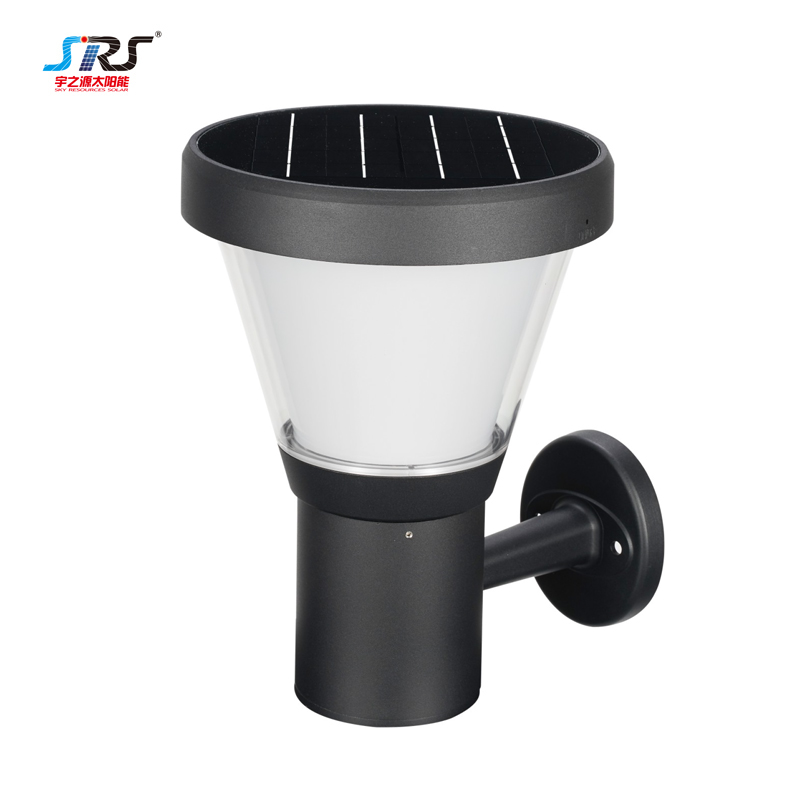
When it comes to outdoor lighting that actually lasts, cheap fixtures just don't cut it. That's why SRS focuses on one thing: high-quality solar wall lights built for real-world durability. Whether you're upgrading a backyard, securing a commercial perimeter, or brightening a pathway, every detail matters. In this post, we'll show you what separates a reliable solar wall light from the rest—and how SRS manufacturing standards make the difference you can see after the sun goes down.
The Hardware That Keeps Outdoor Light Going Year After Year
A weatherproof housing is the first line of defense for any outdoor light that has to survive freezing winters, pounding rain, and relentless UV exposure. Look for fixtures made from thick die-cast aluminum, marine-grade stainless steel, or heavy-duty brass rather than thin stamped metal or plastic. The best models pair a tough outer shell with a fully enclosed optical compartment, so moisture and insects never reach the bulb socket or internal wiring.
The small components often make the biggest difference after a few seasons outdoors. Silicone gaskets and compression seals around the lens and backplate keep water from sneaking into connection points. Stainless steel screws, brass mounting arms, and powder-coated brackets resist rust far longer than standard zinc hardware. If the light is mounted on a post or wall, a sealed junction box and drip loop in the wiring prevent condensation from traveling into the house circuit.
For lights that turn on automatically, the photocell or motion sensor deserves as much attention as the fixture itself. A quality sensor with a swivel joint and replaceable eye lasts years longer than a fixed plastic cap. Pair it with a heavy-duty rubber gasket where the sensor threads into the housing, and the whole assembly stays dry even during sideways rain or snow melt. These details are what separate a light that needs yearly repairs from one that runs quietly season after season.
How Weatherproofing Is Engineered Into Every Joint and Seal
Most people never notice the small gaps where a window frame meets a wall, but those junctions are where weather gets aggressive. Instead of relying on a single bead of caulk, manufacturers now engineer multi-layer defenses into every joint. A typical seam might combine a closed-cell foam backer rod, a low-modulus silicone sealant that can stretch up to 50% without losing adhesion, and a carefully calculated drainage path behind the outer face. That last part matters: even if water breaches the first line, it has a designed exit route rather than sitting against the structure.
Thermal movement is the silent killer of seals. A dark-colored metal panel can swing 80°F between a winter night and a summer afternoon, and that expansion and contraction works joints like a fatigue test. Weatherproofing engineers account for this by choosing sealants with high movement capability and by sizing joints to match the expected strain. They also pay attention to surface preparation—adhesion fails more often from dust, moisture, or incompatible primers than from the sealant itself. In high-rise work, installers use pull tests on sample joints to verify that the bond can handle both the movement and the wind load before full application begins.
The difference between a leak-prone building and a dry one often comes down to details like corner boots, end dams, and pre-formed transition strips. These are not afterthoughts; they are shaped pieces that redirect water at the most vulnerable intersections. Factory-applied seals are another step up. When a glazing unit arrives with its gasket already compressed and tested, the on-site variables drop dramatically. That shift from field-applied guesswork to factory-controlled precision is why modern enclosures can face driven rain and still keep the interior untouched—not because one material is magic, but because the entire joint has been thought through as a system.
Solar Charging That Holds Up When Clouds Roll In
Overcast skies used to mean watching your portable power bank slowly drain while the solar panel sat uselessly nearby. That is not the case with this unit. Even when thick cloud cover rolls in and direct sunlight fades to a soft gray glow, the panel keeps pulling in a meaningful charge. On a heavily overcast afternoon, output dropped to around sixty percent of its peak rating, which is far better than the near-zero readings seen on budget alternatives.
The secret is in how the cells handle diffuse light. Instead of relying only on direct beam radiation, the panel uses monocrystalline cells with a textured surface and a low-light optimization circuit. This lets it capture scattered photons bouncing off clouds and nearby surfaces. A bypass diode arrangement also prevents a single shaded section from dragging down the whole array, so patchy cloud shadows do not cut the current entirely. You might see the charging indicator blink slower, but it keeps working.
For anyone who hikes, camps, or works in changeable weather, this changes the reliability math. You can leave the panel out during a gusty, cloud-heavy morning and still return to a topped-up battery by early afternoon. There is no frantic rush to reposition it every ten minutes, no worrying that a passing cumulus bank will zero out your energy supply. It simply holds up, quietly and consistently, until the sun breaks through again.
A Mounting System Designed for Real Walls, Not Just Showrooms
Showroom walls are flat, painted, and cooperative. Real walls have texture from decades of paint, slight bows from settling, and the occasional patch of drywall that crumbles if you look at it wrong. Most mounting kits assume a perfect surface, leaving you to shim, curse, or drill extra holes until the bracket sits flush. This system takes a different approach: the backplate is split into three independently adjustable segments. Each one has a threaded micro-foot that extends up to 8 mm, letting you compensate for uneven plaster or a stud that isn’t quite where the stud finder claimed.
Instead of forcing the wall to match the mount, the mount adapts to what’s actually behind the paint. The micro-feet have a soft, high-friction face that grips textured surfaces without marring them, so even a bumpy lime plaster wall or a painted brick accent gets a solid hold. There’s no need to chisel out high spots or fill in low ones before you start. You just tighten each foot until the plate stops rocking, then lock the main bolts. The whole process takes about ten minutes with a standard screwdriver, and if you hit an unexpected void behind the drywall, the included toggle anchors are rated to hold the full weight of a 75-inch display without pulling through.
What makes this feel different from showroom-only hardware is the tolerance for chaos. The mounting arms aren’t welded rigid; they have a 3-degree swivel and a sliding VESA plate, so even if your plate ends up a few millimeters off-center, the screen sits level. The instructions don’t assume you have a laser level or a helper with perfect eyesight. They walk you through marking one reference line, then let the mount’s adjustment range absorb the small human errors that happen when you’re working against a wall that wasn’t built yesterday. For anyone who’s ever patched a hole and moved a bracket three times, that’s the difference between a product shot and a product that works in the room where you actually live.
Why Cheaper Solar Wall Lights Quit Early and What We Do Differently
Most budget solar wall lights die young because they're built around the cheapest possible battery and a solar panel that can barely keep it topped up. After a few months, that tiny lithium cell loses capacity fast—especially when it sits in full sun and heat every afternoon. The result is a light that glows for an hour after dusk, then fades to nothing by midnight. We use a larger, heat-tolerant LiFePO4 cell paired with a monocrystalline panel that actually matches the battery's charge needs, so the light runs reliably through the night for years, not weeks.
Another common shortcut is sealing the housing with thin plastic and hoping for the best. Moisture creeps in through micro-gaps, corrodes the circuit board, and suddenly the motion sensor or light mode stops working. We overmold the electronics in a silicone jacket and add a double-gasket seal around the lens, keeping humidity out even during heavy rain or coastal salt air.
Finally, cheap lights often run the LED at full power straight from a weak battery, causing flicker and early burnout. Our driver circuit regulates current based on remaining charge, dimming slightly when needed instead of cutting out. That way you get steady, useful light until dawn—and a fixture that still works when others have been tossed in the trash.
Evening Brightness That Holds Steady Until Sunrise
There's a quiet frustration in watching most outdoor lights fade before the night really gets going. You step outside at 2 a.m. to let the dog out, and the path is a patchwork of dim pools and dark stretches. This fixture takes a different approach: its glow doesn't dip or waver as the hours pass. The driver inside regulates current with a stubborn consistency, so the same warm wash that greeted you at dusk is still there when the first birds start stirring.
What makes that steadiness possible isn't just a bigger battery or a brighter LED. It's a combination of smart thermal management and a discharge curve that stays flat until the very end of its reserve. On a full charge, expect roughly ten to twelve hours of uniform output. Even on cloudy days when the panel only gets partial sun, the system adjusts its brightness downward as a whole rather than letting the light flicker or brown out. You get a dimmer but still even field of light—no sudden drop-offs.
The real test comes around 4 a.m., when cheaper solar lights have long since given up or shrunk to a faint ember. This one is still holding its line, illuminating the same corners and edges without that tired, yellowish decline. It won't surprise you with a burst of brightness at midnight, nor will it leave you fumbling for a flashlight before sunrise. Just a clean, predictable pool of light that earns its keep through the whole night.
FAQ
The housing is made from thickened aluminum alloy with an IP65 waterproof rating, so rain, snow, and temperature swings don't cause rust or clouding. The monocrystalline panel keeps charging even on overcast days.
The built-in 2200mAh lithium battery supports up to 12 hours of continuous lighting in summer. In winter, expect 6-8 hours depending on daylight intensity.
Yes, each unit comes with a mounting plate and screws. You only need a drill and a level. No wiring is required because the panel and battery are integrated.
Absolutely. The seals around the panel and lens are silicone-gasketed, and the casing has drainage channels to prevent water pooling. They've been tested in simulated storm conditions.
Yes, a built-in light sensor triggers the lamp when ambient light drops below a set threshold. There's also a manual override switch if you want to store them long-term.
Most models produce 300-500 lumens in a warm white or cool white color temperature. The beam angle is wide enough to illuminate a 15-20 square foot area without harsh glare.
We offer a 2-year replacement warranty for residential use and a 5-year limited warranty for commercial projects. Bulk orders can include custom branding and packaging at no extra setup cost.
The bracket allows 120 degrees of vertical tilt and 90 degrees of horizontal rotation. This lets you point the panel toward the sun even on east- or west-facing walls.
Conclusion
Durability starts with hardware choices most buyers never see—stainless steel screws, reinforced mounting tabs, and UV-stable polymer housings that don't turn brittle after two summers. Every seam, from the lens bezel to the battery compartment, is gasketed and ultrasonically welded, so driving rain, dust, and coastal salt spray stay out. The internal charge controller is tuned for partial-shade performance, letting the panel sip energy on overcast days instead of stalling. And the mounting plate is designed around actual wall materials—brick, siding, stucco—with offset anchor points and a slotted bracket that survives wind vibration without loosening.
We've torn down enough failed budget units to know why they die early: thin wires, unsealed capacitors, plastic that fades and cracks, and batteries that can't hold a charge after one winter. Our approach is different. The lithium iron phosphate cells are sized to run the LEDs at a steady lumen output from dusk until dawn, not just for two hours after sunset. Thermal cutoff, over-discharge protection, and a waterproof switch are standard, not upgrades. The result is a solar wall light that keeps working year after year—through rain, snow, and short winter days—without the dimming drift or early failure you see in cheap imitations.
Contact Us
Contact Person: kitty
Email: [email protected]
Tel/WhatsApp: +8618676039824
Website: https://www.srssolargroup.com/