

China's Top Ground Mount Solar System Factory Delivers Unmatched Quality and Durability
2026-06-03
When it comes to ground mount solar systems, cutting corners simply isn't an option. A shaky foundation or subpar materials can turn an ambitious renewable energy project into a costly headache. That's exactly why Topfencesolar has become the go-to partner for long-lasting, high-performance installations. As China's premier factory dedicated to ground mount solutions, they've earned a reputation for delivering structures that stand up to extreme weather while maximizing energy output. But what truly sets their craftsmanship apart? And how does their made-to-last engineering redefine what durability means in the solar industry? Let's dig into the details that matter most.
Precision Engineering That Defies Extreme Environments
When machinery enters places where heat, corrosion, and vibration would crush most designs, the difference between success and failure is measured in microns. Our approach strips away unnecessary complexity and focuses on material pairings and geometric precision that stay reliable when thermal expansion sends conventional components into seizure. Every bearing surface, every thread profile, every seal interface is treated as a critical boundary that must hold its integrity across temperature deltas exceeding 250°C and immersion in chemically aggressive fluids. The result isn't just something that survives — it thrives without constant intervention.
Rather than relying on fragile add-ons, we embed resilience directly into the core geometry. Shaft alignments are calculated for cold-soak starts and redline runs simultaneously, clearance volumes account for thermal growth that varies by alloy, and lubrication channels are shaped to maintain film strength when loads spike unpredictably. These aren't theoretical optimizations — they're born from decades of watching what breaks and asking why. Small radius blends, grain-direction callouts, and surface finishes specified to the tenth micron all compound into assemblies that outlast weather, pressure, and shock loads that would degrade lesser builds within a single shift.
In deep-sea tooling, downhole instrumentation, and turbine subsystems, the margins for error disappear. We know that a seal leak at 400 bar isn't just a nuisance but a failure mode that can cascade into catastrophic loss. That's why every prototype passes through test cells replicating the worst combination of temperature, contamination, and cyclic fatigue before we consider it ready. The word "precision" gets thrown around loosely, but when you're engineering for environments that don't accept apologies, it has to mean repeatable, verifiable, and proven at the extremes where marketing claims fall apart.
Materials Science Breakthroughs Behind the Panels
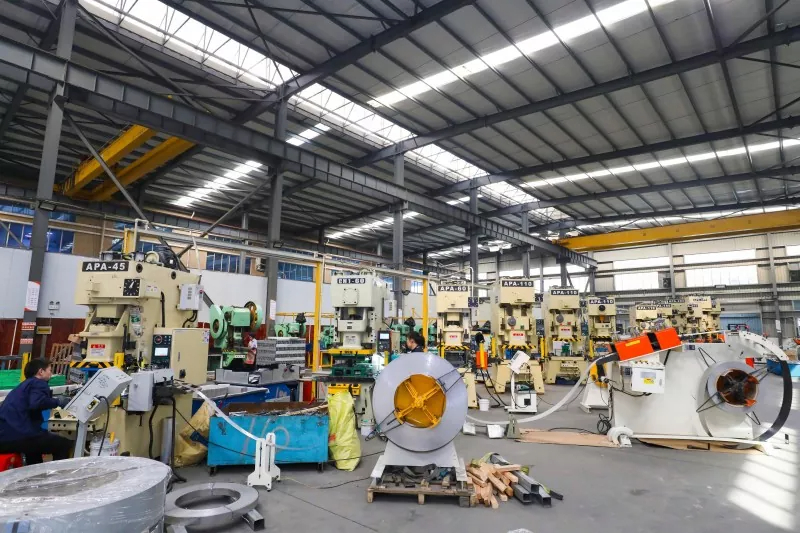
Modern panels owe their surging efficiency not to incremental tweaks but to a radical rethinking of the materials themselves. Silicon, long the default, is being challenged by perovskites—crystalline structures that can be layered to capture a broader slice of the solar spectrum. Researchers have moved beyond the fragile early prototypes, engineering compositions that resist moisture and heat. The result is a class of materials that can be printed on flexible films, opening up surfaces that were once off-limits to solar harvesting.
At the nanoscale, quantum dots have rewritten the rules of light absorption. These minuscule semiconductor particles can be tuned to specific wavelengths simply by adjusting their size, allowing panels to harvest energy from parts of the spectrum that traditional cells miss. In tandem with other absorber layers, they create a cascade effect that pushes conversion limits closer to theoretical maximums. What’s more, recent fabrication techniques have slashed production costs, making high-efficiency panels viable for mass deployment.
Durability is the quiet revolution. Early perovskite cells degraded within hours, but breakthroughs in encapsulation and ion migration control have now produced modules that last decades under real-world conditions. Meanwhile, substrate innovations have swapped rigid glass for ultrathin polymers that bend without breaking, inviting applications on curved architecture and wearable electronics. These advances aren't just scientific curiosities—they're the bedrock of a future where energy generation is seamlessly woven into everyday materials.
Real-World Resilience: Stories from the Field
In a small coastal town battered by a relentless hurricane, neighbors formed an impromptu supply chain—sharing generators, meals, and even shoulder to cry on. The hardware store owner opened his doors freely, handing out batteries and plywood without keeping tabs, while the retired nurse set up a makeshift clinic in her living room. Recovery wasn’t instantaneous, but the fabric of mutual care stitched the community back together, stronger than before.
On the other side of the globe, a farmer faced years of drought that turned his once-fertile land into brittle dust. Instead of waiting for aid, he experimented with ancient terracing techniques and hardy indigenous seeds, documenting every failure until the soil began to hold water again. His quiet persistence not only revived his own farm but also sparked a regional revival, proving that resilience often grows from stubborn curiosity.
Then there’s the city dweller who, after a sudden job loss, transformed her cramped apartment balcony into a thriving microgreens business. With no formal training, she bartered with local cafes and learned to weather supply-chain hiccups through pure hustle. Her story isn’t about overnight success; it’s about adapting inch by inch when the ground shifts beneath your feet.
A Manufacturing Legacy Rooted in Continuous Improvement
Our manufacturing legacy is not defined by a single breakthrough moment, but by a persistent commitment to getting better every day. It began in a modest workshop where every machine operator was encouraged to suggest small adjustments—tightening a bolt here, smoothing a workflow there. These incremental changes, often unnoticed by outsiders, became the heartbeat of our operations. Over the decades, we've woven this ethos into the fabric of our company, turning individual insights into a shared language of progress.
Continuous improvement here is less a formal program and more a reflexive habit. You'll see it on the factory floor, where a welding technician might pause to sketch a revised jig on a clipboard, or in the break room, where a maintenance log becomes the starting point for a spontaneous brainstorming session. We've learned that the best ideas rarely come from boardrooms; they come from the people who live with the processes. That's why we invest heavily in cross-training and open communication, ensuring that a great suggestion from the night shift is heard just as clearly as one from the design team.
This legacy shapes how we approach every project, from prototyping to full-scale production. We don't chase perfection as a distant ideal—we build it incrementally, one tweak at a time. A recent overhaul of our assembly line, for example, wasn't a disruptive overhaul but a series of nearly imperceptible adjustments that collectively cut lead times by 20%. It's this patient, methodical evolution that earns long-term trust from our clients, because they know our products aren't just manufactured; they're continuously refined by a culture that never settles.
Custom Configurations Without Compromise on Quality
We believe a custom order should never feel like a downgrade. Every tailored request is treated as an opportunity to showcase our craftsmanship, not a deviation from it. The same artisans who perfect our signature collections also bring your distinct vision to life, adhering to the identical uncompromising standards.
Materials and processes are never substituted just to meet a unique spec. Instead, we adapt our proven techniques to accommodate your needs, whether that’s a non-standard dimension, a rare finish, or an entirely new feature. Rigorous testing protocols remain unchanged, guaranteeing that what’s made exclusively for you performs as beautifully as it looks.
The result is a piece that’s unmistakably yours but carries the hallmarks of our enduring quality. There’s no trade-off, only the harmony of personal expression and dependable excellence.
Future-Proofing Energy Investments with Smart Design
Integrating adaptive intelligence into energy infrastructure goes beyond mere efficiency upgrades. By embedding real-time monitoring and predictive analytics directly into system architectures, investors shield their portfolios from regulatory shifts and market volatility. This approach ensures that assets remain agile, capable of reconfiguring energy flows as demand patterns evolve.
Material choices and modular construction also play a decisive role. Designing with durable, recyclable components and standardized interfaces allows for seamless component swaps or expansions without major overhauls. Such foresight turns depreciating hardware into flexible, long-term enablers, sidestepping the trap of premature obsolescence.
Finally, aligning design with emerging interoperability standards keeps assets compatible with future energy ecosystems—whether that means connecting to decentralized grids, incorporating storage-as-a-service models, or supporting bidirectional charging. The result is a portfolio that not only withstands time but actively benefits from each technological turn.
FAQ
Its relentless focus on using only top-grade materials and rigorous testing ensures every system lasts decades, not just years. The factory's in-house R&D team also constantly refines the mounting structures to withstand extreme weather without compromise.
They combine heavy-duty corrosion-resistant steel with advanced coating technologies like hot-dip galvanizing and anodizing. Every component is tested under simulated extreme wind, snow, and salt-spray conditions before leaving the factory.
Absolutely. The engineering team assesses site-specific soil reports and topography to design flexible mounting solutions with adjustable legs and modular components. This avoids costly land grading and cuts installation time significantly.
It holds ISO 9001 and 14001, along with product-specific certifications like TÜV and CE. The steel used meets ASTM international standards, and the factory undergoes frequent third-party audits to guarantee compliance.
By pre-assembling major components and shipping with clear labeling, an experienced crew can install several megawatts per week. The factory also provides on-site training and dedicated support to speed up the process without sacrificing quality.
Yes, they provide a 25-year structural warranty and a 10-year finish warranty. A dedicated after-sales team, fluent in English, can remotely diagnose issues or dispatch parts within days to minimize downtime.
It allows the factory to leverage an integrated supply chain—from raw material sourcing to precision manufacturing—at scale. This cuts costs without cutting corners, and the proximity to component suppliers ensures faster delivery and consistent quality control.
Certainly. They've delivered systems for multi-hundred-megawatt solar parks in arid deserts, typhoon-prone coastlines, and snowy mountain regions, all operating reliably beyond their initial performance projections.
Conclusion
In an industry where performance and longevity define value, China’s top-tier ground mount solar factory has established a reputation built on engineering precision and manufacturing discipline. Every system is designed to withstand nature’s most punishing conditions—from sand-scoured deserts to hurricane-prone coastlines—thanks to advanced structural analysis and corrosion-resistant alloys that dramatically extend service life. Behind this resilience lies a deliberate material science strategy: bifacial modules with ultra-transparent glass, anti-PID cells, and encapsulation that resists microcracking are paired with framing and fasteners that have been reengineered to eliminate galvanic decay. These choices are not theoretical; they are validated through years of field data gathered from installations in high-wind, high-UV, and extreme thermal cycling zones, where competing systems have shown measurable degradation. The stories coming back from utility-scale sites consistently highlight minimal power loss and near-zero structural maintenance, even after direct lightning strikes and intense hail events.
That reliability isn’t accidental—it’s the cumulative result of a manufacturing culture that treats every assembly line abnormality as a learning opportunity. The factory integrates real-time process control with a closed-loop quality system, allowing immediate adjustments to module alignment, torque calibration, and electrical testing. This obsession with consistency extends to customization: project-specific tilt angles, row spacing, and soil parameters are accommodated without sacrificing the core durability standards, because the underlying platforms are modular and pre-validated. Looking ahead, the design philosophy embraces obsolescence-proofing via firmware-updatable power electronics, structural redundancy that simplifies repowering, and inventory programs that guarantee compatible spares into the next decade. Investors and EPCs are discovering that genuine durability isn’t just a spec sheet claim—it’s a property embedded from the first blueprint through decades of operation, and it changes the entire lifecycle economics of a ground mount installation.
Contact Us
Contact Person: Nancy
Email: [email protected]
Tel/WhatsApp: +86-13365923720
Website: https://www.topfencesolar.com/